| View |
| preceded by | |
|
||||||||||||||||||||||||
| British Overseas Territories | ||||||||||||||||||||||||
|
||||||||||||||||||||||||


| succeeded by |
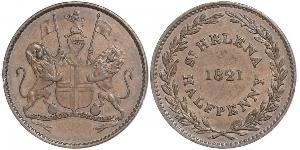
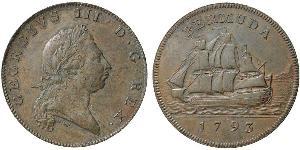
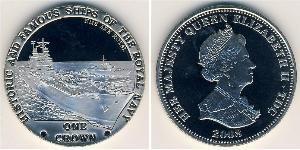
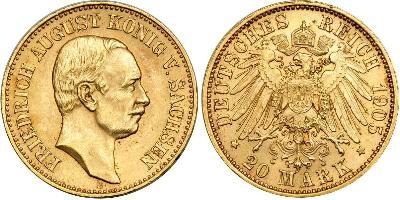
| British Overseas Territories | Link to Wikipedia |
The Fragments of Empire: A Collector’s Guide to British Overseas Territories
To the dedicated coin collector, few stories offer more geographical breadth than that encompassed by the British Overseas Territories (BOTs). These are not merely a single political entity but rather a scattering of fourteen distinct fragments across six continents and three oceans. They represent the final chapters of an empire, preserved in copper, silver, and gold. Unlike modern sovereign nations with singular central banks and unified monetary policies, this region tells a story defined by trade routes that spanned from the Cape to California, connecting London's financial heart with remote outposts on every continent except Australia.
Historical Background
The history of these lands is deeply woven into the fabric of global commerce. The narrative begins in earnest during the 16th century when English fishermen established seasonal camps in what are now parts of Atlantic Canada and Bermuda, establishing a foothold that would evolve from fishing outposts to permanent colonies by the early 17th century. In the Caribbean and North America, coinage initially followed standard British silver, but as these territories grew distinct economic hubs—growing sugar plantations in Antigua or tobacco farms in Jamaica (now Commonwealth realms)—the need for local currency began to emerge.
In Africa and Asia, specifically Hong Kong before its handover in 1997 and Gibraltar itself, the coinage reflected a strategic position as maritime gateways. Before independence was achieved for most of these territories post-World War II, their economies were heavily reliant on imports from Britain and exports to Europe or East Asia. Consequently, early coins often bore English profiles but featured local denominations that simplified commerce in port cities like Georgetown (Cayman) or the strategic fortress at Gibraltar.
The constitutional shift from Crown Colony status to "British Dependent Territories" in 1983 was not merely political; it marked a significant numismatic evolution. As territories gained internal self-governance, they began asserting control over their currency supply while remaining part of the Commonwealth realm structure. This period allowed local mints or British firms under contract to produce coinage bearing specific colonial seals and designs that celebrated unique geography—such as Bermuda’s maritime heritage—or distinct flora found nowhere else in Britain.
Currency and Coinage History
The evolution of money in these regions was a journey from tokenism to full currency. In the early 19th century, remote islands often operated on local barter or simple copper tokens before adopting British sterling denominations like the penny and shilling. However, as trade flourished during the mid-1800s, particularly around Gibraltar which served as a critical naval base between Spain and North Africa, there was pressure to have coinage that distinguished it from Spanish pesetas.
The transition to modern legal tender occurred largely in two phases. First came the "token" era where local authorities issued coins with limited circulation for domestic use before these were officially recognized by London or replaced as sovereigns became obsolete post-1970s. The second phase saw territories like Bermuda and Gibraltar begin minting their own denominations, distinct from Canadian dollars (which circulated in Canada) but legally pegged to the British Pound.
Gibraltar offers a particularly fascinating case study. While most colonies relied on tokens until the 21st century, Gibraltar utilized silver coins for local trade well into the early decades of independence due to its unique European location and historical ties with continental Spain. This created an interesting numismatic duality where British coinage coexisted or competed with Spanish denominations in markets that were part of a larger Mediterranean trading network.
Mints and Coin Production
The production center for most of these coins was, unsurprisingly, the Royal Mint at Llantrisant or Tower Hill. However, it is important to note that "local minting" in British Overseas Territories often involved private firms operating under contract rather than a government-run state-owned facility as seen today. This means many early issues from places like Ascension Island (a remote volcanic outpost) are actually medals with face value attached or high-denomination commemorative coins, rather than everyday circulation coinage.
In contrast to this uniformity regarding central production is the artistic license given in later years. After decolonization and constitutional reforms, local commissions allowed artists on islands like Pitcairn—once settled by mutineers from HMS Bounty—to incorporate indigenous symbols into their designs, although these are often commemorative rather than general circulation.
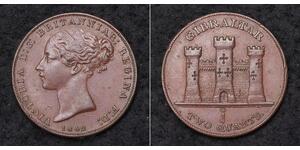
Gibraltar again serves as a prime example of production independence. It maintained its own minting capacity for distinct silver denominations that featured fortifications and specific maritime scenes before the handover to China in 1997 ended Hong Kong's status, though Hong Kong was technically separate until then (remaining a Crown Colony). Gibraltar coins are distinguished by their unique obverse designs often honoring British Monarchs but retaining local iconography.
Notable Coins
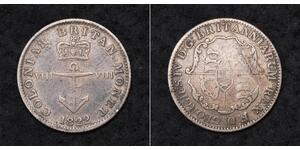
Collectors of this category should look specifically for three types of issues: the early silver florins and crown pieces, the transitional "local" copper tokens from Caribbean territories, and Gibraltar's later distinct series. Early colonial coins often feature a double-headed eagle or Britannia on one side to show allegiance to London.
The most sought-after items typically originate from Bermuda or Cayman Islands due to their higher mintage in local denominations before the 1960s when they transitioned fully into British currency standards. The designs are generally plain, featuring a shield bearing the Union Jack and local agricultural symbols like sugar cane or naval anchors.
Gibraltar silver issues from the mid-20th century remain highly collectible for their unique aesthetic choices compared to standard UK circulation coins released at the same time by the Royal Mint. These coins are important because they reflect Gibraltar's strategic position as a port city and its own distinct cultural identity rather than being simple replicas of British sovereigns.
Rare pieces include high-denomination commemoratives issued for historical anniversaries like the Bounty settlement on Pitcairn or naval victories in Hong Kong waters. These were often struck with high relief to mark their special nature, providing a tactile distinction from standard circulating currency and making them favorites among history enthusiasts looking for artifacts of British maritime expansion.
Cultural Legacy
The coinage of these territories serves as a permanent record of the diverse cultures they absorbed. The islands often feature flora specific to that region, such as hibiscus flowers from tropical climes or naval anchors representing their strategic defense importance for Britain's global trade.
In places where populations were once forced movements—like in British Indian Ocean Territory—the history is preserved differently: here coinage reflects the complex legacy of colonization and displacement rather than celebrating local flora. In contrast, territories with strong indigenous heritage like Pitcairn utilize their own specific emblems (the Bounty) to tell a story unique among all Commonwealth nations.
The currency system remains linked today by its use of "Cayman Dollars" or Gibraltar Pounds that are legal tender in Britain but not vice versa. This economic independence, while still bound loosely to sterling, represents the final stage where these territories have developed their own monetary identities without losing their constitutional link.
For collectors
The value of a collection focusing on British Overseas Territories lies not just in rarity but in its educational potential. It offers insight into why colonies were established—trade, naval defense—and how they evolved from simple administrative outposts to self-governing entities with distinct monetary policy needs.
Collectors who approach these pieces should look beyond catalog numbers and examine the narrative of each island's development. A coin is a snapshot of trade routes once mapped by British sailors; it bears witness to emigration, immigration (as seen in Cayman Islands population shifts), or military history like that found on Gibraltar.
In conclusion, collecting coins from this realm is an exercise in tracing the map of empire and how those maps changed. Each piece connects a tiny island outpost—often no larger than London's Hyde Park—to one of the world’s greatest financial powers. For the historian or numismatist seeking depth rather than just face value, these territories provide endless opportunities to uncover stories written in metal about exploration, colonization, independence, and resilience.