| View |
| preceded by | ||||||||||
|
||||||||||


|
||||||||
 Russian Empire (1720-1917)
|
||||||||
|
||||||||


| Russian Empire (1720-1917) | Link to Wikipedia |
The Russian Empire: History, Coinage and Collectibles
Welcome to the gallery where empires are forged not just from land, but from metal. The history of coinage under the banner of the Imperial House is a testament to wealth, artistry, and statecraft spanning centuries. For those who stand in this hall today, we invite you to examine how silver, gold, and copper circulated through Russian soil, carrying with them stories of expansion, technological advancement, and cultural identity.
Historical Background
To understand the coinage that flows from our collection, one must first consider the vast geography that once stretched between Europe and Asia. For much of its early existence, Moscow served as the seat of power under Muscovite rule, but a profound transformation occurred in the late seventeenth century when political focus shifted eastward to St. Petersburg. This shift was not merely architectural; it marked the birth of Russia as a great world empire with ambitions that mirrored those of other modernizing powers like Britain or France.
The economic infrastructure required for this new status demanded uniformity. Trade routes were being secured, ports opened along the Baltic Sea and Black Sea, and vast resources from Siberia needed to be monetized before they could reach European markets. As Peter I pushed for Westernization of dress and science, he simultaneously sought to align Russian currency with international standards previously dominated by silver guilders or taler coins brought in during trade fairs.
The era also defined the concept of the Tsar as an absolute authority over financial policy. Money became a tool for consolidation, used to pay soldiers, stabilize grain exports from Ukraine and Novgorod, and fund naval expeditions that secured new territories. The coinage therefore serves not just as payment but as state currency representing divine right and imperial power on every face of the metal.
Currency and Coinage History
The evolution of money within these borders was a journey from localized barter to standardized bullion backing. Early Russian denominations were often inconsistent in weight or purity until reform brought stability under later rulers who sought parity with European banks. During the reigns of Catherine II and her successors, silver became dominant for domestic trade while gold coins were reserved for high-value transactions or international diplomacy.
A defining period occurred early in the nineteenth century when economic policies stabilized across a fragmented market previously divided by regional standards. It was during this time that a consistent minting policy ensured merchants from Moscow could do business in Odessa using identical denominations of value and weight, bridging thousands of miles with trust established over metal purity.
Throughout the nineteenth century, silver coins served as everyday money for workers and traders alike, while gold pieces remained instruments of savings or state income. The government maintained strict oversight to prevent counterfeiting—a common challenge during eras where foreign bullion flooded ports like Archangel. This rigorous enforcement meant that genuine Imperial coinage is today considered a rare survivor of an era of great financial regulation.
Mints and Coin Production
The production of currency in this period relied heavily on state-controlled facilities, primarily centered around St. Petersburg. However, as the empire expanded into southern territories like Crimea or Caucasus regions, provincial mints opened up to ensure local supply without shipping heavy bullion across vast distances.
Minting technology transitioned from hand-hammering methods used in early Muscovy to mechanized presses that delivered uniformity of design. By the mid-nineteenth century, dies were crafted with remarkable precision by master engravers who imported artistic influences from France and Italy while maintaining Russian iconography on reverse sides.
High-quality strikes featured deep relief details which allowed wear patterns in circulation still to show crisp images for decades before losing clarity entirely. The introduction of alloys like nickel or bronze reduced copper costs but required strict metallurgical control so that the silver content remained constant within regulations set by financial commissions based on St. Petersburg.
Notable Coins
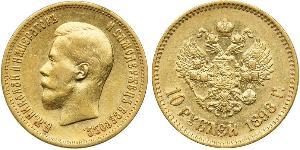
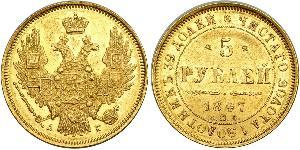
The most cherished examples from these archives are often gold pieces struck during the reigns of Nicholas I and Alexander III, where artistic standards reached a peak before industrial conflict disrupted production quality later in the century.
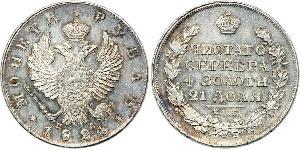
- Nicholas I Silver Rouble: Issued widely across major cities including Kazan and Odessa mints. This piece is notable for its stern military portrait reflecting the strict order of his administration. It represents economic stability during an era when agriculture dominated trade but industrialization began in St Petersburg.
- Alexander III Gold Double Eagle: Perhaps the most iconic symbol of imperial wealth before World War I. These coins often carried a high-relief finish that showcased intricate eagle wings and crowned figures. They reflect confidence in national stability and economic growth driven by industrial expansion across Western Russia.
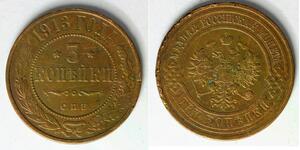
- Catherine II Copper Denars: While less common today due to corrosion, these early copper pieces mark the transition from purely silver trade items toward diverse denominations needed for rural commerce throughout peasant districts of vast farmlands bordering European neighbors.
Cultural Legacy
The design elements found on Imperial coins reflect deep ties between religious identity and governance. You will notice crosses upon the obverse side in earlier periods, representing adherence to Orthodox belief alongside secular imagery including coats of arms featuring two-headed eagles that denote rule over vast lands.
Symbols used were not chosen at random; every detail served a political purpose meant to bind subjects into loyalty toward their monarch. The presence of wheat stalks on reverse sides celebrated agricultural abundance critical for feeding both domestic populations and export markets, while naval anchors signified maritime expansion secured under Peter I's reforms.
For collectors
The legacy of this great power continues to captivate those who study monetary history today. These coins provide tangible evidence of a civilization that shaped global trade dynamics for centuries before the geopolitical order shifted dramatically in early twentieth century events not covered by modern political commentary here.
We encourage new buyers and seasoned hobbyists alike to examine these pieces as windows into their respective eras, appreciating craftsmanship where engraving captured both face features and national symbolism. Whether you seek gold specimens or silver circulation issues from different regions across the empire, each coin carries within its weight a piece of history worth preserving.
In short study remains valuable because understanding them reveals how empires managed their economies through physical media designed to command respect while facilitating commerce on an unprecedented global scale for nations that sought prosperity under such vast and diverse imperial flags during this period of significant historical change across Europe Asia borderlands before the twentieth century turned toward new challenges.