| View |
| preceded by | ||||
|
||||

|
|||||||
 Tsardom of Russia (1547-1721)
|
|||||||

| succeeded by | ||||
|

| Tsardom of Russia (1547-1721) | Link to Wikipedia |
Tsardom of Russia: History, Coinage and Collectibles
The story of the Tsardom of Russia is one of consolidation, expansion, and profound transformation from a regional principality to the heart of an expansive European power.
Historical Background
To understand the coins minted within its borders, one must first appreciate the geography that defined it. The region evolved over centuries following the decline of Kievan Rus and centered around Moscow in the 15th century under Ivan III (the Great). By uniting various Russian principalities under a single rule, this era established diplomatic relations with European powers, which necessitated a sophisticated monetary system capable of facilitating international trade.
The transition from feudal tribute to state currency was driven by economic needs. Merchants traveled along the Volga river and the Silk Road routes connecting Europe to Asia. This flow of goods required standardization in weights and measures that could not be fulfilled simply through barter or foreign coin imports like Venetian Ducats.
The reigns of Ivan IV (the Terrible) brought a period where expansionism into Siberia pushed borders far eastward, requiring local control over resources. As the state grew stronger, it sought to centralize economic power in Moscow rather than leaving trade privileges solely with merchant guilds or foreign powers like Poland-Lithuania and Sweden.
Currency and Coinage History
The monetary system was heavily influenced by necessity during this pre-Imperial period. The primary unit of value derived from silver, specifically the Ruble concept imported through trade networks with Northern Europe. Early attempts to create local currency focused on establishing trust in domestic production over reliance on foreign debased coins.
A critical development occurred when Ivan IV reformed the coinage standards to reduce dependency on German mints and Taler imports for large scale transactions. This period marked a shift where minting technology moved from simple casting methods used by medieval princes toward hammer-strike techniques adopted during the 16th century.
The currency hierarchy stabilized around subunits like the Kopek, allowing smaller trades to occur alongside international payments made in larger denominations known as Polushkas. This transition established a clear link between state sovereignty and economic health; if trade failed or debasement occurred without permission from the central government, it signaled instability.
Mints and Coin Production
The primary location for production was Moscow itself, specifically within workshops that served directly under royal supervision. During earlier decades of the Tsardom, coinage had a somewhat rustic character with simple die strikes often showing signs of hand-planing irregularities.
Craftsmanship improved significantly as European artisans brought their skills to the capital in exchange for commissions on gold and silver plate or jewelry work that transitioned into mint designs. The technology used allowed mints to produce high-quality images, which were essential because coins often served as a form of mobile art representing the autocrat.
The distinction between local peasant money intended for regional agriculture versus state currency meant for commerce created different standards within the same realm. While lower denominations might show less detail due to smaller bullion value available for minting, higher face value pieces carried detailed heraldry and portraits that served as propaganda tools reinforcing loyalty.
Notable Coins
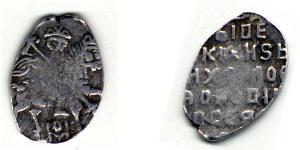
The early reign of Ivan IV produced a distinct series known among collectors. These were primarily struck in the shape of Kopeks but represented various denominations used within different parts of expanding territory, often bearing inscriptions relating to the Tsar’s name.
- Coin Context:
The first notable piece features a cross design on obverse and reverse indicating its use in early commerce before portraits were mandated. The double-headed eagle eventually appeared, distinguishing itself from single headed designs used by regional princes.
- Coin Context:
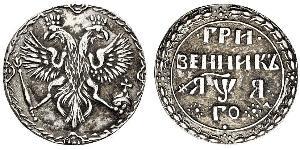
Silver Polushkas are highly sought because they reflect the specific economic reforms of late 16th century Russia. Their design included a crowned figure and often showed intricate work that demonstrates high artistic skill before Peter I imposed stricter aesthetic rules.
- Coin Context:
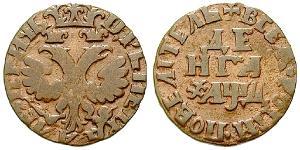
Larger denominations struck to replace foreign imports were critical for state revenue collection during wartime periods when internal trade shifted toward domestic currency only. These coins feature more robust iconography designed specifically for export use in diplomatic exchanges with European courts.
Cultural Legacy
The coinage of this era encapsulates the religious identity and national pride that defined its people. Images of Saint George slaying a dragon frequently adorned the edges or central fields, symbolizing Christian virtue over pagan forces encountered during territorial expansion into Siberia and Central Asia.
Heraldry played an evolving role in numismatic design as well. While Western European monarchs often adopted double-headed eagles derived from Byzantium, Russian usage adapted these symbols to reflect local customs rather than strict adherence to the Italian style prevalent at that time.
For collectors
The historical significance of this era ensures its enduring appeal in the numismatic world. Collectors look for pieces bearing the seal of Tsar Ivan IV or his contemporaries because these define a unique cultural period before modern borders were drawn as we see them today.
- Rarity and Condition:
Pieces from earlier periods often show lighter weight due to inflationary pressures, making survival in pristine condition highly desirable for serious study. However, even worn examples offer insights into how currency circulated through daily markets across the vast landscape.
- Cultural Education:
For a numismatist building an international collection, these coins provide context regarding trade routes between Europe and Asia. Understanding why certain types exist alongside others helps explain broader geopolitical events that occurred hundreds of years prior.