| View |
| preceded by | ||||
|
||||

|
|||||||
 Russian Soviet Federative Socialist Republic (1917-1922)
|
|||||||

| succeeded by | ||||
|

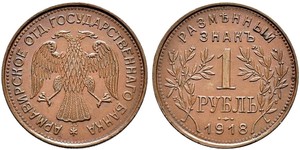
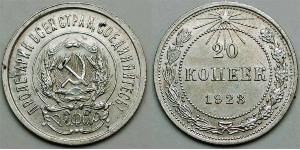
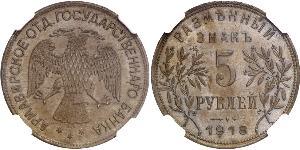
| Russian Soviet Federative Socialist Republic (1917-1922) | Link to Wikipedia |
Russian Soviet Federative Socialist Republic: History, Coinage and Collectibles
Welcome, fellow connoisseurs of history. Today we delve into the fascinating world of the Russian Soviet Federative Socialist Republic, a nation whose legacy is etched not only in stone but also in metal. This region occupies a pivotal space in modern economic narratives where state power was once synonymous with monetary control. Understanding this coinage offers more than just an appreciation for metallurgy; it provides insights into how trade flourished or faltered under the weight of ideological transformation.
Historical Background
The history of this region is one often associated with dramatic shifts in power and economics, moving from a vast imperial empire to an industrial powerhouse. In the late nineteenth century, before major upheavals occurred, Moscow served as the global center for financial innovation under Nicholas II, issuing coins that were admired worldwide. However, following 1920s reconstruction efforts, the focus shifted entirely toward building infrastructure and stabilizing currency after years of revolution and scarcity.
The early decades established a unique economic culture where every coin held weight in both commerce and social policy. For collectors looking at this period, understanding that these metal tokens represented stability during times of immense societal flux is crucial. The economy was restructured rapidly to prioritize industrial output over traditional agriculture or barter systems.
This era marked the decline of gold-backed currency standards which gave way to fiat money management entirely controlled by a central state apparatus. While battles and wars defined the political headlines, coinage served as silent witnesses that recorded recovery efforts in their composition and weight. For any buyer today, appreciating this context transforms these objects from mere paper-like metal into tangible pieces of economic resilience.
Currency and Coinage History
The evolution of money here followed a rapid progression shaped by necessity rather than tradition. Following the 1930s stabilization, circulation coins were minted to facilitate daily trade for ordinary citizens in factories and offices. Unlike previous imperial currency which featured diverse religious iconography or monarch portraits, these early Soviet pieces prioritized uniformity.
The introduction of new denominations such as ten kopeks and rubles marked a move toward higher value transactions required by an industrializing society. By the 1960s, coinage began shifting away from circulation into commemorative categories intended for export or collectors rather than daily use. This was part of a broader policy to control inflation through precise state management without relying on scarce precious metals.
The role of coinage changed significantly after World War II as the economy reoriented toward heavy manufacturing and space exploration achievements funded by metal reserves in banks. These were not just items for purchase but often served as proof pieces that displayed technological capability to the rest of the world, distinguishing them from standard trade money issued elsewhere.
Mints and Coin Production
The minting tradition was centralized around Moscow, where skilled artists worked under strict artistic guidelines. While other production centers existed within wider administrative boundaries, Moscow remained dominant due to its industrial capacity and the concentration of design talent. The technology used here evolved from manual strikes on heavy presses to semi-automated lines that prioritized speed over intricate detail.
Artistic characteristics distinguish these issues significantly for buyers looking at surface quality rather than rarity alone. While some early pieces featured fine artistic backgrounds, later periods favored bold strokes and geometric designs representing the collective workforce. This approach meant collectors today must evaluate condition carefully as surfaces often showed wear from heavy industrial use in earlier decades.
Notable Coins
To understand what makes these coins valuable to connoisseurs of history or modern enthusiasts, consider a few iconic issues. The aluminum bronze coin featuring Lenin with a star background is the most recognizable symbol produced by this era. Historically significant for its ubiquity, it represents a period where simplicity was preferred over elaborate decoration.
This design appears across multiple denominations and dates from 1960s onward when standardization took place. Collectors often prefer early dates because of their historical proximity to the initial post-war economic adjustments or specific proofs that feature polished fields contrasting with frosted designs on obverse portraits. While modern editions exist, older specimens tell a story about supply limitations during reconstruction.
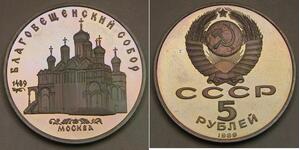
Another area of interest for buyers involves non-circulation medals issued alongside regular currency in certain years like 1980s which celebrated major state anniversaries. These differ sharply from daily circulation items as they utilized higher metal content and were designed with an eye toward international exhibitions rather than local shopkeepers.
Cultural Legacy
The coinage of this republic reflected its culture by prioritizing symbols of unity, progress, and the ruling ideology over individual expression. The image found on these coins remained largely unchanged for decades as portraits were meant to embody timeless leadership rather than aging individuals. For collectors viewing them today through a historical lens, this consistency represents an era defined more by collective ideals than personal branding.
Economy was also represented in design elements like the use of wheat ears or industrial symbols appearing briefly before being simplified into stars for mass production. These artistic choices were not accidental but deliberate signals to foreign governments and domestic workers alike about where national strength lay—within its factories rather than its heritage sites alone.
For collectors
The historical significance remains relevant today as a means of accessing economic data that survives outside official records. These coins remain important because they allow buyers to own small fragments of history without needing large investment sums for rare items, making them accessible entry points into serious study.
- Careful attention should be paid to condition grades rather than just metal content when assessing worth.
- Early issues often hold value due to historical scarcity and the transition from barter economies toward state currency standards.
The appeal lies in acquiring an object that has handled history directly as part of global trade networks before becoming museum quality artifacts today. For those interested in numismatics, these items offer a unique opportunity to study how nations manage inflation without gold reserves and create national identity through metal.