| View |
| preceded by | ||||||||||
|
||||||||||


|
|||||||
 Nazi Germany (1933-1945)
|
|||||||
|
|||||||


| Nazi Germany (1933-1945) | Link to Wikipedia |
Nazi Germany: History, Coinage and Collectibles
Historical Background
The history of the German monetary system during this period is inextricably linked to one of the most turbulent eras in modern European experience following World War I. After the economic chaos caused by hyperinflation had devastated the Weimar Republic, the economy sought stability through strict regulation and state intervention under new political leadership. This shift fundamentally altered how money was perceived and utilized across trade networks. The regime prioritized autarky, or self-sufficiency within national borders, aiming to control imports and exports with ironclad government oversight.
Coinage evolved from a symbol of republic currency into an instrument of state propaganda during the consolidation years leading up to global conflict. While early issues still retained elements of pre-war aesthetics in many mint operations, later designs were strictly controlled by centralized authorities within Berlin. As military conflicts expanded across Europe and trade routes became blocked, the domestic economy was forced to rely on a strict cash transaction system because credit instruments disappeared under rationing laws.
Civil unrest after 1930s economic crises left deep marks on national identity that were reshaped through monetary symbols before eventually turning into wartime austerity measures. This historical context sets the stage for understanding why certain coins carry such high significance to those interested in the material culture of war times, as they represent a specific transition from peacetime economics to total command economies.
Currency and Coinage History
The currency system underwent profound changes during this period. Initially, money was issued based on silver standards with some gold backing until reserves were melted down for war efforts beginning in 1940. This forced a shift away from precious metal coins into the era where paper currency became more dominant even if bronze and nickel remains circulated alongside it.
The central bank began reducing mint production significantly during later years of hostilities as resources needed to be diverted toward military needs rather than public circulation coinage. By 1945, silver content was removed entirely from circulating coins because the metal became too valuable for other uses like ammunition casings or machinery parts.
This transition is vital for collectors understanding the composition changes visible when examining older pieces versus later wartime strikes. The Reichsmark designation continued legally throughout most of this era despite currency reform measures in occupied territories where special versions were issued only under direct orders from Berlin headquarters regarding supply logistics rather than artistic preference or historical continuity.
Mints and Coin Production
Berlin served as the primary center for production, supported by branches located in Hamburg, Munich, Karlsruhe and other major German industrial cities which had operated before 1930. These facilities utilized modernized striking technology inherited from late nineteenth century advances to produce high volume batches needed even during wartime shortages.
Mint masters were tasked with designing new dies that incorporated specific political symbols required by the central government leadership, while strictly avoiding designs deemed politically unsuitable or too reminiscent of previous regimes before these periods. This led to a distinct stylistic evolution where artistic ornamentation gave way to stark functionalism and propaganda messaging in die cuts.
The shift in production focus meant fewer high quality proofs were made because the emphasis moved toward mass circulation coins that could pay wages for soldiers or purchase food ration cards rather than serving as trade items internationally. Consequently, most surviving examples of later dates show signs of lighter metal alloys used to reduce resource consumption during global conflicts.
Notable Coins
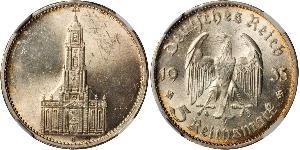
The 1934 silver five Mark piece is perhaps one of the earliest significant issues recognized by collectors today as a transition coin showing high quality artistry before rationing began. This particular issue features a detailed design that reflects the shift from Weimar artistic styles toward more militaristic motifs.
- The Occupation Marks issued in Belgium and occupied Netherlands during 1940-1945 serve as key examples of currency control mechanisms used by German administration within other countries rather than their own territory. Collectors look for specific inscriptions marking these issues distinct from domestic circulation.
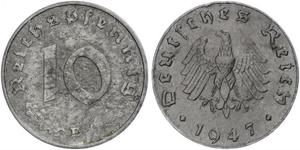
- The final emergency bronze coins struck in 1943-1945 represent a desperate end to the era where precious metal reserves had been completely exhausted under pressure of war needs. These pieces are highly sought after because they illustrate how quickly economic reality dictated die production.
- Larger denomination notes also existed alongside coinage, but collectors focus on coins due to wear patterns that indicate circulation life during wartime which is much more informative about history than pristine banknotes from occupied zones.
Cultural Legacy
The design choices embedded in these metal objects reflect a specific worldview prioritizing national unity and militaristic ambition over individual artistic expression. Symbols appearing on the edges of coins, including inscriptions regarding imperial eagles or other imagery served to reinforce state authority at every transaction point across German territories.
Cultural impact extends beyond visual art into economic psychology as well since these items were daily reminders that personal savings could be affected by government policy directives rather than free market forces alone. This shift away from traditional banking toward strict monetary control is a significant topic of study for historians examining how regimes manipulate material culture to maintain social cohesion during unstable times.
For collectors
Nazi Germany remains important today because these items provide tangible evidence regarding the transition into modern industrial warfare and its effects on everyday life. For serious students of history, each piece offers a glimpse at economic struggles that were not just theoretical but physically felt by families buying bread in 1940s Europe.
The condition of any example found can tell stories about how well preserved items survived decades of neglect or careful storage after being unearthed from ruins. Understanding the specific mint marks and production dates allows enthusiasts to appreciate historical events without needing deep academic study but simply knowing which issues correspond with known military campaigns or regime changes helps frame collection strategy for future auction seasons.