| View |
 Gdansk (1920-1939)

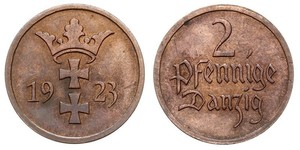
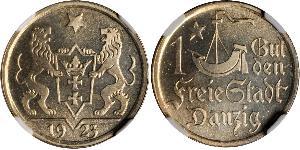
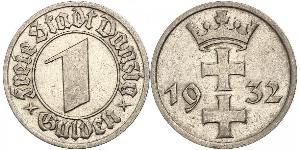
| Gdansk (1920-1939) | Link to Wikipedia |
Free City of Danzig: History, Coinage and Collectibles
Historical Background
Welcome to the story of one of history’s most fascinating diplomatic compromises. Between 1920 and 1939, the world knew this unique entity as the Free City of Danzig (or Wolne Miasto Gdańsk). It was a city-state under League of Nations supervision, yet it lived on the precipice between two superpowers: Germany to the west and Poland to the east. Its origins can be traced back centuries earlier when merchants traded grain along the Vistula River, turning this Baltic port into one of Europe's most dynamic commercial centers.
The geopolitical tension in Danzig is as palpable today as it was a century ago on paper or metal. While roughly 90% of its population identified with German culture and politics, its economy relied heavily on Poland. It had access to the sea via the Vistula River's mouth but needed Polish permission for customs and defense matters—a delicate balance written into Article 100 of the Treaty of Versailles. This tension created a unique cultural environment where Dutch architectural styles from earlier trade eras stood beside newly built Polish infrastructure in Gdynia, which was developed as a rival port to bypass Danzig's restrictive rules.
In this volatile landscape, money became more than just commerce; it became an instrument of political autonomy. The city straddled the Vistula Fens and stretched from hilly Kashubian Lake District terrain down to its coastline. By 1936, local tensions rose as Nazi agitation grew, but until World War II erupted in September 1939, Danzig remained a bustling hub where currencies of different ideologies rubbed shoulders with one another.
Currency and Coinage History
To understand the monetary life of Free City of Danzig, we must look at its transition from an era of imperial oversight to self-governance. For decades after World War I, as a League protectorate under German leadership but with Polish economic oversight regarding port dues, the region utilized currency systems that reflected this dual allegiance.
Coinage in this territory evolved rapidly during these fifteen years of independence from standard German rule while remaining economically tied to Weimar and later Nazi Germany's monetary standards. The city used Marks issued under Reichsbank supervision initially, but as autonomy was asserted over foreign policy within the League mandates, distinct bank notes were often circulated alongside coins.
The financial architecture was complex because "independence" was partial; customs unions with Poland meant that trade goods moved in a specific fiscal rhythm. As commerce passing through Gdynia eventually surpassed Danzig's own volume by 1936—thanks to the Polish Corridor—the monetary landscape shifted again, as new banks and local financial institutions began to dominate the region.
Coinage played a crucial role during these decades of political tension. Every coin struck in Danzig was an artifact of diplomacy; it showed whether this autonomous entity could assert its own authority or if it merely stamped itself with German imagery while acknowledging Polish customs oversight at ports like Tiegenhof and Neuteich.
Mints and Coin Production
During the interwar period, minting operations were heavily centralized. Because Danzig was essentially a territory rather than a sovereign nation-state in its own currency issuance context initially, much of coin production relied on German standards and technologies brought from major centers like Berlin or Karlsruhe.
However, under the oversight of League authorities, local workshops adapted these methods to serve both German-speaking citizens (who were the majority) and Polish minorities. The minting traditions here reflect a high degree of precision typical of Prussian engineering at the time. Coins produced in this area often featured intricate engravings depicting maritime life—the Vistula Spit, sailing ships loading grain—and local industry.
The production technology evolved from standard mechanical presses to semi-automated systems by 1930s standards. However, it is important for collectors to remember that the minting was not always about volume; some years saw limited issues meant specifically to mark diplomatic events or trade agreements with Poland and France.
Notable Coins
The following coin types are of particular interest when examining a collection from this region:
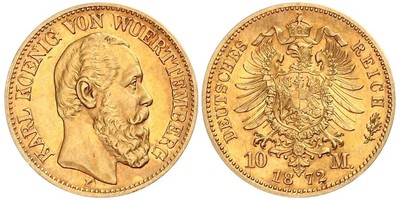
- Reichsmark Circulation (Danzig Period): This is perhaps the most recognizable piece. These coins were standard German Marks minted for local circulation but carried subtle legal distinctions regarding "Free City" authority versus Reich law. The obverse often featured imperial portraits, while reverses showed coats of arms that reflected either the free city administration or Polish oversight in port areas.
The Gdynia Port Transition Coins: As Poland constructed its new seaport at Gdynia and trade shifted northward by 1936, coins found near this border zone sometimes bore different mint marks. These are historically significant as they mark the decline of Danzig's economic dominance.
- Sovereign Notes (Danzig Bank): While not strictly "coins," bank notes issued during these years carry great aesthetic value to paper money collectors, though this article focuses on coinage. These notes often depicted local architecture—the distinctive Dutch-style brick houses and warehouses built by merchants in the 16th century—linking modern currency back to centuries of trade heritage.
Certain coins are highly collectible not for their intrinsic metal value, but because they were minted under a brief period where Germany's legal jurisdiction existed separately from Poland. These pieces serve as tangible records of the political compromise forced by Woodrow Wilson’s Fourteen Points and later enforced treaties.
Cultural Legacy
The coinage of this era tells the story of "The Amsterdam of the East." The imagery stamped into metal reflected a city that was predominantly German-speaking yet physically connected to Poland. We see symbols of maritime commerce, grain barges on the Vistula River, and industrial factories lining these pieces.
Cultural identity played a major role in artistic choices for coin designers. Religious symbols—Catholic imagery given Danzig's Polish minority population—and secular motifs from the League Nations mandate appear together. The coins serve as small art objects showing how two nations shared one harbor while fighting over sovereignty.
For Collectors
The legacy of this state remains significant for numismatists today. It represents a unique chapter in European history—a brief experiment where trade and diplomacy created a financial system that bridged German industrial capitalism with Polish agricultural export needs. The coins from the Free City era are valuable educational tools, illustrating how monetary sovereignty is often tied to political survival.
This small city-state’s existence was short-lived; by 1939 it ended in turmoil and eventually absorption into a larger geopolitical sphere after World War II. Yet, for collectors interested in border regions or League of Nations artifacts, this material history offers depth beyond simple catalog entries. These items remind us how money has always been an ambassador between nations.