| View |
| preceded by | ||||
|
||||

|
||||||||||||
 Weimar Republic (1918-1933)
|
||||||||||||
|
||||||||||||


| succeeded by | ||||
|

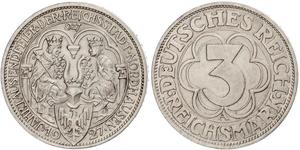
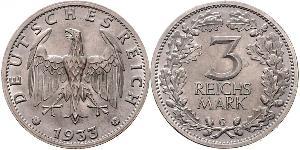
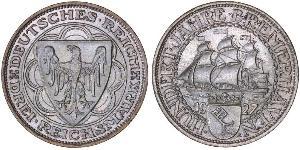
| Weimar Republic (1918-1933) | Link to Wikipedia |
Weimar Republic: History, Coinage and Collectibles
Welcome to the world of one of history’s most transformative political experiments in monetary terms. This period marks a fascinating chapter for those who appreciate both numismatics and broader historical currents. The years between 1918 and 1933 are often associated with economic turbulence, but they were also a brief interlude where modernist ideals flourished before the rise of totalitarian structures that would fundamentally change European artistry forever.
Historical Background
The establishment of this democratic republic marked an abrupt end to over three centuries of imperial rule. Following the conclusion of global conflict, Germany entered a period defined by political instability and economic reorientation. The shift from Kaiserreich authority was profound not just in government structure but also in cultural life. Artists, thinkers, and creators embraced new forms known as Expressionism and later Art Deco during this era.
This democratic experiment did last for fifteen years before the 1930s, yet its monetary legacy is complex because of economic pressures facing a shattered nation. The war had left Germany with heavy reparations obligations that strained trade relations across Europe. Consequently, commerce could no longer rely on standard bullion backing as easily in previous decades. Instead, financial instruments and paper money became the primary medium for daily transactions, fundamentally altering how collectors view value from this period.
Currency and Coinage History
The evolution of currency during these years is a unique study in economic survivalism rather than metal production. During World War I, silver and gold coins had ceased to be standard legal tender for circulation due to shortages of precious metals. This suspension continued into the early Weimar years as hyperinflation took hold.
The most significant development occurred during 1923 when value systems collapsed entirely under inflationary pressure leading to the introduction of stabilization notes known by different denominations before settling on a new Reichsmark standard in 1924. This currency reform was critical for restoring order, yet it rendered silver and gold circulating coinage obsolete as domestic money.
This shift left collectors with few options other than specialized commemorative issues or high-denomination bullion pieces produced under authority of the state during a time when paper was king. These coins served more as proof-of-concept or foreign trade tokens rather than everyday change for German citizens at the cash register.
Mints and Coin Production
The central minting operations were concentrated within the Berlin Mint facilities, which had long stood under Imperial direction before shifting administrative control during this democratic era. The technology remained consistent with late 19th-century standards but saw rapid changes in artistic application.
- Berlin served as the primary authority for all major production runs authorized by the central state bank or financial office.
- Semi-official mints also produced high-grade proofs to celebrate centenary events related to German unification history before 1920s stabilization ended most coin strikes.
The artistic characteristics of these issues reflect a transition from traditional realism toward the stylized border work typical of early twentieth-century modernism. The famous eagle designs found their way into borders that utilized geometric shapes and sharp angles to mimic contemporary industrial design trends prevalent in Europe at large.
Notable Coins
For serious collectors seeking pieces from this specific historical timeframe, the most sought-after items are often commemorative gold strikes or high-grade denominations produced during transitional moments of stabilization. These pieces hold immense interest for those valuing provenance over face value.
The Stabilization Marks
The 1924 Reichsmark issues represent a turning point where the Republic finally achieved economic parity with international standards again. While most were paper, collectors occasionally encounter silver or gold commemorative versions produced to celebrate this recovery in national currency status.
Silver Proof Sets
These are rare because standard circulation was halted shortly after 1924 as the hyperinflation crisis concluded with a decisive shift back to fiscal stability. These pieces often display intricate details that highlight skilled craftsmanship during an era of artistic renaissance.
The Last Imperial Marks
Bridging between Empire and Republic, some transitional issues retained older motifs while carrying new republican inscriptions, creating unique hybrid designs for collectors studying the evolution of state imagery.
Cultural Legacy
The coinage and monetary artifacts from this period are physical imprints of a culture trying to rebuild trust through artistry rather than military force. The symbols used on these metal pieces reflect values such as democracy, reconstruction, and industrial modernism found across Europe during the 1920s.
Silver content diminished not just due to economics but because society moved away from precious metals toward paper fiat currency systems that persist today in most parts of our world. This transition makes surviving pieces a testament to an era before digital finance and plastic money dominated global markets completely.
For Collectors
The legacy remains vital for those interested in the intersection of economy, art history, and political science. These objects serve as witnesses to a brief moment when Germany sought democratic stability after years of authoritarian rule but were eventually interrupted by regime change that altered all subsequent coinage designs permanently.
Possessing pieces from this era allows you to hold tangible artifacts representing the final days before modern totalitarianism consolidated control over national industries. The scarcity resulting from suspension of standard mint operations combined with their high artistic merit creates a specific value profile distinct from other historical periods where mass-produced change was common.