| View |
| preceded by | |
|
|||||||||
 Duchy of Saxe-Altenburg (1826 - 1920)
|
|||||||||


| succeeded by |

| Duchy of Saxe-Altenburg (1826 - 1920) | Link to Wikipedia |
Saxe-Altenburg: History, Coinage and Collectibles
Historical Background
To understand the numismatic legacy of Saxe-Altenburg is to examine one of the smallest yet most politically intricate pieces within the patchwork of Imperial Germany. Situated in what is now Thuringia, this duchy represents a fascinating chapter in German history where micro-states played significant roles despite their modest size and population figures from the nineteenth century.
The region was born out of the partitions that reshaped Saxony following the Reformation, eventually falling to the Ernestine branch of the House of Wettin. While politically fragmented—often split between Ostkreis (the eastern district) and Westkreis by administrative borders—the duchy retained a distinct identity for centuries under its sovereign dukes.
The political landscape here was defined not just by local rule but also by strategic alliances with neighboring German powers like the Habsburgs. The capital of Altenburg served as a minor hub on significant trade routes, facilitating commerce that required standardized currency to function across borders. This era fostered a specific cultural identity, blending traditional Saxon heritage with the growing influence of Enlightenment thought.
The economic foundation was rooted in agriculture and forestry, industries visible today through historical imagery but critical then for minting policies. Silver flowed into these economies alongside grain and timber wealth, necessitating robust coinage systems that were often dependent on external inputs until local silver mining or importation could stabilize the monetary supply.
Currency and Coinage History
The evolution of currency in Saxe-Altenburg mirrors broader shifts within German numismatics. Early history was defined by a reliance upon Imperial Thalers, but as the region gained autonomy under Ernestine rule, local authorities began to assert control over specific denominations.
Sovereign authority manifested most clearly through minting privileges granted to various rulers. Over centuries, the dukes issued coins that were legal tender within their territories and often recognized in neighboring principalities during times of political unrest or economic fluctuation. The transition from independent mints with unique local designs occurred gradually.
In later periods, the coinage history reflects a complex relationship between these smaller states and German nationalism. By 1873, all Thuringian duchies were required to adopt coins minted in Weimar or other central locations under a unified monetary standard of Mark pieces for circulation alongside older silver issues. This era marked a shift away from localized currency toward national standards.
Mints and Coin Production
Saxe-Altenburg's coin production was constrained by its physical size, leading to the utilization of shared minting rights or reliance on centralized facilities in larger Ernestine territories like Gotha. However, this limitation bred a unique numismatic charm; many specimens found today reflect limited edition runs.
Minting traditions often utilized copper alloys for lower denominations while reserving silver and gold for high-value pieces displaying the coats of arms—typically featuring the red lion on white shield that defined Saxon heraldry. Production centers varied between private operations run by local government authorities and contracted minters in neighboring principalities.
The craftsmanship displayed during these centuries was consistent with Imperial standards but carried specific stylistic preferences. Engravers from regions like Nuremberg or Berlin were frequently employed, bringing their artistic influences to the capital of Altenburg while maintaining a focus on detailed heraldry and dates marking reigns ending in significant political transitions.
Notable Coins
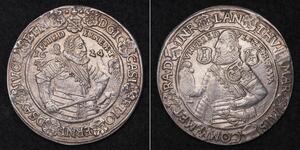
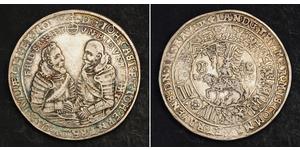
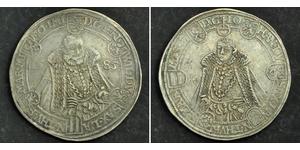
The collectors of Saxe-Altenburg pieces are primarily drawn by rare silver coins issued during specific eras. One particular highlight involves the Silver Thaler (Gulden), which, despite being part of a regional union system in later years, often bore distinct mint marks for Altenburg that were less common than those found on larger states.
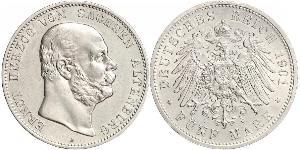
Another significant group comprises the Gold Sovereigns and Imperial Half-Unzen issued towards the turn of the twentieth century. These pieces carried specific monograms or portraits reflecting ducal families such as Ernst I, providing a tangible link to local governance even after national unification was accepted in spirit if not always politically.
Copper pfennigs represent another accessible entry point into collecting this region's numismatics, particularly those minted prior to the 1873 reform. These low-denomination coins provide evidence of daily commerce and often feature intricate designs on both obverses and reverses that distinguish them from mass-produced national currency.
Cultural Legacy
The coinage left a profound imprint on regional identity, blending the heraldic symbols of Saxon tradition with artistic trends prevalent in Central Europe. The depiction of ducal arms served not only as identification but also as an assertion of local pride within a fragmented empire.
Symbols used include references to St. James' church and other historical monuments that connected ancient heritage with the contemporary rulership, often seen in the reverse designs or die cuts from late nineteenth-century strikes. These artistic choices reflected both reverence for history and forward-looking modernism inherent in German culture during this period.
For collectors
Saxe-Altenburg remains vital to numismatic collections today not because it was wealthy, but precisely because of its constraints that produced rare varieties. Condition is paramount; given the age and often small mintages for lower denominations, many high-grade examples are difficult to find outside specialized auctions.
The historical narrative embedded in these coins spans centuries—from imperial autonomy under the Holy Roman Empire through Napoleonic interventions back into local consolidation before final integration as part of German states. For auction buyers or museum pieces alike, these items offer a tangible connection to Thuringian life that cannot be replicated by artifacts from larger kingdoms.