| View |
| preceded by | ||||
|
||||

|
||||||||||||
 North German Confederation (1867 - 1871)
|
||||||||||||
|
||||||||||||


| succeeded by | ||||
|

| North German Confederation (1867 - 1871) | Link to Wikipedia |
North German Confederation: History, Coinage and Collectibles
Historical Background
Welcome to our gallery of history where time is frozen between steel and gold. To understand this brief but pivotal era in the numismatic landscape, one must first appreciate how Europe shifted from a fragmented map towards modern nationalism.
- The Rise of Prussia:
In 1867, following decisive military victories and diplomatic maneuvering by Otto von Bismarck, the North German Confederation was formed. This entity represented a major turning point in European history because it excluded Austria while uniting most of the northern principalities under Prussian leadership.
- Economic Integration:
The foundation of this political unity was already laid by economic necessity; states were joining together to form stronger trade blocs. The Confederation formalized these unions and created a legal framework that allowed for the free flow of commerce across previously hostile borders.
Currency and Coinage History
Moving from fragmented local currencies into a unified system was not just an administrative decision, it was an act of economic statecraft. Before 1867, travelers carrying silver change often faced the headache of dozens different weights and standards.
- The Thaler Standard:
Coins minted by this federal body were heavily influenced by the Prussian monetary standard which relied on a solid piece of silver called the Thaler. By adopting common weight measures, they created stability in trade while laying groundwork for the gold mark system later introduced after 1873.
- The Gold Shift:
In this transitional period before the full establishment of the German Empire as we recognize it today, silver coins dominated daily transactions. These early attempts at federal currency demonstrate how Germany was navigating away from pure bullion backing to a paper-currency backed system that would eventually define modern banking.
- Prestige and Standards:
Negotiating the value of gold coins for high-value transactions required precision. These early experiments show how finance became an instrument of political will to ensure that Germany's economy could compete with France, Britain, or Italy on equal footing.
Mints and Coin Production
The minting operations during this period highlight the efficiency achieved through Prussian leadership while still respecting local traditions. It was a unique arrangement where mints produced coins for states that were technically sovereign under federal law.
- Berlin:
This central mint became busy producing not only currency but also medals commemorating the unification process, reflecting how history itself could be captured in metal. It was a place where gold and silver were measured by weight with exactness.
- Hamburg:
The Hamburg mint continued operations while adapting designs to fit federal specifications rather than local ones. This shift is interesting when examining how coins moved from regional symbols of independence into tools representing a collective nation-state identity emerging within the heartland.
- Minting Techniques:
Silversmithing techniques evolved during this short window, moving away from rougher hammered pieces toward mechanically stamped production. The sharpness of these engravings speaks volumes about industrial capability in the German states before World War I.
- Evidence:
You can feel quality simply by holding a specimen; there is usually excellent detail on high-grade silver pieces from this era, which was essential for public trust and acceptance of money across borders without the need to carry heavy coins.
Notable Coins
If we examine our display case, several specific types stand out as historical landmarks. These items represent more than just economic value; they are tangible evidence of political change captured in metal.
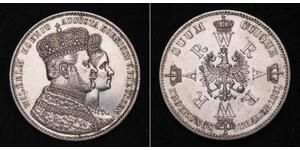
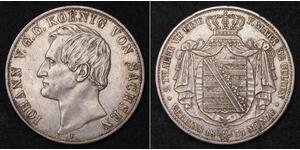
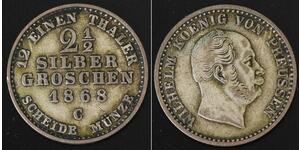
- The 1867 Thaler featuring heraldic shields: This silver coin depicts the combined arms and crests that symbolized unity under Prussian sovereignty, offering collectors a glimpse into how national symbols were adopted from local to federal levels. The reverse often featured a crowned shield or denomination clearly stamped in bold lettering.
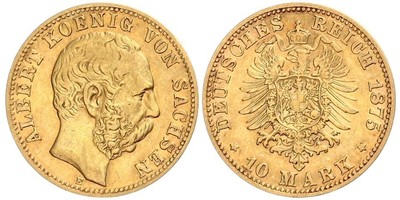
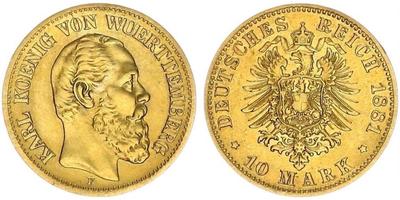
- The Gold Pieces of 1870: Minted for international trade purposes and high-value transactions within the customs union, these coins carried the weight of gold bullion standards established before World War I. They were often issued by individual states minting under federal authorization or as sovereign currency during this unique period.
- The Copper Cent Pieces: Though smaller in size, copper denominations helped standardize commerce for rural merchants and farmers who used them daily to buy salt bread locally before moving further afield. These coins provide an entry point into the numismatics of working class life during rapid industrialization.
This selection helps you understand how various metals were utilized according to their practical function while maintaining consistency across regions so merchants would not be penalized when traveling outside city limits in search of trade opportunities.
Cultural Legacy
- National Identity:
The imagery used on these coins served as propaganda tools that promoted a sense of shared culture and destiny among German peoples from Hamburg to the north. These symbols reflected deep cultural values, often depicting scenes related to agriculture or industry which were sources of local pride at time.
- Ancient Traditions:
The use of heraldry on silver coinage connected modern governance with older traditions from centuries before. This was a deliberate choice by designers who understood how history could anchor political legitimacy for new governments forming within Europe.
- Economic Symbols:
Corn sheaves or ship masts depicted on the obverse side often represented agricultural wealth, while industrial gears hinted at growing factory production. These choices were not accidental; they communicated economic stability to international buyers and domestic investors alike.
For collectors
You hold a small piece of history whenever you touch one of these silver coins from the mid-nineteenth century. They are prized today because their survival is linked directly to how briefly this political configuration existed before being absorbed into the German Empire proper in 1871.
- Rarity: Many issues were minted for short periods and then recalled or replaced by later standards, leaving few pieces remaining in high grades.
This scarcity makes them interesting additions to any cabinet focusing on transitional European states where political boundaries changed significantly.
- Investment Value:
The coins from this era are not merely metal, they represent economic evolution and the birth of modern Germany. While values fluctuate based on condition and market demand for specific types like silver thalers or gold crowns used internationally during that time period.
- Motivation:
Diversifying your collection to include these transitional issues provides insight into how finance systems adapt when nations grow stronger. For the historian and collector, there is no better way than examining a silver piece bearing federal insignia from 1867.