| View |
| preceded by | ||||
|
||||

|
|||||||||
 Free State of Prussia (1918 - 1947)
|
|||||||||


| succeeded by | ||||
|
| Free State of Prussia (1918 - 1947) | Link to Wikipedia |
Free State of Prussia: History, Coinage and Collectibles
The legacy of the Free State of Prussia is etched deeply into German history, representing a pivotal era where democracy emerged from monarchy within one of Europe’s most influential regions. For numismatists and historians alike, this territory represents not just political transformation but also the evolution of monetary identity during a turbulent century.
Historical Background
The Free State stood as the cornerstone of Weimar Republic governance, possessing roughly three-fifths of Germany’s population. Its capital Berlin served as the federal hub where democratic ideals clashed with authoritarian impulses from early days. The state transitioned rapidly from an aristocratic monarchy under Frederick the Great to a parliamentary democracy following the revolution of 1918.
This period was characterized by immense social upheaval and political reformation. While it was often viewed as the bulwark of democracy within Germany, its history includes significant turmoil including coups in 1932 that subordinated state autonomy to national government authority. The cultural shift involved separating church from state initially before reverting during periods of unrest.
Culture and economy intertwined tightly; trade relied on a unified market despite internal political strife. Berlin’s industrial output fueled the republic, making this region vital for economic stability. However, external pressure after 1933 led to eventual legal abolition by Allied control councils in 1947 following World War II.
The narrative of this state is one of resilience through democratic and authoritarian shifts. Collectors often value items that reflect the unique transition from Imperial rule to Federal democracy. The visual representation on currency shifted, moving away from crowned monarchs toward republican symbols.
Currency and Coinage History
To understand the monetary heritage requires understanding how money evolved across these shifting borders of governance. Prior to 1907, Prussia was part of a unified Imperial German banking system but retained regional influence until currency unification efforts accelerated financial integration.
During the Free State period (post-1920), national coins such as silver marks and gold marks issued by the Reichsbank circulated widely within the state. While metal coinage was federal, local identity remained evident in paper notes from Prussian Landbanks that were often accepted until centralization tightened.
The transition of authority meant a shift in currency policy designed to combat inflationary pressures following 1923 hyperinflation and stabilize prices under new political orders. The Reichsbank assumed control, but the history prior to this integration remains vital for collectors who track regional economic independence before it was absorbed into national mandates.
Paper money issued during these years often featured portraits of republican leaders like Paul Hirsch or Friedrich Ebert on obverse sides while depicting state landmarks. The denominations and designs served as propaganda tools promoting democratic values to the public, distinguishing them from prior Imperial currency that favored royal iconography.
Mints and Coin Production
The production of coinage was centralized primarily at Berlin mints under Reichsbank supervision during the Republic era. Before 1920, however, distinct Prussian minting traditions were established within imperial facilities using local metals like silver for circulation coins.
Minting technologies remained standard across Germany but specific die preparations reflected regional artistic preferences in earlier periods. The Berlin Mint was responsible for preparing dies that carried Imperial symbols until the revolution altered production mandates to reflect republican iconography such as wreaths and eagles without crowns.
The quality of workmanship during this period varied based on economic stability; later years saw reduced metal content or lower relief designs due to hyperinflationary stress on government reserves. Despite national oversight, local mints often preserved traditions established under the Kingdom which continued into early Free State minting runs before total standardization.
Metal composition changed frequently as markets demanded smaller face value coins for daily commerce while larger denominations remained gold or silver backed in earlier decades. Collectors look at how these metal values influenced trade volume within Berlin and surrounding territories managed by Prussian administration during that time.
Notable Coins
The coinage associated with this region is categorized into distinct groups: pre-republic issues, Republican circulation pieces, commemorative medals, and banknotes. Each offers a unique window into the era’s economy and politics for serious collectors.
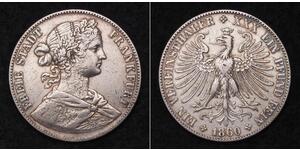
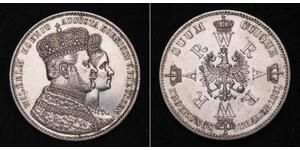
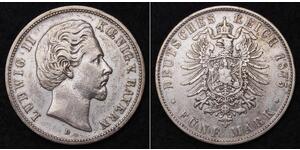
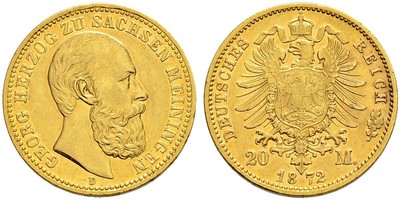
- Silver Marks Pre-1920: These silver denominations feature heads of previous Prussian kings but date marks often indicate minting years that overlap with late monarchy transitioning to republic. They represent the economic foundation before full centralization in 1924 and remain high value items.
Historical context involved heavy trade reliance on silver content which was stable for decades until hyperinflation ended their practical use later. Design features included royal portraits that were altered as monarchies fell to republics in neighboring territories or after abdication occurred nationally.
Importance stems from scarcity of high grade examples and connection to Berlin’s history even though mints operated federally. They are highly desired for their historical representation rather than modern monetary value.
- Weimar Banknotes: Paper currency produced by Landbank branches in 1920s is extremely significant as it reflects the local government before Reichsbank takeover fully enforced central issues on paper money later. Note designs feature democratic leaders and civic buildings of Berlin or Potsdam.
Historical context includes hyperinflation years where notes became worthless but high denominations are collected for rarity. These items served to document the struggle against economic collapse during unstable political periods before stabilization measures took effect around 1924.
- Military and Civil Medals: Commemorative pieces often struck at Berlin mints honor Prussian military units or civil service events post-World War I. These were produced to boost morale in state institutions under democratic administration but ceased after political changes restricted local issues further mid-century.
Design features include republican eagles on obverses with specific historical figures depicted depending on mint director’s taste at time. Importance grows due to low production numbers following administrative cuts that limited regional medal programs significantly post-1924.
These items represent the fading independence of Prussia during early Weimar Republic years before total federal absorption occurred in subsequent decades under pressure from national central authority. Their value today relates to how few were ever minted due to economic pressures and political instability preventing large runs.
Cultural Legacy
The coinage reflects the shift from a culture of aristocratic hierarchy to democratic republicanism through iconography changes on currency items found in private collections. Portraits changed, dates became secularized as religious symbols were removed or minimized by new administrations focused on modernization.
- Symbols: The national eagle was adopted alongside civic wreaths replacing crowns seen earlier centuries.
This shift illustrates broader cultural movement where state identity moved toward unity rather than dynastic lineage after revolution broke older feudal orders within region. Collectors appreciate how these subtle changes mark political stability during early Weimar period which was widely admired before later authoritarianism returned.
The economy relied on industrial strength supported by this state apparatus which funded art and infrastructure projects reflected in minting designs of civic buildings. Architecture seen on notes mirrors the modernist aesthetic that replaced historic styles after Kaiser abdication, signifying cultural rebirth.
Even when political turmoil arose late period, numismatic items retained quality design before budget cuts forced simplification in later years of Nazi rule. These changes document how politics directly influenced public finance and artistic expression on currency during this critical time.
For collectors
The Free State remains a vital topic for coin historians interested in the transition between empires and republics within Europe’s largest political entities before 1947. The region offers items representing unique periods of governance where democracy struggled against national pressures.
Items from this area remain important due to connection with Berlin as global capital city at time and preservation of industrial culture documented by trade tokens or local banknotes produced before Reichsbank took over full issuance duties in mid-1924. Collectors seeking regional history find value in paper money series that document economic collapse and subsequent stabilization during these decades.
The numismatic community continues to study how currency reflected public sentiment as democracy rose then faltered before war ended sovereignty claims completely by Allied decree mid-1947. These artifacts provide tangible links to political history often omitted from general narrative accounts, making them essential for comprehensive collection building today.
Understanding the regional context allows buyers to appreciate rarity factors related to mint runs that ended abruptly due to war or administrative changes in early post-revolution years. Such items tell stories of a state striving for identity within German federation framework until dissolution finalized by foreign powers after conflict concluded.