| View |
| preceded by | |
|
|||||||||
 Papal States (752-1870)
|
|||||||||
|
|||||||||


| succeeded by | ||||
|

| Papal States (752-1870) | Link to Wikipedia |
Papal States: History, Coinage and Collectibles
To walk through the archives of central European numismatics is inevitably to encounter the distinct presence of Rome. However, this narrative requires more than just a look at ancient denarii or modern eurocentric currency; it demands an understanding of a unique sovereign entity where spiritual authority governed temporal affairs for centuries: The Papal States. For collectors and historians alike, tracing the coinage issued by popes is akin to reading through history itself. These pieces were not merely instruments of commerce but physical manifestations of a complex political order that defined much of Italy's identity from 754 until its dissolution in the late nineteenth century.
Historical Background
The story begins with an event that would echo through centuries: the Donation of Pepin. This diplomatic transaction expanded the territories held by the Popes, extending their sovereign control from Rome up to Ravenna and down toward Bologna on both sides. As this territory grew over the next millennium, it became a distinct nation-state embedded within Italy but governed by ecclesiastical law rather than secular Italian statutes.
The Papal States were not merely a spiritual headquarters; they were an economic powerhouse in medieval Europe. Agriculture and trade routes across the region fueled their economy. Rome served as the heart of this system, while cities like Bologna acted as significant provincial capitals with their own administrative centers. The stability provided by the papacy fostered an environment where art flourished under Michelangelo and Raphael during certain eras.
This political structure influenced commerce significantly. Merchants traveling between northern Italy relied on stable coinage from Rome, while others feared inflation or instability when secular powers challenged ecclesiastical authority. The rise of the Bonaparte brothers in 1798 introduced foreign rule to these Italian territories, bringing about significant changes that would be reflected sharply on every piece of money circulating at the time.
The eventual decline involved not just military defeat but also political shifts within Europe. By the mid-nineteenth century, nationalist movements challenged papal independence in Italy. While modern history books might emphasize geopolitical disputes involving France and Austria regarding these lands, for a numismatist, this period represents fascinating changes in currency circulation as French francs entered Italian soil before Rome was recaptured by Papal forces once again.
Currency and Coinage History
The monetary evolution within the Papal States mirrors broader European trends but with unique local flavor. For much of their history, silver coins dominated commerce for larger transactions involving grain exports from central Italy to northern Europe or trade across the Adriatic Sea.
In earlier centuries, coinage often bore inscriptions referencing "Romani Pontifici" (Roman Pope), establishing legitimacy and authority in metal form. By the eighteenth century, monetary reform began to address inflation issues which plagued many continental states. Popes like Pius VI attempted to standardize denominations across different regions of Italy that came under Roman administration.
Copper coins were essential for daily life among the populace within Rome and beyond. These pieces varied in weight significantly over time as bullion prices fluctuated or local demands grew. The transition from heavy silver thalers used by kings to lighter fractional currency reflected a shift toward a more regulated economic system designed for stability.
Collectors often observe how foreign influence altered these standards during the Napoleonic occupation, yet when sovereignty was restored post-1809 and again in 1815 with Pius VII's return, distinctively "Papal" features returned to obverse designs. This cycle of disruption and restoration is a vital part of understanding why specific dates or reigns carry premium interest today.
Mints and Coin Production
Rome was the primary mint where these coins were struck under Papal sovereignty, yet the quality reflected changing standards in engraving technology. Early strikes often showed rougher details consistent with punch-cut methods common before high-quality engraved dies became prevalent across Europe.
- The transition to hand-engraved tools allowed for finer portraits of papal faces that resembled famous artists of their times like Raphael or Bernini.
- Metal content varied, but silver remained the standard until copper and bronze took over during specific eras where silver reserves were strained by war or trade.
Notable Coins
Focusing on the historical significance rather than raw rarity helps us understand what makes these pieces special. A prominent example involves thalers minted under Pope Leo X during the early 1500s. These silver coins featured portraits reflecting humanist artistic movements and often utilized key motifs to signify authority.
- Pope Benedict XIV: This era introduced reforms regarding coinage that sought clarity in denomination values, marking a transition toward modern accounting standards used by merchants across the continent.
A second area of high interest concerns copper currency. These small pieces circulated among Roman laborers and were designed for low-value transactions necessary to buy bread or services. Their obverse often bore simple profiles while reverse sides featured religious symbols like keys representing heavenly power.
- Pope Pius VII: Post-Napoleonic reign saw the re-establishment of sovereign minting authority, creating issues that bridge late eighteenth-century artistic styles and early nineteenth-century industrial production techniques.
Cultural Legacy
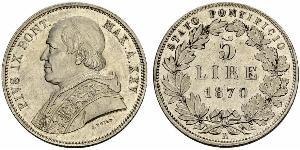
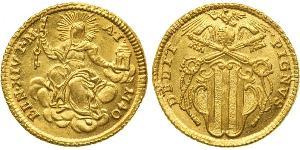
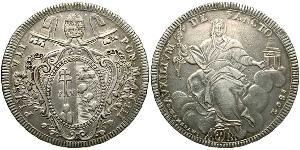
The coins produced within these territories reflect much more than government decrees. They are artifacts of religious devotion intertwined with political power. Symbols like the triple crown or cross keys appear regularly on designs, serving as visual reminders that spiritual leadership held secular jurisdiction over vast lands.
For collectors
Papal States coinage remains important because it connects directly to Italy's pre-unification history and offers a glimpse into an era where the Church dictated not just church policy but state affairs. Collectors find satisfaction in finding coins that survived centuries of political turmoil.
- Rarity: Many issues are scarce due to wars or changes in government leading up to 1870 when Rome was unified into the Kingdom of Italy.
The aesthetic qualities of late eighteenth-century pieces offer a chance to see how art history intersects with metal production. For buyers interested in historical narratives, these coins tell stories about empires and trade routes that no text can fully explain.
- Aesthetics: High-quality silver thalers retain their luster from centuries of storage or original hoards found by historians across Europe.
In the final analysis, owning a piece struck within these historic borders is akin to holding an artifact that bridges spirituality and economics. It invites observers to appreciate how currency has always functioned as art, propaganda, and practical trade combined in one form.