| View |
| preceded by | |
 Italy
Italy


| succeeded by |
| Italy | Link to Wikipedia |
Italy: History, Coinage and Collectibles
Welcome to a journey through one of the most vibrant eras in numismatic history. For centuries, Italy was not merely a nation-state on the map but rather a mosaic of independent city-states, duchies, and kingdoms that traded with Europe, Africa, and beyond. Today, we look back at this fragmented peninsula to understand how it became an economic powerhouse whose currency stamped its name upon global commerce.
Historical Background
To collect Italian numismatics is to hold a piece of Western civilization's foundation. The history here begins long before modern boundaries were drawn, tracing back to the mighty Roman Empire. When Rome fell in the 5th century AD, the peninsula did not vanish from commerce; rather, it fractured into Byzantine provinces and later became part of the Holy Roman Empire under Charlemagne.
The defining characteristic that shaped Italian coinage was its political fragmentation for nearly a millennium after antiquity. While many nations were ruled by kings during this time, Italy's north—Venice, Florence, Siena, Pavia—operated almost as independent corporate entities driven by maritime trade and banking. It is estimated that from 1250 to 1492 AD alone, there may have been over a thousand distinct mints operating simultaneously across the peninsula.
This fragmentation was not always chaotic; often, it allowed for incredible artistic experimentation in coinage design, as rulers competed with one another and vied against neighboring states. The political landscape shifted again during the Middle Ages and Renaissance, where Florence rose to become a banking colossus under families like the Medici. By 1500 AD, Italy had moved from feudalism into an early capitalist age.
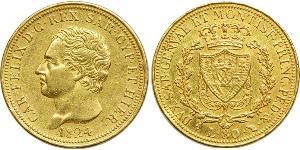
The final era of pre-unification coinage belongs to the House of Savoy in Turin. For nearly two centuries before 1861, the Kingdom of Sardinia-Piedmont unified various northern territories and modernized their economy, paving the way for Italian unification (the Risorgimento). By mid-19th century Italy had become a monarchy with borders roughly similar to today's republic.
Currency and Coinage History
The story of money in Italy is one of transition from utility to art. Initially, the coins were heavy silver pieces used for large transactions or taxation. However, as trade routes expanded through the Mediterranean into Egypt, India, and China—carried by Venice and Genoa—the demand shifted toward gold bullion.
A monumental moment in global economics occurred when Florence began minting a new type of coin that would become known to the world as the Florin. This silver coin proved so successful that it eventually paved the way for gold standards elsewhere, although Italy was also pioneering high-quality pure gold coins like the Ducat.
In contrast to many contemporary European mints which focused on mass production and durability of metal weight, Italian minting often treated each coin as a miniature canvas. The economic system relied heavily on foreign trade; Venice's stability allowed its currency to be trusted from London to Baghdad for generations without debasement being issued in every generation.
Mints and Coin Production
The geographical landscape of Italy dictated where the best coins could come from. Turin was a major industrial center later on, producing modern silver coinage before unification with its famous 10 centesimi pieces. In Florence (Firenze), the minting tradition went back to ancient Roman times, often utilizing older dies or re-minting bronze and copper for local commerce while reserving gold for international trade.
Venice was unique; because it had no king but relied on merchant councils and a Doge who elected officials by lot rather than inheritance. The production quality remained exceptionally high even during times of war, as the republic needed its coinage to remain reliable enough that merchants would accept Venetian gold abroad without hesitation.
Rome itself held significant minting power through Papal authority. However, Rome is distinctively known for a different kind of collection: medals and papal tokens commemorating church councils or coronations. The style in Bologna (Papal state) often featured frescoes on silverware translated directly onto copper coins.
The transition from simple punch-struck designs to die-hammering techniques happened much later in Italy compared to France, but this allowed for a distinctively artistic freedom where the profile of kings was rendered with softness rather than sharp realism typical of French minting.
Notable Coins
To understand what makes an Italian collection special is to look at three specific historical pillars. First and foremost, we must discuss the 1346 Florentine Florino (also known as a Zecchino). Issued during the reign of King Ladislaus of Naples but heavily influenced by local banking, this coin was so pure in its weight that it remained standard for over two hundred years.
The second is undoubtedly the Venetian Ducato. This gold piece carried an image of St. Mark atop his lion on one side and a seated Doge or later King of France upon another. It was the currency of choice when Christopher Columbus sailed west, funding expeditions across oceans because it held its value through decades.
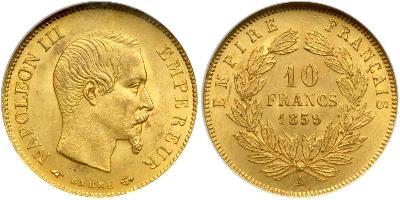
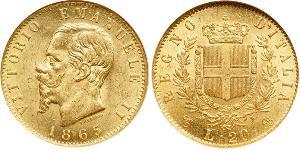
The final category for collectors is often called "Lira" era coins (post-1862). These are perhaps more familiar to general coin enthusiasts and feature portraits such as Umberto I or Victor Emmanuel II. The Italian State 5 Lire piece in silver, with the bust of a young man wearing laurel leaves, became an iconic image across Europe during that industrial boom period.
Copper pieces from these eras were produced in great volume for small transactions but still maintained artistic merit, showing local city names and coats of arms rather than generic Roman profiles found on other nations' copper coinage. The contrast between ancient bronze sestertii with the emblems of Hercules or Mars versus modern silver 5 Lire coins creates a stunning visual bridge through time.
Cultural Legacy
The legacy left by Italian numismatics is defined by its aesthetic beauty and cultural symbolism. Coinage in Italy often mirrored painting techniques found on Renaissance altarpieces, utilizing soft shading (chiaroscuro) rather than the stark contrasts used to maximize weight visibility.
We see religious imagery dominating these coins because so much of early Italian banking was funded through Church connections and donations from pilgrims traveling East. Furthermore, classical revivalism in Italy meant that ancient symbols like laurel wreaths were not just decoration but an assertion that modern rulers saw themselves as heirs to the Roman Empire.
The shift toward national unification brought about a new style where coins served propaganda purposes more than artistic ones; portraits of Victor Emmanuel II emphasized strength and unity across diverse regions. However, even during this period, Italian mints continued their tradition of high artistic quality that set it apart from functional coinage in Eastern Europe or Asia.
For collectors
The importance of Italy's numismatic history is undeniable for any serious collector seeking a historical journey across centuries. Unlike the United Kingdom where coins are predominantly English and often strictly royal, Italian collections allow you to hold currency from dozens of different independent city-states that functioned like modern countries.
Acquiring these pieces offers access to art before photography was invented. You can physically handle gold struck in 14th-century Florence or silver minted during the Napoleonic wars while wearing a laurel wreath on one side, connecting you directly with human history and international trade networks that connected Europe to Africa.
In summary, Italy remains central to numismatic study because it provides the perfect bridge between ancient Rome's grandeur and modern industrial banking systems. Its coins tell stories of empires rising and falling while maintaining a consistent dedication to beauty and craftsmanship unmatched by any other European nation during its era of independence.