| View |
| preceded by | |
 Kingdom of Naples (1282 - 1816)
|
| succeeded by |
| Kingdom of Naples (1282 - 1816) | Link to Wikipedia |
Kingdom of Naples: History, Coinage and Collectibles
Historical Background
To understand the currency and artifacts left behind by this state, one must first appreciate its unique position on the Mediterranean stage. For centuries, the Kingdom was often referred to historically as Sicily *citra Farum*, meaning "this side of Faro," a distinction that set it apart from the island kingdom governed directly from Palermo. This geographical identity began with Roger II in 1137 and evolved through a complex tapestry of feudal rule until 1816, when it was merged into the Kingdom of Two Sicilies.
The political landscape shifted dramatically following the Norman conquests that unified mainland Italy and the island under one scepter. For long periods, however, Naples served as a battleground for larger powers—most notably France in the late 1490s and Spain during subsequent centuries. These occupations were not merely military campaigns; they represented deep economic interventions where new rulers sought to restructure local commerce. When foreign troops invaded from Aragon or Provence, they carried with them different banking traditions and trade policies that directly dictated how money was minted.
Coinage in this region often struggled during times of intense feudal conflict because the competing houses could not agree on a standard weight for silver or gold. However, under rulers like Charles I of Anjou, the state began to stabilize enough to issue high-value international currency that competed directly with Venice and Florence. This period was crucial for collectors today, as it represents a bridge between local feudal coinage and early modern European banking standards.
Currency and Coinage History
The history of money in this region began with silver denominations used to pay taxes collected from the city-states of Apulia. These were primarily small coins, like the *quadriggi*, which facilitated daily commerce among merchants who relied on consistent standards for weighing silk and spices.
A significant development occurred during the Angevin period when they introduced gold florins based on Florentine models to facilitate international trade with England and France. However, political instability often led these rulers to debase their coinage—lowering the metal content—to finance standing armies against rivals like Hungary or Sicily's Crown of Aragon.
The Spanish takeover in the 16th century marked a shift toward greater stability but also centralization. The new kings sought to force all coins into strict conformity with Castilian standards, which frustrated local mints used accustomed traditions and designs. Despite this administrative rigidity, Neapolitan coinage maintained distinct artistic characteristics that reflected regional tastes rather than simply copying Spanish prototypes from Madrid.
Mints and Coin Production
The heart of the kingdom's monetary production was found at major fortresses, with Castel Nuovo in Naples serving as a primary center for minting high-value bullion. Other important workshops operated in Gaeta and Taranto to service local trade routes.
Ancient traditions continued into these medieval mints where die cutting involved skilled craftsmen who often inscribed artistic details onto the edges of coins before striking them with hammers or screw presses as technology advanced through the 17th century. While many European coinages relied on simple religious symbols, Neapolitan pieces frequently displayed portraits of sovereigns alongside images of Saint Januarius, whose miracles were believed to protect the kingdom.
The artistic evolution from Gothic motifs during Angevin rule to Baroque realism under Spanish control is one of the most striking features for study. Collectors can observe this stylistic shift simply by examining how King Ferdinand I's bust on a gold piece became increasingly detailed and regal over decades, while his successors maintained that imperial grandeur even as political power waned in the early 19th century.
Notable Coins
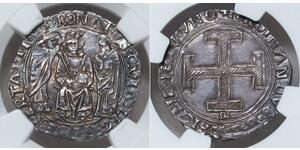
The Florin of Charles I serves as one of the earliest masterpieces. It features a portrait of the king on one side and heraldic imagery representing the claim to Sicily, illustrating how royal authority was visually constructed for foreign merchants who accepted these coins in exchange for their goods.
- The Aragonese Quarter-Grossi: Produced after 1458, these silver pieces are significant because they represent a transitional era where Neapolitan identity merged with Spanish iconography. The reverse designs often show the shield of Spain superimposed on local saints.
- Ferdinand I Silver Grosz (Ducato): Minted in Naples shortly after his deathbed will was read, this coin displays a high degree of relief and detail not seen in earlier issues. It is prized for its excellent preservation of the sculptor's style during that turbulent period.
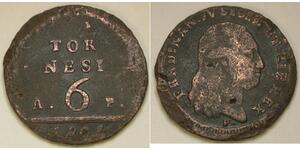
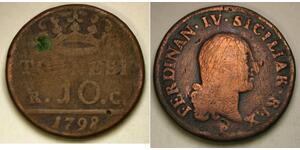
- Bourbon Half-Eight (Scudo): Found from 18th to early 19th century, these large gold coins were used to pay salaries and fund war efforts. While heavy and impressive in appearance, they became rarer as the kingdom faced invasion by Napoleon.
- The Gold Ducat of Charles IV: A late Angevin issue that shows a return to traditional designs despite internal dynastic struggles between senior and junior lines competing for control over southern Italy's treasury.
Cultural Legacy
Beyond their financial value, these coins act as historical records of Neapolitan culture. The frequent appearance of local saints on coinage reveals how religion was woven into the public consciousness and used to legitimize rule by monarchs who might not otherwise have been welcome in this southern land.
The artistic quality reflects a unique regional school that blended Byzantine influence from nearby Sicily with Italian Renaissance styles. Even when political power shifted hands, local artists maintained their style while adapting themes requested by visiting foreign kings or papal legates who controlled parts of the kingdom's finances during wartime expeditions to Rome.
For collectors
The coins from this period offer a deep window into how southern Italy interacted with Europe. They remain vital for enthusiasts because they provide physical evidence of centuries where Naples was one of the wealthiest trading hubs in the western Mediterranean.
Rarity is often determined by condition rather than just survival rates, as many gold issues circulated widely through banking networks and were worn down quickly during wars. However, well-preserved specimens from late Aragonese or Bourbon eras are highly sought after for their distinct portraits and intricate details that rival modern numismatic treasures.
In closing, while the political map of Europe changed drastically over time in this region—from Norman unification to Spanish domination—the coinage remains a testament to resilience. It tells the story not just of kings fighting wars with other European powers but of an urban community that thrived despite these shifting tides. For anyone studying monetary history, collecting from Naples offers one of the most colorful and dynamic archives available in Italy's numismatic collections.