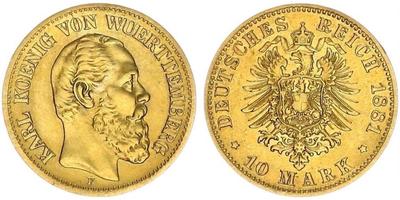
| View |
| preceded by | ||||||||||||||
|
||||||||||||||


|
|||||||
 Kingdom of Italy (1861-1946)
|
|||||||
|
|||||||


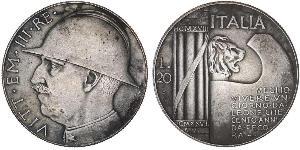
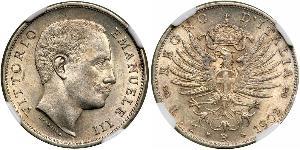
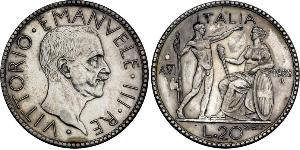
| Kingdom of Italy (1861-1946) | Link to Wikipedia |
Kingdom of Italy (1861–1946): History, Coinage and Collectibles
Welcome to the collection room where history steps out from the page and onto metal. When we turn our attention back in time toward the Kingdom of Italy, spanning its formative years through 1946, we are not merely looking at a country on a map; we are examining the tangible result of one of Europe’s most compelling political evolutions: the Risorgimento, or "Rising."
This era was defined by an incredible drive to unify disparate states into a singular modern nation. From 1861 until its transition in 1946, this monarchy sat upon Rome and Sicily while forging a new national identity through art, culture, currency, and politics. For the collector or historian standing before these artifacts today, every mint mark is less of an administrative note than it was a statement of loyalty.
Historical Background
The Kingdom of Italy emerged from centuries of fragmented rule involving Spanish Habsburgs, Austrians, and French influence. It began in 1861 as a coalition of states—Naples, the Papal States, Piedmont-Sardinia—that had long maintained their own distinct traditions. Before it could be known simply as "Italy," the region was defined by local pride; Naples held its kings separate from Turin's rulers for centuries.
The process of unification was complex and often fraught with tension between old regional aristocracies eager to hold onto power and a new middle class driven by commerce. This economic friction had direct consequences on national finances. To govern effectively, the monarchy needed stability; they could not rule through local barons who maintained separate tax rolls or trade tariffs. The drive for unification was fundamentally about creating a unified market economy. Consequently, coinage played an early and vital role in nation-building, serving as a physical representation of sovereignty extending across borders.
The capital moved frequently during this period; first to Turin (Savoy), then Florence, before finally resting on Rome after its conquest in 1870. Each move marked the integration of different cultures into one Italian soul—a theme that is deeply etched onto gold and silver coins produced across these cities.
Currency and Coinage History
In the early decades following unification, Italy was still using a hybrid monetary system where local currencies like Sicilian ducats or Neapolitan piastres circulated alongside Sardinian issues. This diversity reflected a nation that had not yet found its final economic rhythm.
The major shift occurred in 1862 and culminated fully by the early years of the new millennium as a standardized Lira system was implemented to replace these local currencies. For a collector, this is an important milestone because it represents Italy's first true attempt at "one nation." Underneath that single currency sat various silver compositions—often containing 90% fine silver or similar ratios—that allowed for international trade across the Mediterranean.
The Lira quickly became one of Europe’s most respected currencies, facilitating massive cultural and economic exchange between Italian ports like Livorno (Leghorn) and Genoa. The quality of these coins is notable; unlike some nations that prioritized raw weight over design or metallurgical purity during wartime issues, Italy often maintained strict standards until the later years of WWI. This ensured survival rates for modern collectors were generally high.
Mints and Coin Production
The production centers of Italian coinage reflect its geography perfectly. Turin remained a major hub but lost prominence in favor of Florence, Pisa, Naples, Leghorn (Livorno), Palermo, Parma, Modena, Lucca, Carrara, Rome, Milan, Brescia, Mantua, and Venice as the nation expanded.
Turin was particularly significant during the reigns of Victor Emmanuel II and Umberto I. Early Italian gold pieces often bear mint marks that signify where they were produced—such as the "Siciliani" mark for Turin's specific die varieties or Florence (FI) which became dominant later on. Interestingly, many early 20th-century issues show high artistic standards even at regional mints like Parma and Modena before those small duchies lost their status after WWI.
The artistry here is distinct from the industrialized coinage of Germany or France seen in this period. Italian gold pieces are often characterized by heavy, thick planchets that give them a substantial feel when held—almost palpable "weight" to them which collectors love. In Florence and later Rome, engravers were known for their intricate backgrounds featuring laurel leaves and oak branches rather than the plain fields common in German minting.
Notable Coins
The Great 5 Lira Gold Pieces:
If we look at the coin cabinets of any serious collector, the gold pieces issued between 1870 and 1936 will likely dominate. These massive issues—often weighing around 24 grams—are known as "The Greats" for a few reasons: their size, their striking quality on heavy metal planes, and the distinct portraits of Vittorio Emanuele II or Umberto I.
The design usually depicts the Emperor standing left, wearing imperial robes with an Imperial crown (a diadem). These were not just money but status symbols. Collectors are often drawn to early Turin issues which feature specific mint marks like "T" for Torino on gold coins produced before 1875.
The Silver Trade Pieces:
In contrast, the silver pieces—most notably those issued in Venice and Florence after unification with Rome—often depict portraits facing right. The background is frequently plain, allowing for a very crisp profile that makes them easy to date die by style rather than relying solely on dates.
The 1903/4 Gold "Lunette":
A fascinating variant emerged from the mint of Turin in the early 20th century, where specific coins bore distinct mint marks like a star. While often mistaken for error pieces, they are simply unique productions that tell us about how mints operated before standardization.
Cultural Legacy
To look at these coins is to see Italy's artistic heritage preserved in metal. The designs were heavily influenced by Italian art history—from the Roman busts of ancient emperors often appearing as allegorical figures, to references from local mythology or classical sculptures.
The use of symbols like fasces and laurels during later years reflects a specific historical political context without needing us to dive into modern commentary. However, for our collector friends today, the most striking feature remains the human face depicted: Vittorio Emanuele II's bearded features in late Victorian style contrast sharply with the clean-shaven look of Victor Emmanuel III or Umberto I.
The choice of materials was also a cultural statement; Italy remained a leader among nations that prized high-quality metals for their coinage well into the 20th century. They were rarely seen as "cheap" money, maintaining an image of prestige essential to diplomacy in Europe before WWII changed currency standards entirely.
For collectors
The Kingdom of Italy (1861–1946) remains a fascinating pursuit for numismatists seeking pieces that bridge history and art. It offers something distinct from European neighbors who often saw their coinage decline in artistic quality after WWII; the Italian kingdom maintained high standards until very recently.
The condition of these coins is generally excellent even without mint preservation, thanks to a "duty-free" circulation policy applied by the monarchy which treated its own gold currency with exceptional respect—treating it almost like jewelry rather than paper. For modern collectors hunting for pieces from this era, one finds that while many are common in high grades due to their size and weight (the heavy planchets survive better), true "key dates" or those bearing early mint marks of Naples before 1865 hold a special historical allure.
The story told by these coins is simply the birth pangs of modern Italy—a nation that took centuries to find its rhythm, only to produce some of Europe’s most beautiful gold issues while it happened. Whether examining the heavy Turin pieces or finding silver from Naples with distinct mint marks from a time when Italian culture was still being forged in regional fires, these artifacts offer an intimate window into one of history's great political narratives.