| View |


|
|||||||
 United Kingdom of Great Britain and Ireland (1801-1922)
|
|||||||

| succeeded by | ||||||
|


| United Kingdom of Great Britain and Ireland (1801-1922) | Link to Wikipedia |
United Kingdom of Great Britain and Ireland: History, Coinage and Collectibles
Historical Background
To understand the coinage that has circulated off these islands is to hold a physical reflection of an empire that spanned half the globe. The history of this region began not with commerce, but with conquest; from the Roman legions bringing silver sesterces across the Channel centuries ago, coins have always been markers of power and identity for the British Isles.
The true story begins in earnest following the departure of Rome. As local Celtic kings and later Anglo-Saxon settlers established themselves, they needed a way to tax their populations and reward loyalty. In 1066, William the Conqueror arrived with his Norman forces. This event reshaped everything. The French brought mints, styles, and an administrative rigor that would eventually standardize money across Europe. By this time, coins were not just currency; they were tangible proof of feudal allegiance.
The evolution continued through the Renaissance and into the age of exploration. With Henry VII securing his throne on silver standards after a turbulent succession war with Edward IV and Richard III's downfall, England entered its 'Golden Age'. The era was defined by trade dominance—wool to Flanders, spices from the East Indies—and coins were essential facilitators. When Britain industrialized in the 18th century, it became known as ‘Workshop of the World’. Coin production boomed alongside shipbuilding and textiles. This economic might paved the way for a global empire where British currency was often accepted wherever goods or military power dictated terms.
The political landscape shifted significantly in 1801 with the union, bringing Ireland into the fold under one monarch. However, this period also brought industrial strife, trade wars, and eventually two World Wars that tested the resilience of both the economy and its currency supply. The story is not merely about battles or treaties; it is a history written on copper and silver surfaces.
Currency and Coinage History
The transition from hammered rounds to mechanically milled coins was one of the most critical developments in British monetary history, mirroring similar shifts elsewhere but eventually taking its own path. For centuries, Britain struggled with debasement—mixing base metals into gold or silver standards to increase royal profit margins—a practice frowned upon by merchants who feared inflation.
The pivotal shift happened under Elizabeth I and her successors like James I and Charles II, where the ‘Groat’ became a staple coinage. It was during this period that we see the first serious attempts at consistent mint marks—tiny symbols indicating exactly which workshop made which coin.
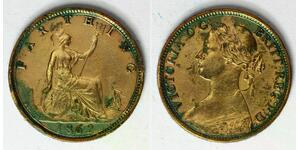
The Victorian era brought standardization on an industrial scale. The Penny and Shilling were the workhorses of commerce, but it wasn't until the reign of Queen Elizabeth II in 1971 that Britain fully decimalized its economy, moving from a complex system based on twelfths (240 pence to a pound) to the simpler hundred-based metric. This change was not just mathematical; for collectors today, this period marks one of the most exciting eras because it saw thousands of designs released in relatively short succession.
The 1970s also introduced the use of cupro-nickel—a silver-colored metal—for coins that were previously made of copper or brass. This shift was designed to make change last longer and resist corrosion, a small but vital improvement for public trust in coinage during inflationary periods.
Mints and Coin Production
The production center moved physically through history as London expanded and security concerns grew. For centuries, the Tower of London housed an ancient mint that produced coins under the strict gaze of royalty. But by the 19th century, industrialization required better technology.
Cooling down a bit on the old site was one thing; finding secure new locations for mints and die-engraving facilities became necessary due to rising threats from counterfeiters in an age of steam power and advanced chemistry. Mints eventually opened across major ports like Liverpool, Birmingham, Newcastle-upon-Tyne, London (the Royal Mint), and Edinburgh.
The artistic quality is where this region truly shines compared to its peers. The British tradition has long favored portrait sculpture that evolves subtly rather than wildly changing with every monarch's whim. Early 20th-century artists like George Kruger-Meyer brought a sculptural realism to the coin, moving away from idealized profiles found in earlier centuries.
Notable Coins
The Tudor Halfpenny (1497–1536)
This early coin represents a crucial transition. It features simple heraldic designs rather than the complex iconography of later eras, yet it carries great historical weight as one of Britain's first standardized silver coins for everyday use.
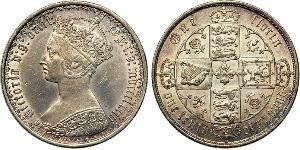
The Florin (1849–1860)
This 5-shilling coin is legendary among collectors. Its design by James Wyon the younger was so highly regarded it influenced designs across Europe and beyond. It features a laureate head of Queen Victoria wearing her tiara, surrounded by intricate floral motifs.
The Maundy Money
Perhaps the most historically poignant coinage in use today is issued during the reigns of Elizabeth I through to George V for the ceremonial purposes of giving out money to poor widows and elderly women on Palm Sunday. The coins are silver and feature simple royal effigies, but their survival into the modern era connects us directly to centuries-old religious traditions.
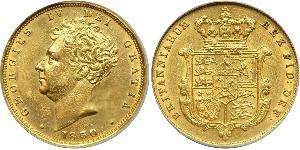
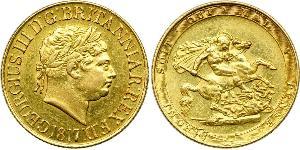
The Gold Sovereign (1820–Present)
This is perhaps the most valuable piece of coinage in British history. Introduced with immense political gravity during George III's reign, it became a symbol of wealth and stability. The 1937 King George V version was particularly prized for its cameo contrast.
Cultural Legacy
The imagery found on these coins serves as a gallery of art history in miniature. During the Georgian era, Britannia—the personification of Britain—often appeared clad and standing before columns or shields representing Roman victory over barbarians (French). Later depictions show her holding trident and shield.
The use of symbols is deeply political yet cultural. St George's Cross represents England, while the harp stands for Ireland; these merged into one symbol under shared monarchy.
The shift to cupro-nickel and then bronze-alloy meant that coins no longer carried a premium bullion value in the eyes of merchants, but they held immense sentimental and cultural weight. This is seen clearly in how modern citizens keep these copper pennies as souvenirs.
For collectors
Britain remains one of the most dynamic fields for collection because its history spans such a massive timeline. Collectors can trace their holdings back to the days when coins were scarce and valuable commodities used to trade tea, before moving into periods where they served as mass-produced currency.
The variety is staggering; from silver issues of Queen Elizabeth II featuring the Queen Alexandra Fountain at Osborne House, to special commemorative pieces for coronations and Olympic Games. There are also rare examples like "error" coins where metal blanks were double-stripped or wrong planchets were struck.
The artistry has always been high. While other countries have moved toward minimalist modernism, the Royal Mint maintains a strong tradition of sculptural realism on obverse and reverse alike.
In conclusion, coin collecting in this region offers more than just precious metals. It is an opportunity to own fragments of history—of kings who ruled empires, wars fought over borders (notably the Napoleonic Wars), and cultures that have evolved over centuries.