| View |
| preceded by | |
 Kingdom of Ireland (1542-1651, 1659-1801)
|
| succeeded by | ||||
|

| Kingdom of Ireland (1542-1651, 1659-1801) | Link to Wikipedia |
Kingdom of Ireland: History, Coinage and Collectibles
Historical Background
To understand the numismatic soul of Ireland during its existence as a Kingdom within personal union with England and Great Britain (1542–1800), one must first appreciate the complex tapestry that held it together. For centuries, this territory stood at the crossroads where English political ambition met Gaelic resilience. It began not as an equal partner to London but as a dependency established by King Henry VIII in 1542 through the Crown of Ireland Act. This act transformed the medieval Lordship into a formal Kingdom, theoretically elevating its status while practically binding it closer to Westminster.
The political landscape was defined by what historians call "The Pale," an area on the east coast directly under English control from Dublin Castle. Beyond these borders lay Gaelic nobles holding minor principalities that were nominally subject but often independent in practice. This tension shaped trade and economy; as Tudor conquest expanded, new roads connected local markets to continental ports like Cork and Waterford. The colony of Ulster established by the Plantation of 1609 changed demographics significantly, bringing a wave of English traders who demanded standardized currency for commerce with London. It was through these merchant exchanges that coinage became not just legal tender but a vehicle for imperial authority.
Currency and Coinage History
The monetary evolution in this region reveals a fascinating transition from local autonomy to centralized union. In the 16th century, England circulated its own "Sterling" money in Ireland, but it rarely minted locally due to distance costs and political caution. However, under Henry VIII and Edward VI, Dublin produced significant quantities of copper halfpennies—small coins that fueled the local economy for laborers and farmers who could not afford English gold.
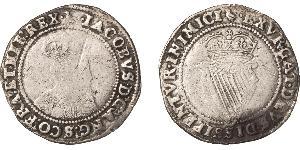
A pivotal moment occurred during the Stuart era (1603 onwards). James I unified the crowns but allowed Ireland to maintain its own "Old Irish" currency system which was legally defined as distinct from England's. This meant that while they shared a monarch, their coinage often differed in denominational value and weight standards until reforms were imposed later in the century.
The 1708–1726 period is of particular interest to historians. A Currency Act reformed the system again, establishing that Irish currency would now be strictly defined by English law but minted with specific iconography reflecting local identity (such as the harp on coins). This was a delicate balance: asserting sovereignty over money production without losing economic ties to Great Britain. Following 1726 until the Union in 1800, distinct "Irish" coinage ceased for high denominations and English pieces circulated freely, with only specific copper issues minted locally—a shift that defines much of collector interest.
Mints and Coin Production
The heart of this monetary system was the Dublin Mint. Unlike London, which produced massive quantities of bullion coins for export to Europe, the Irish production centers were often constrained by political climate. The mint houses at St Nicholas or later locations in Dublin Castle reflected a tradition where coinage served as propaganda and currency.
The technology shifted from early hand-struck methods using die-hammers (which left distinctive "crossed axes" visible to experts) to screw presses after the 18th century. This allowed for sharper, more detailed images of monarchs and heraldry—though often crude due to copper material constraints.
Notable Coins
- The Crown Piece (Tudor Era): Minted in the 16th century under Henry VIII or his successors, these were substantial gold coins that solidified Ireland's claim as a Kingdom. Their faces featured royal portraits alongside heraldic shields of St Patrick.
- The Jacobite Copper Issues (Stuart Era): Under Charles II and James II, distinct copper halfpennies entered circulation to manage the local economy where gold was scarce for commoners. The Jacobite period saw designs that were slightly more ornate in attempt to legitimize Catholic influence.
- The William and Mary Crowns: Produced post-1690, these coins carried royal portraits following the Glorious Revolution (William of Orange taking the crown). Collectors prize their reverse designs which often featured St Patrick’s Crosses or variations of English crowns minted in Dublin with local die-cutting marks.
Cultural Legacy
The coinage left behind a distinct iconographic legacy. The most enduring symbol was the Irish Harp, appearing on seals and coins alike as an emblem of sovereignty rather than subjugation to Scotland or England. It represented cultural identity that survived through centuries of religious discrimination (Penal Laws) and colonial administration.
Certain designs were also chosen specifically because they referenced local geography: images depicting the Tower of Dublin, St Patrick's Crosses in specific heraldic positions on shields minted during union periods—though strictly speaking these often referred to broader British heritage adopted by Ireland. The artistry evolved from rougher Tudor strikes intended purely for trade to refined copper pieces bearing royal effigies that were carefully crafted.
For Collectors
The Kingdom of Ireland offers a unique numismatic narrative unlike any other major power in Europe during the early modern period. It represents an empire where the "center" was London, but local production allowed for cultural expression through coinage that eventually led to union.
Rarity and Historical Weight: While many copper issues are common due to their low value at minting (meant only for laborers), gold sovereigns from Henry VIII remain highly sought after. The transition in designs—from generic English crowns to distinct "Irish" pieces featuring the Harp—marks a key chapter in political maturity.
The Value of Context: Collectors appreciate these coins not merely as metal, but as artifacts that prove how Ireland stood alone legally within an empire. The scarcity of gold issues compared to English coinage during this period adds significant interest for those who look beyond catalog listings and seek the story behind why money was made differently here than in England.