|
|||||||
 Second French Empire (1852-1870)
|
|||||||
|
|||||||

| succeeded by | ||||
|


| Second French Empire (1852-1870) | Link to Wikipedia |
Second French Empire: History, Coinage and Collectibles
Welcome visitors of Hobbyray to a curated exploration of numismatic treasures from the Second French Empire. This era, spanning roughly between 1852 and 1870 under Napoleon III, serves as a fascinating bridge in our understanding of monetary evolution during an age of rapid industrialization. When viewing these pieces today, we are not merely looking at metal; we see physical manifestations of political stability, artistic ambition, and imperial reach.
Historical Background
The historical setting for this period was defined by a profound desire to restore the glory days of the earlier Napoleonic conquests while navigating modern Europe. The transition from the reign of Louis Philippe in 1852 brought an end to the July Monarchy and initiated a government that sought legitimacy through tradition rather than pure democratic suffrage at first, eventually leading to constitutional monarchy status before full imperial restoration.
This stability was crucial for the economy. France during this time experienced its second great industrial boom under Haussmann’s modernization of Paris infrastructure. The drive toward economic unification in Europe meant that French currency standards became de facto international references alongside British gold and German silver patterns later on. Culturally, there was a resurgence of Neoclassicism which sought to link the Second Emperor with his uncle, Napoleon Bonaparte, creating an iconography designed to unify the population across vast colonial holdings.
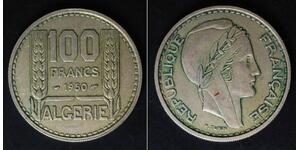
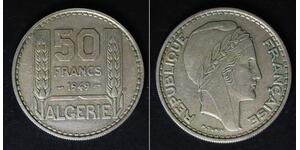
The empire extended its reach significantly into North Africa through Algeria. While often misunderstood as purely military ventures from this era, these expansions created new trade routes and markets that required robust coinage systems for daily transactions among soldiers and merchants alike. The economic prosperity generated by industrial growth meant there was a high demand for silver and gold to flow freely across borders.
Currency and Coinage History
The monetary landscape during this period is notable for its standardization. France had already established the decimal system, but under Napoleon III, it solidified these standards into forms that would eventually influence the Latin Monetary Union. The goal was to ensure reliability in international commerce.
Metallic content remained consistent with other European powers, yet French coins maintained a distinct aesthetic identity rooted in artistry rather than mere utility. This is critical for collectors who understand intrinsic value versus artistic merit during this transitionary era. Gold denominations were minted primarily at the state mints to back paper money and secure international trade.
Silver circulation saw frequent design updates based on government mandates that often coincided with new legislative periods within the empire’s short reign. The introduction of specific silver denominations facilitated large scale commerce, as merchants required coins for precise pricing structures in a modernizing retail market economy. Collectors can trace the evolution from early decimal issues to later standardized designs which emphasized national unity over individual mint preferences.
Mints and Coin Production
The Paris Mint served as the primary center of coinage operations, ensuring high quality control under strict imperial supervision. While smaller provincial mints operated occasionally, they often produced lower quantities that can be difficult to attribute without expert knowledge. This centralized production helped maintain uniformity in weight and edge characteristics which remain important diagnostic tools today.
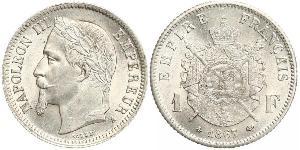
Minting technology had advanced significantly by the mid-nineteenth century, utilizing steam-powered presses rather than manual striking methods common earlier in history. These improvements allowed for sharper detail on legends such as the profile of Napoleon III himself or allegorical figures representing Victory or Liberty depending upon legislative decrees.
The artistic characteristics are particularly distinct when compared to First Empire issues. The Second Emperor utilized a portrait style modeled after his uncle, but executed by different sculptors who brought contemporary realism into relief work on metal surfaces. Some coins feature mint marks indicating production centers which can distinguish between authorized strikes and anomalies that may appear in private collections.
Notable Coins
The gold 5 Franc piece remains the centerpiece of serious collecting efforts within this series, featuring a detailed bust modeled after ancient Roman types. This denomination was designed to appeal both domestically as savings money and internationally where it circulated alongside British sovereigns due to similar metallic content values.
Silver denominations often bore images representing agricultural abundance or military strength depending on the year of issue during reign periods before 1870 when war suspension halted production. The silver half-franc is particularly sought after by enthusiasts interested in early Republic and Imperial continuity, as its design language bridges both concepts.
Bronze centimes provide a window into daily life for Parisians who walked these streets decades ago under modern streetlamps installed during Haussmann's renovation projects. The legends on the reverse often feature specific phrases referencing national achievements or legislative titles that offer narrative context when examining condition alongside patina levels.
Cultural Legacy
The coinage of this empire reflects a society caught between revolutionary change and imperial nostalgia, symbolizing stability within modernization efforts. These coins carry engravings that were commissioned with an eye toward international standards yet retained national distinctiveness through specific artistic touches on obverses.
Cultural pride is evident in how the state invested resources into beautiful designs rather than purely functional marks like those seen later during Republic eras influenced by austerity or economic necessity. The use of French language and Latin inscriptions reinforced a sense of heritage that connected modern France to classical antiquity while projecting power globally.
The enduring legacy lies in these artifacts continuing to represent the zenith of European artistry applied directly to small-scale circulation money before photography fully replaced engraving for visual documentation purposes. They serve as miniature monuments commemorating an age when craftsmanship still defined national identity alongside political ambition.
For collectors
The significance of these historical coins today lies in their narrative potential rather than merely catalog rarity. For those seeking completeness, the set represents a specific chapter of Western history marked by industrial confidence and artistic revivalism.
- These items offer insight into pre-decimalization monetary trends which influenced global trade standards for nearly two decades after this regime ended following invasion events in 1870.
- The artistry on these pieces remains a benchmark against which modern reproductions are measured by dealers today, ensuring provenance authenticity is easier to verify through stylistic consistency with known masters of the era.