| View |
| preceded by | ||||
|
||||

|
|||||||
| French Second Republic (1848-1852) | |||||||

| succeeded by | ||||
|

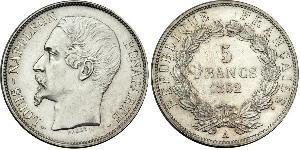
| French Second Republic (1848-1852) | Link to Wikipedia |
French Second Republic: History, Coinage and Collectibles
Historical Background
Welcome travelers of history and connoisseurs of metalwork. You are standing on the threshold of a fascinating era in France where democracy took hold for only brief moments before transforming into an empire that would shape modern Europe. During 1848, France experienced what became known as the Springtime of Peoples, a wave of revolutions sweeping through Parisian streets and dismantling old monarchies across the continent.
This period began with profound upheaval following months of political tension between the bourgeoisie and the working class under King Louis-Philippe. The revolution erupted in February 1848 when crowds gathered not just to demand social reform, but a fundamental restructuring of government. France adopted universal male suffrage for adults, marking a significant shift toward popular participation previously unseen on such scale.
However, this brief moment of republican democracy was fragile and fraught with internal conflict. Social unrest flared throughout May as workers demanded economic rights during what would be known as the June Days insurrection in Paris. The Provisional Government struggled to maintain order while navigating a chaotic landscape of political change that ended abruptly when Louis-Napoléon Bonaparte ascended power, eventually shifting France toward imperial rule before 1852 was concluded.
This historical context matters immensely to collectors because it occurred during the peak industrial and economic expansion in Europe. The French economy required stability but could not afford political stagnation resulting from prolonged unrest after major upheavals like Napoleon's earlier reigns or previous revolutionary periods of 1789-94.
Currency and Coinage History
The transition to the Second Republic necessitated immediate changes in how money was issued. Coins are often viewed as state seals, representing government authority over subjects and commerce alike during times where that authority shifted dramatically. The July Monarchy had established a robust minting infrastructure which survived these early days of turmoil.
Coinage evolved rapidly to match the new symbols of liberty replacing royalty on currency denominations. Under this regime, coin production continued using established French silver standard and copper alloy for fractional currencies while attempting to modernize imagery away from crowned monarchs toward allegorical figures representing abstract virtues like Justice or Truth.
One notable development during these short years was the attempt at unifying provincial trade under a single republic's standards. Previously, some regions operated with regional coins or foreign imports more common in daily market transactions among merchants and rural villagers alike after Napoleonic wars reshaped international boundaries across European continent leading up to this decade.
The monetary policy during these early years emphasized financial security against inflation caused by war debts accumulated earlier under the Second Empire's predecessors. While silver content remained steady, copper issues were more susceptible to metal price fluctuations which impacted availability at times affecting public trust in small change circulated widely among lower classes who relied upon them for daily sustenance purchases.
Mints and Coin Production
The French minting operations centered primarily around the historic Monnaie de Paris, one of oldest active mints globally dating back to Roman occupation of Gaul. During this turbulent second republic period, production capacity was temporarily constrained by political uncertainty regarding who had authority over state affairs at any given day.
Craftsmen employed there often worked under provisional oversight committees that sought balance between artistic expression and fiscal caution required after financial crisis preceding revolution outbreak across many nations in 1847-48 transition period. Artistic characteristics of the era were defined by a need to quickly design coins bearing republican symbols rather than royal portraits which had become obsolete overnight.
Metal composition varied significantly during this timeframe as raw material costs fluctuated with global markets impacting copper prices for bronze issues struck frequently in Paris mint facilities along provincial branches occasionally utilized under emergency measures until central authority reasserted control later before 1850 ended most operations briefly due to changing leadership dynamics.
Notable Coins
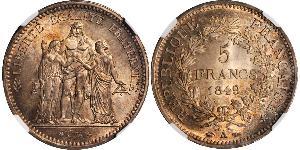
Coin collectors often seek the silver half-franc or two franc pieces struck toward end of this brief period which reflect transition between republican and imperial designs. These coins typically feature profile busts adorned with laurel wreaths rather than coronets denoting sovereignty.
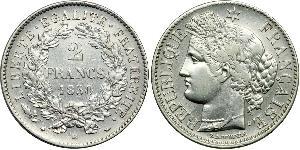
- The Silver Two Franc (1849): This denomination was popular among merchants trading in France who valued silver standard coinage during this period of economic adjustment after inflationary pressures from recent global conflicts affected purchasing power across continent significantly. Collectors appreciate the intricate detailing found on reverse sides depicting symbols representing liberty alongside dates marking transition year.
- The Bronze Four Centimes (1849): Smaller denomination used daily by working class citizens in Parisian markets and rural towns alike throughout late 1840s where metal shortages forced some pieces to be struck from alloyed copper or even repurposed materials due to economic pressure affecting government funds allocated for mint operations.
- The Gold Five Franc (circa early years): High value piece often held as reserve currency by banks while circulating more sparingly compared to bronze issues widely used in daily commerce among common merchants during final months before Louis-Napoléon transformed France back into empire status later on.
Each of these coins holds specific importance because they represent a brief democratic interlude within French history where symbols shifted from monarchy toward republican ideals that would eventually shape modern constitutional structure despite eventual return to imperial rule following 1852 elections. The design elements remain highly sought after by numismatists interested in complete sets spanning reigns of Napoleonic family members under various regimes before and after these revolutionary transitions.
Cultural Legacy
The coinage from this period serves as a tangible link between the ideals born during 1848 revolutions which sought to modernize society through democratic means even if only briefly successful. The imagery featured on coins reflects broader cultural values of liberty and civic duty that were celebrated across Europe regardless of political success achieved immediately after events occurred decades ago.
Furthermore, these pieces provide insight into how a nation transitions during crisis from monarchy toward republicanism then shifting again to imperial rule later as stability becomes priority concern following years of social unrest throughout France. Artistic styles utilized on coin reverses often draw upon classical Greek and Roman motifs suggesting hope for renewal after previous centuries marked by war debts or regional divisions threatening national unity.
Rarely do we find examples showing such clear visual contrast between old crown symbols replaced with laurels or abstract republican figures representing truth. This shift was deliberate attempt to legitimize new government authority without relying on personal charisma associated solely with specific individuals but rather upon collective virtue embodied through state issued currency for public use.
For collectors
- The French Second Republic offers rare opportunities to complete comprehensive sets spanning reigns of Napoleonic family during various eras leading into 1850. Even though these coins were minted briefly under turbulent conditions, their survival in good state is testament to quality craftsmanship employed by skilled workers at Monnaie de Paris regardless of political pressures faced daily.
- Coin dealers often highlight these pieces as historical artifacts rather than mere monetary instruments due to scarcity resulting from limited output during times when government instability hindered consistent production schedules. Collectors value them not only for rarity but also for role they played in preserving stability amidst economic challenges facing industrializing nation after Napoleonic conquests reshaped maps of Europe.
- The historical narrative embodied by these items makes them desirable additions to portfolios held by enthusiasts passionate about understanding political evolution through tangible artifacts rather than solely textual accounts found within academic journals or encyclopedic sources available publicly online today. Understanding why such pieces survive helps explain enduring fascination with this particular chapter of French history which continues attracting new generations interested in numismatic treasures discovered across Europe.
In conclusion, the legacy left by these brief years remains intact through objects preserved carefully within collections worldwide showcasing artistic brilliance achieved during uncertain political times. The transition from royal iconography to republican symbols offers a unique window into how money reflects changing societal values and aspirations of peoples who sought freedom under new forms of governance.