| View |
| preceded by | |
|
|||||||||||||
| Kurdistan | |||||||||||||


| succeeded by |
| Kurdistan | Link to Wikipedia |
Kurdistan: History, Coinage and Collectibles
Welcome to our exploration of a region defined more by its geography than its borders—the land known historically as Kurdistan. For those who collect history through metal and narrative, this territory presents a unique challenge. Unlike unified empires that maintained centralized mints for centuries, the historical landscape here is fragmented yet rich with cultural depth. Our collection focus today centers on how coinage evolved from imperial standards to expressions of local identity in a region spanning parts of modern Turkey, Iraq, Iran, and Syria.
Historical Background
To appreciate the numismatics of this region, we must first understand that for most of its ancient history, Kurdistan was not an isolated state but part of vast civilizational currents. In antiquity, groups such as the Mannaeans and Armenians inhabited what is now western Iran and southeastern Turkey. The kingdom of Corduene emerged from these roots in the 2nd century BC, eventually vying for dominance between Rome and Persia. This position made it a crucial node on trade routes connecting Mesopotamia to Anatolia.
The historical narrative deepens with various dynasties established between the 8th and 19th centuries under different names like emirates and principalities. During these periods, local power often resided in Kurdish chiefs who acted as vassals or rulers within larger caliphates. In the 20th century, following significant geopolitical shifts such as World War I and the Gulf War, political entities emerged that sought autonomy. These brief interludes—such as the Kingdom of Kurdistan (1921–1924) or the Republic of Mahabad—are particularly fascinating for collectors because they represent unique assertions of self-rule in a region otherwise dominated by external empires.
Currency and Coinage History
The history of money here is one of transition. In ancient times, Corduene and its neighbors operated on trade standards set by the great powers that bordered them—specifically Rome and Persia (Sassanids). Consequently, early artifacts are often standard Roman silver denarii or Persian drachms circulating among local tribes.
As history progressed into the Islamic era and beyond, coinage production fell under various caliphates. However, Kurdish dynasties did maintain economic agency within these systems. The Ottoman administration eventually formalized governance over parts of this region as administrative units like the 19th-century Kurdistan Eyalet. During the early 20th century experiments with independence and autonomy—such as after the First World War in regions like Ararat or Mahabad—the goal was to establish a currency that reflected local sovereignty, though these attempts were often short-lived.
This evolution is critical for collectors because it highlights how coinage shifted from imperial symbols of conquest to tools meant to sustain local commerce and identity. The 20th-century microstates described in historical records attempted this transition, creating coins designed specifically for their citizens before being absorbed back into federal structures like the current administrative region in Iraq.
Mints and Coin Production
In a stateless nation defined by mountain ranges rather than straight lines of latitude or longitude, minting locations varied wildly. Historically, mints were centralized under imperial command (e.g., Baghdad for Abbasids), but local dynasties sometimes operated independent workshops.
The artistic characteristics distinguishing this era’s coinage are often subtle yet telling. Because many ruling families maintained shared ties with neighboring empires—like the Seljuks or Ottomans—the style of minting followed broader regional trends. Engraving technology remained largely consistent across these borders, but the iconography on obverse and reverse sides differed to assert local prestige.
The transition from 19th-century administrative units to modern autonomous regions represents a shift in production methods as well. Early issues were often crude or experimental attempts at sovereign banking before falling back into reliance on neighboring states' currency during times of central government collapse. This scarcity, born of political volatility rather than lack of resources, makes many pieces from this specific timeframe highly sought after.
Notable Coins
For the connoisseur, certain types stand out as historically significant:
- Corduene Silver Types (Ancient to Roman Era):
- Historical Context: These coins date back over two millennia. The Kingdom of Corduene was a vassal state that shifted allegiance between Rome and Persia.
- Design Features: Collectors often find these with Greek or Roman lettering, alongside local symbols representing trade wealth. They are physically similar to standard coinage found in Diyarbakir regions but carry a regional legacy.
- Importance: These pieces represent the earliest assertion of local identity on currency, predating much organized emirate rule.
This is followed by issues that emerge during the 20th century when political fragmentation created distinct monetary systems. The following types offer a glimpse into these brief periods:
- Republic of Ararat (1927–1930):
- Historical Context: One of the few distinct republics mentioned in 20th-century histories. Established in Eastern Kurdistan during a time when local autonomy was sought against Soviet influence.
- Design Features: These coins typically feature standard denominations (like silver kopeks or rubles) but bear the name of the specific Republic. The obverse often displayed a symbol related to local governance rather than an emperor.
- Importance: Due to their short lifespan and political pressure, these issues are rarely seen outside specialized collections.
Another significant group represents the Kingdom of Kurdistan (1921–1924) or similar entities in Syria. These were part of a wave where various Kurdish dynasties sought independence before being reabsorbed into regional empires during the 1930s.
- Kurdistan Eyalet Period (Ottoman Era):
- Historical Context: The first time an administrative unit specifically named "Kurdistan" was recognized, this period involved local autonomy under the Ottoman Empire.
- Design Features: Coins from this era often display Islamic calligraphy and symbols common to the broader Caliphate but may have specific inscriptions denoting local authority or regional names like "Kurdistan."
- Importance: These are prized for illustrating the transition from purely imperial control toward a semi-autonomous economic identity.
Cultural Legacy
The coinage of Kurdistan reflects its history as a "stateless nation" where culture persists despite political fragmentation. The word itself means "Land of the Kurds," and throughout centuries, this region served as a crossroads between East and West.
We see cultural legacy in the artistry: even when using standard designs from Caliphates or Empires to maintain trade stability, local dynasties inserted themselves into history through mint names found on silver coins. For ancient collectors, these pieces tell stories of vassalage and diplomacy—how a region like Corduene could navigate between Rome and Persia.
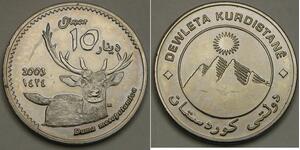
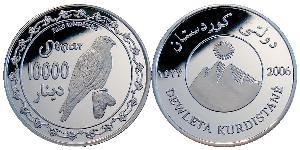
In more recent times (20th century), the coin designs often attempted to incorporate motifs reflecting local autonomy or democratic symbols seen in autonomous administrations described in history books. For modern collectors, these artifacts serve as tangible links to those brief moments of political independence before reintegration into larger federal states like Iraq and Syria.
For Collectors
Kurdistan offers a distinct niche for the serious coin collector because its numismatic landscape is so different from standard empires. While Roman or British coins are ubiquitous, these regional types offer specific historical contexts regarding autonomy in West Asia. The scarcity of 20th-century issues—born from political instability and failed independence referenda described in history books—is not due to war but rather the rapid dissolution of those states.
The challenge here is condition-dependent; many pieces are common, while others representing specific dynasties or brief republics (1946–20th century) command a premium. We recommend focusing on coins that carry local names and regional inscriptions versus generic imperial types found across borders. This region's story—where culture survived statelessness—is vividly etched in silver, copper, and bronze.