| View |
| preceded by | ||||
|
||||

|
|||||||
 Kingdom of Spain (1814 - 1873)
|
|||||||

| succeeded by | ||||
|

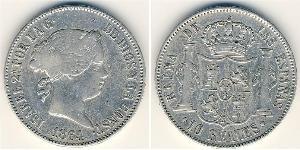
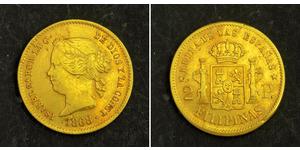
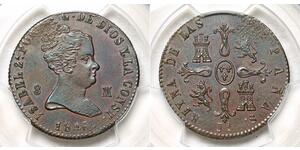
| Kingdom of Spain (1814 - 1873) | Link to Wikipedia |
History of Spain (1814–1873): History, Coinage and Collectibles
Welcome to a journey through the annals of one of Europe's most storied numismatic periods.
This collection takes us from 1814 into the late seventeenth century. It is defined by political shifts, trade realignments with South America following independence movements in neighboring colonies, and an internal search for national identity that left distinct traces on metal currency. Collectors often find themselves drawn to this era because it represents a bridge between colonial silver standards and modern monetary systems.
Historical Background
The Restoration period opened with Ferdinand VII returning from exile in 1804, though the Napoleonic Wars had altered global commerce significantly by then. Spain faced immense economic pressure to rebuild its infrastructure without foreign aid as trade routes were disrupted during conflict years leading up to these dates.
- Political tension between Liberal and Conservative factions shaped legislation regarding currency usage
- The loss of American colonies left a new market focus on domestic silver reserves for export coinage needs rather than colonial bullion flow into mainland banks directly from the Americas anymore after 1820s independence movements concluded.
Absolutist tendencies clashed with constitutional demands under Isabella II in mid-century. These tensions created an unstable environment but also a high volume of local production needed to service small change markets during periods where national mints were less efficient or temporarily interrupted by civil unrest affecting the northern regions particularly heavily during the later Carlist wars.
Currency and Coinage History
Money evolved rapidly from traditional Real denominations into more decimalized systems. The Spanish Escudo of gold had long served as a benchmark for international trade, but under these new regimes it was minted with specific weight standards adjusted to European bullion markets.
- Silver coins circulated widely in daily commerce and were often the first issue reformulated from older colonial designs during Isabella II reign
Liberal governments introduced reforms intended to simplify trade but found they could not control the influx of foreign silver dollars which still clogged local markets. This reality led many collectors today to understand that early Spanish pieces are sometimes mixed with Mexican or United States coins in older portfolios because domestic supply failed during these times.
Mints and Coin Production
The Casa de la Moneda in Madrid remained the center of production but regional centers like Barcelona were also vital. Artistic styles shifted toward French Neoclassical influence, which affected portraits on obverse designs while reverse patterns often retained traditional heraldic eagles or coats-of-arms.
- High relief pieces from this period are highly prized due to their bold artistic intent
Minting traditions were interrupted by budget constraints during political crises. However, the technical capability remained advanced as these Spanish workshops produced gold and silver of exceptional purity standards that impressed foreign investors seeking reliable currency partners for export trade.
Notable Coins
The Isabellina series includes many varieties now highly collected despite their common face value at issuance. These pieces are famous for subtle differences in lettering or the date placement on copper denominations and silver reales from mints around Madrid, Seville, or Bilbao.
- Gold Escudos of this era represent a benchmark for collectors tracking royal portrait evolution over decades
During times of conflict emergency pieces were struck with simpler designs to save costs but retained their intrinsic value due to strict bullion controls. These are often sought after by those who study the specific historical context of war and civil unrest in southern Europe.
Cultural Legacy
Spanish coinage from this span reflects a transition between old empire symbols like religious imagery or royal crowns towards modern portraits that emphasized state legitimacy over divine right. This shift mirrors broader European trends but maintained distinct Catholic artistic traditions visible on the reverse side of silver pieces.
- The use of heraldic eagles and shields served as propaganda for national unity
Coinage was also a tool for commerce in rural areas where paper money did not circulate widely due to lack of trust or printing capacity. Metal currency allowed small merchants across Spain and Latin America to trade securely without reliance on foreign banking infrastructure which often collapsed during regional uprisings.
For collectors
This country's history remains vital for the study of how state power is physically distributed into metal objects held by populations daily. While modern political controversies are absent here, we focus purely on artistry and historical context found in every piece today available to auction or sale at various hobby shops worldwide.
- Investigation of mints helps establish rarity based on surviving examples rather than just face date value
The study conditions for these pieces reveals much about the technological limitations versus artistic ambitions during this period. They remain important because they tell a story of economic resilience, cultural continuity and political struggle preserved in silver or gold that still spark interest today.