| View |
| preceded by | ||||
|
||||
|
|||||||
 Kingdom of Spain (1808 - 1813)
|
|||||||

| succeeded by | ||||
|

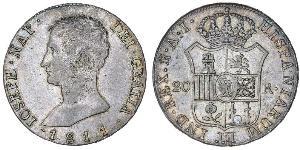
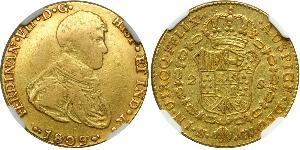
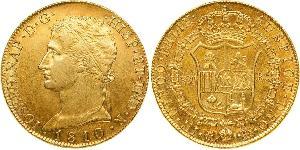
| Kingdom of Spain (1808 - 1813) | Link to Wikipedia |
Kingdom of Spain (Napoleonic): A Turbulent Era in Silver and Gold
The story of the Kingdom of Spain during the Napoleonic era is one written not just with ink, but stamped on silver. For numismatists and history enthusiasts, this period represents a fascinating disruption—a brief interregnum where the traditional Bourbon monarchy was temporarily displaced by French influence before being restored to its historic throne.
In 1807-1809, following Napoleon Bonaparte's entry into Spain with French forces during the Peninsular War dynamics that would later define continental Europe, a unique political experiment took shape. This state is often referred in historical texts as the "Kingdom of France" or historically by its official designation covering central and northern Spanish territories.
This article explores why this brief interregnum holds such significance for collectors today: a period where the old silver was melted, new faces were placed upon ancient designs, and economic systems grappled with foreign occupation. The coins minted during these years serve as tangible artifacts of one of Europe's most turbulent chapters.
Historical Background
To understand the coinage produced in this era, one must first grasp the political landscape. For centuries, Spain was a bastion of Habsburg and then Bourbon rule. However, by 1807, the Spanish Crown had found itself entangled with Napoleon's ambitions on the Iberian Peninsula. As French forces crossed into territory controlled previously by Charles IV (and later Ferdinand VII), the local Junta Centrale—governing bodies formed to resist foreign control yet dependent on Napoleonic backing for survival—took charge of central regions.
In this chaos, a new regime emerged. It was essentially a puppet state established under French protection after Napoleon's direct intervention. While political legitimacy is often debated among historians today, the economic reality is clear: these coins were produced to support commerce in territories that remained loyal or were occupied by French forces against British influence and local resistance.
The cultural impact of this era was profound. It marked a moment when traditional Spanish identity clashed with modernizing attempts imposed from Paris. This tension is visible on the coin faces themselves, where designs often oscillated between traditional Baroque motifs popular in Madrid under Charles IV and the clean, neoclassical lines favored by Joseph Bonaparte during his brief tenure.
Currency and Coinage History
The monetary system of this period was deeply connected to one of history's great engines: silver. The Spanish dollar (or Piastre) had long been the de facto currency for international trade, valued by its consistent weight rather than just intrinsic worth. However, during these tumultuous years—spanning 1807 until roughly 1823—the flow of bullion from the Americas to Spain was interrupted by conflict.
The coinage system continued to use "Real" denominations but faced significant challenges with metal scarcity. As French forces occupied Spanish mints, they attempted to mint new currency using available resources in Mexico (which had declared independence) and Peru. Consequently, much of the silver production shifted away from Spain proper toward Central American mints.
The transition also brought decimalization efforts to bear on older systems. While the "Real" remained king due to its colonial heritage, smaller denominations like the céntimo were issued in various guises. The goal was stability amidst a war zone economy where inflation and smuggling threatened price controls.
Mints and Coin Production
The Casa de la Moneda real (Royal Mint) of Madrid remained central to this production, though not without interruption or change of command. During the years Joseph Bonaparte held power as King over these territories—often styled simply "Joseph I"—Madrid milled new dies featuring his portrait.
In Barcelona and other occupied cities in Andalusia (like Cádiz), which resisted French rule but minted coins under specific treaties, production was also high. However, due to the rapid succession of political events, these regions shifted allegiance between Spanish loyalists, French forces, and restored monarchs within single years.
The artistic quality varied significantly. Early pieces often retained traditional portraits from Charles IV's reign but were updated with dates or inscriptions indicating "Napoleon" as King (under the title Napoleon V of Spain). However, later issues—particularly those minted for Joseph Bonaparte himself during his brief tenure before being expelled by Wellington in 1813-showcased a distinct French style. These featured more elaborate laurel wreaths and cleaner lines.
Cádiz Mint is notable among collectors today as the primary issuer of "Restoration" coins after Ferdinand returned, creating a fascinating overlap where old Spanish designs met new political realities under foreign oversight before full restoration occurred in 1820.
Notable Coins
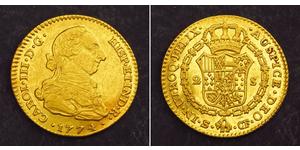
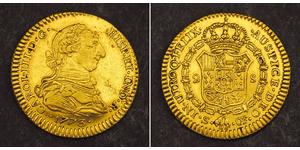
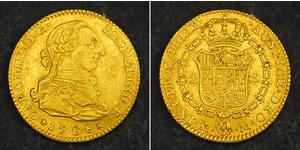
- The 4 Real Silver Piece (or similar denominations): Often minted during the reign of Joseph Bonaparte, this coin is prized for its historical context. It features a portrait that replaced traditional Spanish monarchs with figures bearing French titles but stamped by local mints in Spain.
The transition from Charles IV to his son Ferdinand VII and then back again—often through foreign imposition—is captured most clearly on these silver pieces, which sometimes bear the title of both kings or display conflicting dates reflecting rapid political reversals.
- The Semi-Real: A smaller denomination often associated with "Restoration" years. This coin helps historians and collectors piece together where coins were actually minted versus how long they circulated before recall in favor of other denominations or foreign currency during trade disruption periods.
For the collector, these pieces are attractive for their rarity; many examples survive only because silver was scarce, leading to a smaller volume produced than typical peaceful decades. The "Cádiz Mint" issues specifically represent one of the most intriguing segments due to the city's role in resistance against Napoleon and its survival as a major trading port.
- The Real de Aduana: Produced during this specific regime, these coins are significant because they bridge Spanish coinage with foreign (French) designs. They serve as an excellent example of how political boundaries shifted on paper while commerce—and money—continued to flow despite the wars.
The scarcity and artistic variety in this era make it a "treasure hunt" for collectors who seek pieces that carry both historical weight and aesthetic interest, especially those featuring early neoclassical portraits alongside traditional Spanish heraldry.
Cultural Legacy
Beyond mere silver content or political titles, these coins reflect the shifting identity of Spain itself. When one holds a coin from this era in their palm—perhaps a copper centimo minted during French occupation—they feel the friction between old traditions and new ambitions.
The legacy is also one of economic resilience; despite military invasions, blockades by British fleets that prevented shipping routes to Europe (the "Black Years"), commerce never completely halted. Silver coins were often re-melted for war needs, or foreign notes circulated alongside local silver pieces.
This period represents a moment when the traditional Spanish coinage system was forced into an adaptive evolution. The artistic elements—often combining French portraiture with Iberian backgrounds—served as diplomatic tools to assert authority over occupied territories even from afar, reminding collectors that money is often a language of power more than just value.
For Collectors
This period offers an incredible opportunity for those who study the nuances of Spanish coinage history. It bridges the gap between classic Bourbon issues and modern restorations after the Napoleonic Wars, specifically focusing on Joseph Bonaparte (Juan Carlos de Borbón) pieces minted in 1807-1823.
The coins from this era are not merely scarce due to low mintage; they often represent specific moments of political transition where a single coin might bear the imprint of two different kings or even conflicting titles during a short war period. The challenge and allure for collectors today lie in hunting these transitional pieces that tell stories of military occupation, local independence movements (Junta Centrale), and international economic shifts.
In conclusion, collecting coins from this era is like holding history's most volatile chapter in your hands. It allows enthusiasts to trace the flow of silver dollars through a war-torn landscape where empires rose and fell not just on battlefields but within mint presses themselves. For anyone seeking a deeper understanding of how currency shapes national identity—especially when that identity was disrupted by foreign rule—the Kingdom of Spain under Napoleon offers an unforgettable journey.