| preceded by | ||||
|
||||

|
|||||||
| Kingdom of Holland (1806 - 1810) | |||||||
| succeeded by | ||||
|

| Kingdom of Holland (1806 - 1810) | Link to Wikipedia |
Kingdom of Holland: History, Coinage and Collectibles
Historical Background
The narrative of the Kingdom of Holland begins with a unique intersection of revolutionary politics and imperial ambition. Born from the ashes of the Batavian Republic, this short-lived entity existed under a hereditary monarch imposed by Napoleon Bonaparte to stabilize his northern European empire. Before 1806, Dutch territories were governed as republics or client states that often suffered from political instability and economic inconsistency. The transition marked by Louis Bonaparte was intended to replace republican fervor with monarchical tradition while preserving national identity.
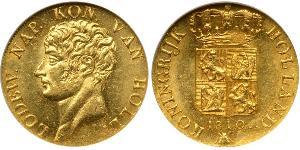
Napoleon sought a monarchy because he believed only such a regime could unify the provinces against British pressure without causing civil unrest among those desiring a return to old dynasties like the Dutch Republic of 1581. Louis Bonaparte, often addressed as "Lodewijk" or Lodewik by his subjects, accepted the crown on June 5th, though he never received a formal coronation ceremony typical for other European kingdoms. This lack of ceremonial splendor is reflected in its early coinage which focused more heavily on state symbols than royal portraits.
Louis sought to prove that monarchy did not require sacrificing Dutch traditions. His court and administration were explicitly declared "Dutch" rather than French, despite the administrative centralization modeled after his brother's empire. He learned the vernacular language to connect with his people personally. In 1807 he faced significant political challenges regarding sovereignty when Napoleon annexed southern territories like Limburg into direct French control, but for the remainder of its existence until 1813, Holland served as a buffer state and trade hub within France's continental system.
Currency and Coinage History
The monetary evolution during this period was rapid, driven by Louis's reformist policies. The Batavian Republic had experimented with various currencies, including the guilder based on specific silver weight standards which often lacked uniformity across provinces. Upon establishing the Kingdom of Holland in 1806, a primary task for the new regime was to enforce financial standardization.
This era saw an attempt at unifying monetary systems by creating consistent specifications for gold and silver coins. The currency system evolved from local guilders into standardized coinage backed by French weight standards but circulating independently in many ways until 1809-1810 when the annexation necessitated total integration with France's assignats and later francs. During this time, merchants relied on thalers for international trade while smaller copper denominations circulated domestically to replace local town issues.
The government implemented a tax system that reduced corruption from previous decades. This financial discipline allowed mint operations to function more efficiently without the chaotic political interference seen in earlier years of revolutionary coinage reforms. By 1809, Louis introduced new codes and laws which included monetary regulations ensuring gold florins were produced with sufficient purity for international acceptance.
Mints and Coin Production
Coin production centers during the Kingdom period saw a shift from local to centralized authority. The Amsterdam mint remained one of the primary mints, leveraging its long-standing reputation as the financial hub of northern Europe. Louis replaced provincial private or semi-private issues with strict national control.
The artistic style used in coinage shifted dramatically within just a few years. Initially, designs mimicked French Imperial types closely to please Napoleon's sensibilities but incorporated local heraldry. By 1807 and later in the reign of Louis Bonaparte, designers introduced distinct elements like shields bearing Dutch Lions alongside Napoleonic eagles.
Minting technology utilized standard dies from Paris or Amsterdam factories but adapted with new iconography such as the Order of Union replacing French orders around the shield. Crossed sceptres often appeared behind the portrait on larger issues to denote Connétable de France status for Louis Bonaparte, though these were removed later under his own initiative.
Notable Coins
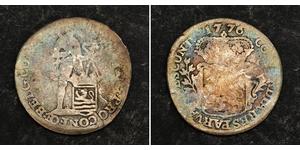
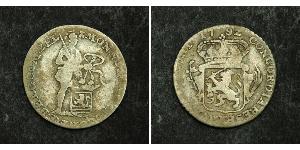
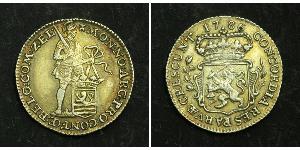
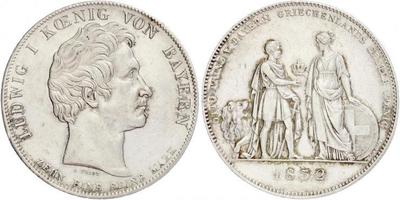
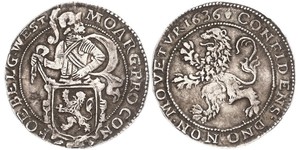
- Silver Thalers (1806-1807): These large silver pieces are highly prized by collectors. They featured a complex design combining the Napoléonic eagle with the Lion of United Netherlands, quartering both symbols to represent the alliance between family loyalty and Dutch independence.
- Fine Silver Florins: Produced during the latter years before French annexation fully took hold, these smaller coins emphasized royal regalia like helmets above shields. The design evolution from simple eagles to crowned lions with mottos reflects changing political confidence of Louis Bonaparte's reign.
The "Unity makes strength" motto appears on later pieces replacing French orders entirely in 1807 or subsequent years when Dutch Orders were introduced. Collectors look for these specific design changes to distinguish early issues from late period coins that show increased autonomy before the forced integration.
Cultural Legacy
The coinage of this brief kingdom serves as a physical testament to Louis Bonaparte's personal campaign to merge French imperial power with Dutch national sentiment. The presence of local symbols like the Amsterdam flower or specific mints alongside standard Napoleonic motifs demonstrates how currency was used to cultivate loyalty.
"Unity makes strength". This motto encapsulates the political philosophy behind these coins at a time when Europe was fragmented by war and ideology. These items show how coinage can act as propaganda yet still retain local artistic merit through detailed engraving work done primarily in Amsterdam or The Hague workshops.The transition of currency from French-controlled designs to autonomous Dutch orders on the face illustrates the struggle for sovereignty within a Napoleonic empire. Even when territories were taken away, coins produced during this brief period carry distinct national pride expressed through heraldry that would not appear again until decades later with restoration movements in Europe.
For Collectors
The Kingdom of Holland remains significant to modern numismatists primarily because its reign was short and politically volatile, resulting in low mintage volumes for high-quality examples. Silver coins from the initial period featuring combined heraldry are particularly sought after due to their transitional nature between Republican France influence and later independent restoration coinage.
- Rarity: Coins bearing early designs or those showing unique artistic adaptation by local engravers rather than Paris imports command premiums.
- Cultural Value: These pieces represent a rare period where an empire imposed rule but allowed significant cultural expression through iconography and mottoes on metal currency.
Due to the limited timeframe of issuance, condition grades become critical in valuation. Finding high-grade examples is difficult as circulation wear often removes detail from the heraldic shields which define historical periods within this short-lived monarchy. The story behind these coins involves a brother who tried to remain independent while serving an emperor, making every surviving specimen a piece of political history.