| View |
| preceded by | ||||
|
||||

|
|||||||
 Batavian Republic (1795 - 1806)
|
|||||||
| succeeded by | ||||
|
| Batavian Republic (1795 - 1806) | Link to Wikipedia |
Batavian Republic: History, Coinage and Collectibles
Welcome to a journey through one of the most fascinating chapters in Dutch numismatic history. The coinage of this short-lived state offers collectors not just metal and ink on paper designs, but tangible fragments of a transformative era where liberty was debated across the Netherlands under French tutelage. Though its duration may seem brief compared to centuries-spanning monarchies, every piece carries weight in understanding how modern Dutch democracy took shape. This article serves as a guide for those seeking to appreciate the historical narrative preserved within these artifacts.
Historical Background
The genesis of this state was born from fire and political upheaval. Following centuries under the rule of Stadtholders, internal tensions between Patriots—those who sought reform—and traditionalists sparked a revolution that aligned heavily with the ideals sweeping across Europe in 1795. While initially welcomed by many citizens as an uprising against authoritarian control, this shift fundamentally altered the nation's alignment. The country moved from being influenced largely by Great Britain and Prussia to becoming integral part of French revolutionary sphere.
This political realignment was not merely theoretical; it had immediate practical consequences for trade and finance. To secure peace with its new powerful neighbor, Batavia signed treaties that required territorial concessions but promised economic stability in return. The chaos of the preceding decades included hyperinflation driven by old government paper money schemes (assignats), which left a legacy of financial distrust among merchants. Consequently, when this Republic was established, there was an urgent need for reliable currency to support commerce and restore faith in public institutions.
Socially, the region underwent significant transformation as it sought to define itself against its former British allies who had previously supported their Orangist rulers. The transition involved replacing a loose confederal structure with a unitary state system. This structural change required centralized control over monetary policy that did not exist before in such capacity for this territory.
Currency and Coinage History
The evolution of money during this period reflects the broader struggle between traditional Dutch financial practices and new revolutionary models imposed by external forces yet embraced domestically. Early efforts to stabilize finance involved abandoning chaotic paper issuance for metal-backed currency. For collectors, this transition from unstable notes to minted coin marks a turning point in economic maturity.
The introduction of the decimal system was pivotal here. Prior eras utilized complex calculations involving various weights and guilders that could vary significantly by region or weight class under different city governments. This new Republic aimed for simplicity comparable to French currency, adopting units that made calculation easier across diverse markets within this small landmass. The adoption of a single standard helped unify the fragmented economic landscape inherited from years before.
Initially, coins bore marks showing their allegiance and political structure without necessarily hailing France as conqueror but rather as liberator in spirit. As French influence waned or fluctuated depending on broader European politics at home (where Napoleon rose), local designers maintained some independence within a constrained framework to ensure these metallic tokens remained acceptable both domestically for internal trade.
Mints and Coin Production
The Amsterdam Mint served as the primary center of production during this transformative era. It functioned much like its historical predecessors but adapted rapidly to new political demands. Initially, many dies were imported from Paris or other major French mints, resulting in coinage that shared stylistic features with continental Europe while retaining local heraldry such as national lions.
The artistic characteristics of these pieces reveal a distinct blend of classical and regional styles influenced by revolutionary movements abroad. Neoclassical aesthetics became popular throughout the late 18th century regardless of location, reflecting Enlightenment ideals prevalent among educated elites across borders including those who sought reform within this republic itself. Symbols chosen were carefully selected to convey messages about liberty while maintaining connection with heritage.
Copper and bronze pieces for daily commerce appeared alongside precious metal coinage in the same timeframe as these designs matured. The craftsmanship evolved from simple utilitarian issues toward more refined depictions reflecting pride in civic achievement without overtly compromising political neutrality needed during fragile times when alliances shifted frequently due to external pressures.
Notable Coins
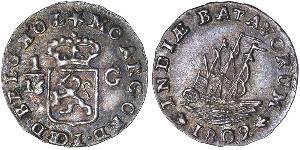
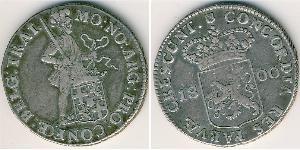
The most significant specimens for enthusiasts come from the silver guilder types introduced after 1798. These coins were crucial as they marked stabilization efforts following earlier periods of financial instability caused by war and political maneuvering involving foreign powers like Austria or Britain who had previously exerted influence over neighboring territories.
- Silver Guilder (Batavian Florin): Featuring heraldic shields often combined with tridents symbolizing naval power. This design choice highlighted the nation's reliance on maritime trade for survival and prosperity despite political challenges posed by neighbors who controlled key shipping routes across Europe.
- Copper Denominations: Essential for local markets, these pieces circulated widely in towns like Haarlem or Leiden before being collected decades later. Their preservation shows how daily transactions continued even as constitutional changes were debated at national level above.
Furthermore, coins produced during the Commonwealth period (known formally after October 1801) show subtle stylistic shifts marking a transition toward authoritarian rule favored by external powers before ultimate absorption into empire in later decades. These are particularly intriguing to those studying art history alongside economics as they reflect shifting aesthetics.
Cultural Legacy
The coinage preserves the cultural narrative of this era through its choice of symbols and inscriptions drawn largely from ancient Roman or Greek sources, aligning Dutch revolutionaries with classical notions of liberty. The motto "Eendracht" emphasizing unity was sometimes rendered alongside national shields depicting traditional beasts like lions found in earlier royal eras.
This synthesis between imported foreign styles and indigenous artistic traditions created a unique numismatic identity during these turbulent years when many feared colonization by France yet welcomed reform to their own democratic ideals. Collectors examining this material often appreciate how artistry served political messaging, ensuring that even small change reflected serious debates about what kind of nation they sought to become.
For collectors
The Batavian Republic remains a cornerstone for those who study early 19th-century monetary systems because few other European states successfully transitioned so abruptly from monarchy or confederation into centralized republicanism backed by France yet maintaining internal autonomy briefly. Its rarity stems not just from minting quantities which were modest in some eras, but also the short span between first appearance and eventual annexation shortly after 1806 when Louis Bonaparte ascended as monarch ending republican governance entirely.
Serious acquisition often begins with understanding these stories behind metal pieces rather than simply chasing lowest denomination values alone. Each artifact offers insight into trade history across seas or how nations responded to political pressure while maintaining commerce vital for global stability during Napoleonic wars period when continental powers frequently clashed over territorial ambitions in Europe.
In summary, the coinage associated with this state stands as testament to an era where financial reform drove modernization efforts alongside broader societal changes. Whether examining a copper piece used daily by workers or silver coins held in treasury boxes awaiting trade across borders for international markets involving British merchants nearby during early 1790s conflicts over river crossings near Dutch ports, every object tells story of survival and ambition against backdrop of larger continental conflict.