| View |
| preceded by | ||||||||
|
||||||||


 Duchy of Anhalt (1806 - 1918)
|
| succeeded by |
| Duchy of Anhalt (1806 - 1918) | Link to Wikipedia |
Duchy of Anhalt: History, Coinage and Collectibles
Historical Background
Welcome, patrons of history and artistry alike. Today we turn our gaze toward the Duchy of Anhalt, a realm that sits quietly in the historical memory yet vibrates with significance to those who study it through numismatics. Located within what is now modern Germany, specifically straddling the border between Thuringia and Saxony-Anhalt, this region was long known for its strategic position on major trade routes linking Central Europe.
The story of Anholt begins in the High Middle Ages with the Ascanian dynasty establishing their presence. Over centuries, political fragmentation following customary inheritance laws divided the state into several small duchies and principalities. This division shaped a unique cultural identity; while politically often aligned or absorbed by larger neighbors like Saxony-Anhalt or Prussia for administrative unity, Anhalt retained its own distinct sovereignty until unification periods under the German Empire.
The region was culturally conservative yet economically pragmatic. Its position between two major states meant it served as a transit zone rather than merely an endpoint in commerce. This trade activity influenced local craftsmanship and banking habits long before modern central bank notes were printed. For history enthusiasts, Anhalt represents an era where smaller sovereign entities maintained autonomy despite economic integration with powerful empires like the Austrian Empire or Prussia.
Socially and religiously, the region was diverse. The Protestant Reformation had already influenced local customs by the time of its full rise in Germany's monetary consciousness. This cultural diversity meant that coinage often needed to accommodate various denominational needs and regional preferences for symbols, making Anhalt a fascinating study case in how state power projected itself through art on metal.
Currency and Coinage History
To understand the coins of this duchy is to walk through its economic evolution. In the early periods following medieval minting practices, currency was often regional and localised based on guild standards rather than strict imperial mandates. The region participated in the broader circulation of Holy Roman Empire coinage before adopting standardized denominations as German unity progressed.
During the late 18th century, political turbulence forced many states to adopt common monetary weights for trade stability. Anhalt eventually integrated its system into that wider framework under Prussian influence around 1905, when currency unification was formalised across northern Germany and Saxony-Anhalt provinces.
The shift from silver thalers and groschen to the gold marks introduced by German Empire legislation in later periods is crucial for collectors. These changes mark a transition where precious metal content diminished significantly as inflation rose prior to World War I, affecting how these coins were perceived both as currency and collectibles. For decades following unification, Anhalt coinage was struck under government oversight that mirrored Prussian standards but maintained distinct iconography.
This era saw the final minting of silver pieces before base metals became dominant for circulation. Understanding this timeline allows collectors to appreciate why certain issues from the 1904-1905 mark are rare and valued, not necessarily due to scarcity alone, but because they bridge a gap in numismatic history regarding monetary reform.
Mints and Coin Production
The production of money here was governed by state mints located primarily within urban centers like Köthen and Dessau. These facilities operated under strict quality controls typical for late 19th-century Europe, ensuring that designs remained crisp even with the transition to lower-metal content coins.
Coinage tradition in this region emphasized simplicity of design over opulence, yet maintained high standards of relief on die-striking dies. The local authorities often chose reverse sides featuring agricultural symbols or coats-of-arms rather than standard imperial eagles for earlier periods, allowing them to express their regional identity even within a larger unified monetary union.
The technology used shifted from manual hammering and planchet preparation during the 17th century toward mechanical presses by the time of German unification. However, despite industrial advancements, many local designs remained conservative; for example, keeping traditional heraldic emblems on obverse sides while updating reverse denominational texts.
This blending of tradition with modern minting practices created a visual legacy where collectors can observe subtle die variations indicative of different production runs or the changing hands between local administrative offices before complete state takeover. Artistic characteristics here reflect a deliberate choice to balance national loyalty with regional pride, evident in how heraldry and dates were positioned.
Notable Coins
In every collection devoted to German states, Anhalt presents pieces that stand out for their historical context rather than sheer rarity. Below are several coin types of enduring interest:
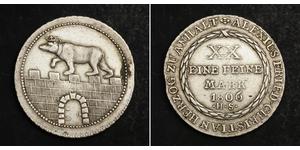
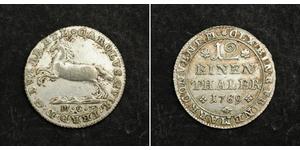
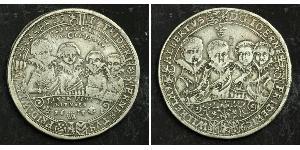
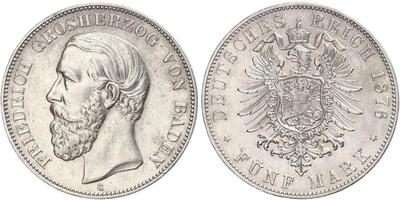
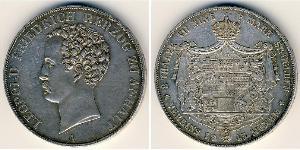
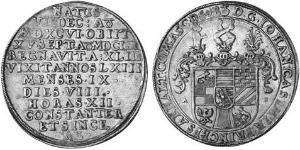
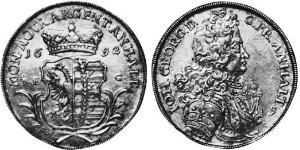
- The Silver Thaler Issues (Late 18th Century): These coins represent a significant moment where regional powers attempted to maintain minting rights despite the economic pull towards imperial currency standards. The obverse typically bore the royal portrait while reverses depicted traditional coats-of-arms associated with local lords or territorial symbols.
- The Prussian-Era Groschen (19th Century): As Anhalt aligned its economy more closely with Prussia, denominations shifted toward copper-nickel alloys for everyday transactions. These pieces often feature intricate reverse designs including wheat sheaves and crowns symbolizing agricultural prosperity common in the region's culture.
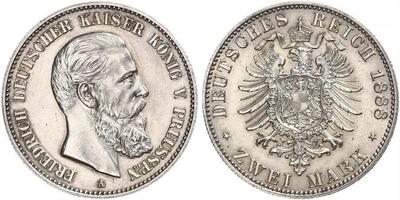
- The Pre-WWI Gold Marks (1904-1905): Perhaps the most sought after issue among high-grade collectors because they were minted immediately before major monetary disruption. Their mints are usually struck with full detail, reflecting a final flourish of pre-war prosperity and economic stability under imperial governance.
- The Post-Unification Copper Coins: Issued later in the era when silver was demonetized for circulation due to inflationary pressures from global conflicts. These serve as historical markers showing how local economies adjusted their purchasing power standards over time during turbulent times in Europe's history.
Focusing on these types allows collectors to appreciate design evolution without relying purely on catalog grading points or exact market pricing, which fluctuate rapidly based on condition availability rather than intrinsic value alone.
Cultural Legacy
The coinage of this duchy reflects a region deeply rooted in its local geography and cultural heritage. Religious tolerance during the early modern era is often symbolized through mint marks that avoided overt iconography associated with dogmatic conflict, preferring secular symbols like grain or heraldic beasts instead.
Rulers are depicted as patrons rather than conquerors on these pieces; this artistic choice reflects a society valuing order and trade over martial prowess. It also demonstrates how local pride persisted even when political borders shifted significantly under larger German administrations throughout the 19th century.
The transition to base-metal coins later in history highlights broader societal shifts towards industrialization, where precious metals were reserved for hoarding rather than daily transactions. Understanding this cultural shift helps explain why modern collectors must look at both aesthetic quality and historical context when evaluating these pieces today.
For Collectors
Anhalt remains vital to numismatics because it offers a unique window into the economic mechanics of small German states before total unification. Completing an Anhalt set requires patience but rewards collectors with stories about regional autonomy and political transition.
Coinage from this region teaches us how governments used currency design as propaganda for stability during times of external conflict, particularly toward late 19th-century industrialization when local economies faced integration pressures without losing national identity. For those seeking pieces that tell the story beyond dates on a ledger or price guide listings, Anhalt is an excellent choice.
Avoiding modern political controversies keeps our focus strictly on heritage and preservation efforts required to maintain these historical artifacts properly today. Whether you seek high-grade silver for investment potential or base metal circulation coins from early 20th-century economic reforms, this collection offers depth in history that few other European states can match within such a compact timeline.