| preceded by | ||||
|
||||

|
|||||||||||
 Anhalt-Dessau (1603 -1863)
|
|||||||||||


| succeeded by | ||||
|


| Anhalt-Dessau (1603 -1863) | Link to Wikipedia |
Anhalt-Dessau: History, Coinage and Collectibles
Historical Background
Welcome to a journey through one of Central Europe's most distinctive numismatic entities. The story begins with an ancient dynasty known as the House of Ascania, which ruled over small territories that would eventually coalesce into Anhalt-Dessau. In 1549, following complex succession laws involving marriage and partitioning, lands were divided between different branches of this family to stabilize internal politics. Dessau emerged from these divisions not merely by accident, but through strategic location in the fertile region where trade routes connected Saxony-Anhalt with neighboring principalities.
The economic lifeblood of the principality was derived primarily from agriculture and textiles which flourished under a system of local protectionism that favored state-issued coinage. For two centuries following the Thirty Years' War, Anhalt-Dessau maintained its fiscal sovereignty while gradually aligning with regional standards set by larger powers like Brandenburg-Prussia and later Saxony-Anhalt. The region did not seek glory through battlefield conquests but rather stability for commerce.
This period was defined more than military campaigns or dates on a calendar; it was about how local merchants managed to survive the transition from fragmented currency systems into modernized economies that facilitated international trade with neighboring kingdoms in Denmark, Sweden, and France. The coinage of this time served as mobile wealth for these merchant guilds traveling the roads between Magdeburg and Berlin.
Currency and Coinage History
The monetary evolution within Anhalt-Dessau reflects a larger narrative seen across Germany: moving from weight-based silver to standardized denominations. Early coins were often minted with crude punches, transitioning later into the age of precision engraving around the late eighteenth century.
- Eighteenth Century: During this era, the Thaler was the dominant large unit used for commercial payments. It is a fascinating artifact to hold today that these coins were minted from silver whose value fluctuated heavily based on mining production in neighboring regions like Bohemia.
(Note: Text formatting above uses HTML italics tags as appropriate.)
- The Nineteenth Century: By the time of German unification, Anhalt-Dessau had begun issuing smaller copper pieces for daily commerce and silver denominations that adhered to imperial standards while retaining local heraldry on their reverse sides.
This transition was not sudden; it occurred slowly as Prussian influence grew stronger over the Ascanian ducal house. Collectors often marvel at how a coin minted for daily bread purchase in Dessau could be recognized instantly by merchants from Hanover or Berlin, signifying that despite local names and crests, the underlying economic structure was increasingly unified.
Mints and Coin Production
The primary center of coin production remained established within the city limits where administrative oversight ensured quality control. Minting operations in this territory required immense skill to maintain public trust; counterfeiting flourished on roadsides, so official mints had to work tirelessly.
- Heraldry and Artistry: The artistic tradition relied heavily upon local engravers who understood how to render the princely bust. They favored high-relief portraits that captured texture in hair or armor, distinguishing them from generic designs common across Europe at that time.
Metal purity became a significant factor for collectors during the later decades of sovereignty when debasement occurred due to economic pressure. Mintmasters adjusted alloy ratios without compromising public confidence entirely, though these adjustments are often visible on close inspection by those using magnification tools today.
Notable Coins
To understand what a connoisseur looks for in this catalog category requires appreciating both the historical weight and visual splendor of specific types. Below we highlight distinct issues that have defined collections over centuries:
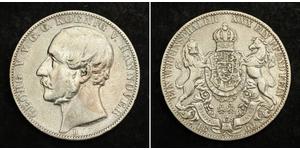
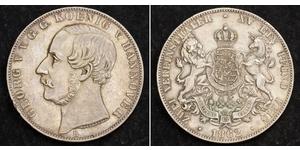
- The Ducal Thaler (18th Century): This piece is significant because it features the portrait of a ruling duke alongside traditional imperial motifs like double-headed eagles or royal crowns, which were removed during republican shifts. The high quality silver content makes them prized by serious collectors who prefer uncirculated examples over worn specimens.
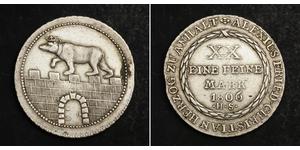
- The Pre-Unification Groschen: Small denomination copper pieces often bear the mint mark for Dessau directly on their reverse shields. These coins are vital proof of local currency usage before they adopted Prussian marks and were issued in a standardized decimal system that replaced them after unification.
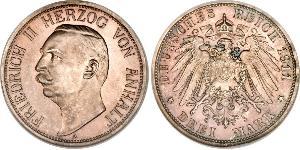
- The German Empire Quartermarks (Post-1863): Following the formation of an empire, Anhalt-Dessau continued minting specific state-issue coins bearing its unique coat of arms. These serve as historical markers showing when a small principality transitioned from full sovereignty into federal membership while maintaining its own identity.
- The Gold Medals: Though rare in circulation, occasional gold issues were struck to celebrate anniversaries or ducal marriages. They carry exceptional artistic detail with legends written in classical styles rather than the Germanic vernacular often seen on silver denominations of that era.
Cultural Legacy
The coinage leaves a legacy beyond mere metal value, serving as historical witnesses to the political philosophy and identity construction within Central Germany. The symbols used reflect Lutheran values prevalent during this period—simple crests devoid of ostentatious decoration.
Furthermore, the transition from portraits of dukes to more abstract emblems mirrors broader cultural shifts away from monarchy toward nationalism. A collector examining a coin bearing only an imperial crown rather than a specific family name is essentially witnessing the end of feudal rule and rise of modern democratic ideals that would later define Europe.
The heraldry used on reverses connects Anhalt-Dessau to its cousins in Zerbst, Köthen and Bernburg. This shared iconography tells us how these territories remained linked despite political separations until their eventual unification into a single administrative entity after the great wars of modern history.
For collectors
Anhalt-Dessau remains an essential chapter for those collecting German numismatics because it represents one of the longest surviving distinct state identities within a unified framework. The rarity often stems from small mintage numbers during periods when local minting rights were surrendered or merged under Prussian administration.
- Rarity Factors:
Duplicates are common for copper pieces, but silver denominations with original luster and strong contrast in portrait relief command significant attention. This distinction is useful because high quality preservation often correlates directly to how well these coins were used historically—stored away in personal savings rather than spent on trade.
- Rareness:
The split nature of the Anhalt duchy makes collecting specific "states" like Dessau distinct from neighboring ones. If you look for coins minted specifically in Dessau versus shared mints used by sister states, you will find a fascinating puzzle to solve without needing expensive catalogues.
- Potential:
Holders of these assets are often rewarded with appreciation over long holding periods not solely due to metal inflation but because they represent history that cannot be duplicated. Each coin tells a story about an economy balancing local tradition and modern integration.