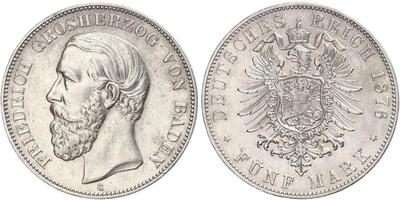
| View |
| preceded by | |
 Brazil
|
||||||||||||
|


| succeeded by |
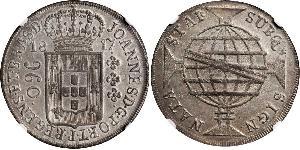
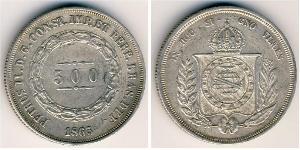
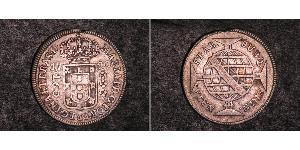
| Brazil | Link to Wikipedia |
Brazil: History, Coinage and Collectibles
The Empire of Brazil stands as a testament to one of South America's most profound transitions from colonial outpost to imperial powerhouse. To understand its coinage is to study the arc of independence itself, where metal became a vessel for declaring sovereignty over vast territories rich in natural resources.
Historical Background
Brazil emerged into global history after Portuguese explorers first sighted its coastline at the turn of the sixteenth century. While indigenous civilizations managed these lands long before European arrival, it was the influx of sugar and subsequently coffee cultivation that shaped the economy's rhythm for centuries. The geopolitical landscape shifted dramatically in 1822 when Dom Pedro I severed ties with Portugal to proclaim an independent nation.
The stability provided by Emperor Dom Pedro II during his reign is what most numismatists value regarding this era, yet it sits upon a foundation of complex imperial maneuvering. As the empire expanded its borders and consolidated power in Rio de Janeiro and later Brasília, trade routes connected South American markets to European banking houses. This connection meant that local economies often relied on precious metal standards imported from Lisbon or London before they could be struck locally with distinct national characteristics.
Currency and Coinage History
The evolution of money in Brazil began heavily influenced by Portuguese systems, utilizing the Escudo and Real frameworks. However, as independence solidified, there was a drive to establish a currency that reflected local identity rather than colonial allegiance. Early efforts often involved striking silver denominations intended for trade with neighboring regions.
Metal standards fluctuated due to external market pressures, particularly regarding gold mining in Minas Gerais which provided significant bullion reserves for the state treasury. The monetary system relied on high value pieces made of precious metals while everyday commerce utilized lower denomination copper or brass coins produced locally within Rio de Janeiro mints before production centers expanded later.
This era is distinguished by a standardization process similar to other nations that were establishing their own national identities through trade law and banking regulation. The transition from the Real system toward decimal coinage systems occurred slowly, reflecting an empire attempting to balance old-world European traditions with New World realities.
Mints and Coin Production
Coin production was centralized in Rio de Janeiro for much of its existence until political instability disrupted operations. The facilities utilized heavy machinery imported from Europe but were operated by a diverse workforce ranging from Portuguese veterans to local artisans. These workshops became centers where the national symbol—often nature-inspired or royalist—took shape on circulating currency.
Aesthetic choices reflected deep cultural ties, distinguishing Brazilian coinage from other Latin American states that might prioritize military imagery or religious scenes more heavily in early periods. While silver coins often carried portraits of emperors, copper issues sometimes focused purely on numerals and denominations to reduce production costs for daily transactions.
The artistic quality remained consistently high due to the influence of European engravers who trained locally during the imperial period. This era produced some of the finest relief work seen in South American numismatics before the twentieth century introduced modern manufacturing techniques to the Americas.
Notable Coins
Coin enthusiasts often focus on gold pieces struck under Dom Pedro II, where rarity and historical weight combine. The 5000 Reis coin is particularly significant; it represents a high-value unit of trade that was frequently exported or held by wealthy merchants rather than common citizens.
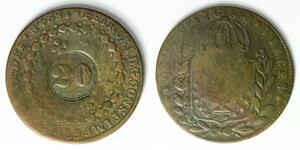
In the silver range, denominations like the four hundred reis served as bridges for medium-sized commerce among planters and traders along the coast. These pieces often feature intricate relief work depicting local fauna or agricultural motifs alongside imperial portraits which celebrated dynastic stability.
Collectors also seek out copper coins that circulated daily within markets to understand how these denominations survived in circulation conditions unique to tropical climates and active port cities like Bahia. The wear patterns found on the oldest surviving examples offer clues about usage habits across vast agricultural regions where distance made centralized banking difficult even into the late nineteenth century.
Cultural Legacy
Brazilian coinage preserves symbols of a country in transition between monarchy and republicanism, with artistry reflecting values placed on stability and commerce. The imagery used to decorate these pieces often drew from local flora rather than foreign import themes common elsewhere during that period.
The designs served propaganda purposes for an empire needing unity amidst internal political debates regarding expansionist ambitions abroad versus agrarian needs at home. Each reign left marks of different artistic priorities, but the underlying theme remained consistent: showcasing Brazil as a modernizing nation capable of standing alongside major powers through its own monetary systems.
This legacy continues to inform how historians view economic history in South America where material evidence provides context for written records which may be incomplete. The physical objects remain tangible links between colonial foundations and national aspirations during one of the continent's defining centuries of growth.
For Collectors
The numismatic legacy remains important because it offers a window into how trade, culture, and governance were intertwined within South America’s largest nation. While many examples from early circulation periods are common to collectors today, pieces struck during specific reign changes or mint closures often carry higher significance.
Brazilian coinage provides a challenge for those seeking regional focus since production centers varied over time alongside currency standards that evolved through multiple reforms and transitions in government forms before the twentieth century. For serious students of history and money alike, this collection offers insights into an empire where commerce was king even as political tides swept toward new constitutional orders.