| View |

 Uruguay (1825 - )
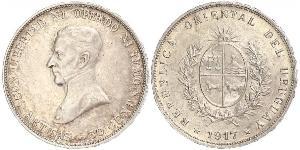
| Uruguay (1825 - ) | Link to Wikipedia |
Uruguay: History, Coinage and Collectibles
Welcome to a curated exploration of Uruguay, a nation that has often been likened to the "Switzerland of South America." While renowned for its stability in diplomacy and human rights within modern times, this small yet historically significant republic possesses a numismatic narrative as rich as any European kingdom. As we walk through the halls of history today, let us examine how metal currency captured moments of revolution, trade dominance, and national identity.
Historical Background
The story of Uruguay is intrinsically linked to its geography; it sits upon the Río de la Plata where South America's economic destiny was often decided in international waters. Originally inhabited by hunter-gatherers like the Charrúa, Guaraní, and Chaná peoples over 13,000 years ago, this region became a coveted frontier between Spanish and Portuguese empires. The early colonial period is characterized not just by conquest, but by a struggle for control of cattle ranching territories that fueled regional wealth.
The arrival of Europeans in the early sixteenth century brought both disease and settlement patterns from Europe to the Americas. As European powers vied for dominance between 1516 and the late seventeenth century, Montevideo emerged as a crucial military stronghold for Spain while Buenos Aires looked across the water. This competition shaped an economy heavily based on agriculture and livestock. For coin collectors today, this context is vital: money in Uruguay was initially a tool of imperial ambition.
The drive toward independence began with José Gervasio Artigas in 1811, leading to complex conflicts against Spanish, Portuguese, and Brazilian forces that lasted nearly two decades before the nation formally declared its sovereignty. The signing of the Treaty of Montevideo secured this liberty in 1828. These turbulent years were crucial for trade routes; once stability returned, Uruguay began opening itself up as a commercial republic. This era set the stage for migration from Europe—primarily Spain and Italy—which fundamentally altered demographics but also introduced artistic sensibilities that would later define their coinage designs.
The "Switzerland of South America" label is not merely metaphorical; it implies an economy built on transparency, social justice, and industrial innovation starting in the early 20th century. This reputation for progress was cemented after a turbulent mid-century involving internal strife and dictatorial rule ended with the restoration of democracy in 1985. For collectors, this transition from civil war to prosperity is reflected in how their currency stabilized during these decades.
Currency and Coinage History
The evolution of money in Uruguay mirrors its struggle for autonomy. Following the independence wars between Argentina, Brazil, Spain, and Portugal (1806–1835), many Latin American nations struggled to establish their own monetary systems against colonial remnants.
In 1841, a crucial step occurred when President Bernardo de Irigoyen established a national mint. This was the first significant move toward creating a self-sufficient currency system independent of foreign interference from Spanish Real or British Silver dollars that often circulated locally. By utilizing local silver reserves—particularly during times when global silver prices fluctuated—Uruguay began issuing its own "Pesos," initially subdivided into centavos and millésimos.
The early decades were difficult due to the economic instability of Argentina (which shares a border), which often caused inflationary pressures that Uruguayan leaders had to manage. The adoption of decimalization was pivotal, aligning with international standards used by neighboring Brazil. It allowed for seamless trade and banking operations across the Southern Cone.
The early coinage reflects this transitional nature. During these formative years, money served as a symbol of sovereignty against imperial neighbors; every time new copper pennies or silver pesos were minted in Montevideo rather than London or Madrid, it was a public declaration of nationhood to merchants and citizens alike.
Mints and Coin Production
The establishment of the Central Mint (Casa de Moneda) eventually provided Uruguay with its own artistic identity. Initially operating under foreign supervision due to economic constraints common in small South American nations, production was often handled on contract by mints in Europe or other parts of Latin America.
Fine silver from local mines and trade flows became the standard for high-denomination coins (the peso). The artistry reflects a conservative approach typical of Southern Cone aesthetics—often avoiding excessive ornamentation to emphasize dignity, order, and clarity. As technology improved toward the mid-20th century, designs shifted from classical republicanism symbols (Liberty caps) to more modern industrial imagery reflecting Uruguay's status as an advanced economy in agriculture and dairy.
The artistic direction of these coins is distinctively elegant rather than flashy. Unlike neighboring countries that might produce high-relief or baroque-style reliefs for silver, Uruguayan numismatics tend toward flat, refined designs often featuring allegorical figures representing Industry, Agriculture (the cow), or the Arts.
Notable Coins
The Silver Pesos of Independence:
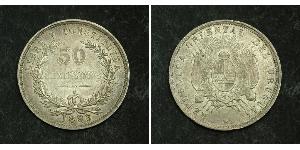
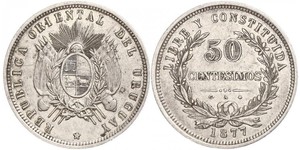
Perhaps among the earliest and most significant for collectors are the silver pesos struck in the mid-19th century. These coins often feature obverses that highlight national symbols such as a sun rising over liberty caps or the profile of President Artigas himself, who remains an enduring figurehead for federalism and autonomy.
The Significance: Collectors value these not just for metal content but because they represent the birth of trade stability after decades of civil unrest. High-grade specimens are rare due to high circulation needs in a pastoral economy where large denominations were required to pay ranchers.
Copper and Bronze Fractionals:
For everyday commerce, copper-based coins circulated widely from the 1850s through the late 20th century. These pieces are essential for historical context as they show the progression of denominations in a decimalized system.
The Significance: While less precious to modern investors due to metal value fluctuations, these provide insight into how Uruguay's agricultural exports were taxed and counted by workers.
The Modern Commemoratives:
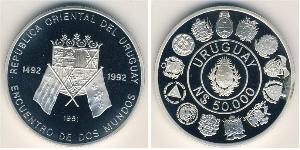
More recently, the Uruguayan Mint has produced high-quality commemorative pieces. Following their progressive social policies (such as legal cannabis or marriage equality), special coins have been released to celebrate these societal shifts.
The Significance: These are important to "progressive" collectors who look for currency that reflects humanitarian values and forward-thinking governance, distinct from the traditional historical narrative.
Cultural Legacy
Uruguay's coins act as a mirror of its national psyche. Just as Uruguay is celebrated globally for being a democracy with high levels of social equality—often ranking near the top in income distribution indices—its currency designs consistently reflect ideals of justice, agriculture, and nature.
The landscape often takes center stage; images of rolling green pampas (grasslands) or the iconic mountains near La Candelaria are common motifs. This is unique because few South American coins focus on rural pastoralism rather than indigenous battles or conquests alone. The culture of "honest work"—whether shepherding cattle in a field for decades, as was once done by Spanish colonists who introduced them—or the modern industrial workforce is honored.
This respect for social cohesion also means that designs tend to be respectful and understated rather than militaristic or imperial. Even during times of dictatorship, the mint maintained certain artistic standards regarding quality control because Uruguayans value education and civic infrastructure above mere raw power displays. This results in a collection history where "quality" is often preserved even if political climates fluctuate.
For Collectors
In conclusion, Uruguayan coinage offers a fascinating slice of numismatic history that differs significantly from the well-trodden paths of Spanish colonial silver or gold. It provides an opportunity to explore how smaller nations in South America managed their monetary sovereignty against regional instability.
The country's unique position as a bridge between Europe and Brazil allows for hybrid artistic styles that are rarely seen elsewhere. For collectors focusing on high-integrity, progressive-era currencies, Uruguay offers some of the cleanest mint marks in all of Latin America.
Brief summary: It remains important today because it captures the evolution from an agrarian frontier to a modern welfare state.