| View |
| preceded by | ||||
|
||||

|
|||||||
 First Brazilian Republic (1889 - 1930)
|
|||||||

| succeeded by | ||||
|

| First Brazilian Republic (1889 - 1930) | Link to Wikipedia |
First Brazilian Republic: History, Coinage and Collectibles
Historical Background
Welcome to a journey through one of the most transformative eras in South American history known as the First Brazilian Republic, often referred to by historians simply as the Old Republic. This period began with a military coup d'état that took place on November 15th, 1889, abruptly ending nearly five decades of imperial rule under Pedro II. For collectors and enthusiasts standing at this crossroads in numismatic history, understanding the political climate is essential to appreciating why certain coins were minted as they were.
The nation stood on shaky ground following its independence from Portugal centuries prior but reached a moment where modernization and global trade demanded new leadership styles. The establishment of republicanism was not merely a change in government; it represented the end of aristocratic court life centered around Rio de Janeiro's imperial palace. Instead, power shifted to rural oligarchies driven largely by coffee production. This agricultural engine fueled national wealth but also created social tensions that simmered for decades.
Economically, this era was defined by a heavy reliance on exports directed toward the United States and Europe. Coffee became known as "black gold," driving inflation and necessitating careful monetary management despite significant paper currency usage by state banks. The culture of the time moved from royal courtly grandeur to a republic founded upon civilist ideals, though these were often contested in practice among regional elites.
This was an age where the country attempted to industrialize while remaining agrarian. For coin collectors studying this period, they will see how the state tried to align its financial systems with international standards without sacrificing national pride or stability amidst political turbulence that would eventually lead to revolution and civil unrest in later years.
Currency and Coinage History
To understand what a citizen walked upon at any given point in this era, one must look closely at how money evolved during these critical decades. When the imperial regime was toppled in 1889, there were no massive minting strikes to celebrate independence immediately; rather, existing metal reserves and established trade relations dictated production.
The currency system inherited from previous governments faced immediate scrutiny because stability is essential for commerce. The old Escudo coinage had circulated for centuries but the new government needed symbols that reflected republican values without necessarily changing denominations overnight in times of economic uncertainty. Gold sovereigns continued to serve international trade purposes, while smaller copper and silver pieces were issued primarily for internal circulation within Brazil.
The transition period is fascinating because coins did not change overnight; old imperial designs often remained on presses until stock was used or a new commission ordered different imagery. This meant that finding an identical coin struck in 1890 versus 1875 could be impossible to distinguish without knowing the specific context of who commissioned it.
The economy faced pressures during and after World War I, where gold reserves fluctuated globally as nations moved toward monetary standardization or left the system behind. The Brazilian government struggled with these challenges while trying to keep trade flowing despite internal political instability that led to strikes in urban areas like Rio de Janeiro at key moments.
Money served two purposes: everyday commerce and preserving wealth during times of war. During this specific period, collectors see how coinage reflected economic shifts from a gold standard toward silver usage or mixed systems before Brazil later aligned with the Americas' dollar-based monetary system in subsequent decades under different regimes.
Mints and Coin Production
The heart of this era's numismatic production lay at the Casa da Moeda do Brasil located primarily within Rio de Janeiro. During these early years, minting technology was still heavily reliant on hand-operated presses that transitioned slowly toward mechanization as industrial capabilities improved across Latin America.
Mintmasters and engravers of this period were tasked with an interesting challenge: creating new designs while keeping production costs low enough to not deplete the national treasury. Artistic styles moved from classical depictions often seen in earlier imperial coins, moving into simpler engravings that prioritized quantity over fine detail as silver reserves dwindled.
The physical locations of minting facilities remained relatively stable for much of this time because relocating equipment and workers during a period of political instability would have been disastrous. However, the symbols being stamped onto metal plates changed significantly to reflect the new regime's motto and iconography while often keeping older portraits or national emblems.
Metal composition became another critical factor in production quality. Early Republican coins were struck on copper-nickel alloys rather than pure metals due to scarcity issues exacerbated by global demand for gold during wartime banking crises later on.
Notable Coins
- The 50 Centavos Gold Sovereigns:
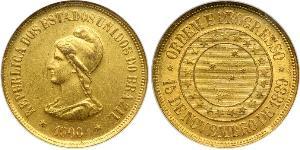
These pieces represent perhaps the most prized coins from this specific era. Despite bearing old imperial imagery in their earlier designs, these were struck during a time of intense political change. The historical context is that they backed international trade when Brazil was an agrarian powerhouse selling coffee to Europe and Japan.
- The Silver Dollars:
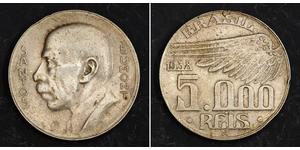
Minted for export purposes mostly with Japanese or North American merchants, these pieces featured designs adapted over time from imperial standards. They were vital for paying imports without relying on foreign paper money that might devalue against local goods.
- Copper Centavos With Republican Imagery:
This is a significant category because they represent the shift in national identity. Early designs kept royal motifs, but later strikes featured eagles or other republican symbols without crowns to denote loyalty to state rather than person.
Cultural Legacy
The legacy of this coinage lies in its ability to preserve a moment of transition between the monarchy and modern republicanism through metal. As one examines these coins, they are not just currency but artifacts that reflect how art was used by state power during times when political authority was fragile.
Culture played a massive role in what symbols were chosen for the faces of coinage. For instance, images often highlighted agriculture to celebrate coffee production which fueled national wealth even while cities grew around industrialization efforts and labor unions began demanding better rights decades later within this same historical window.
For Collectors
The coins from this period remain important today because they tell the story of a nation building its identity amidst global pressure to modernize. Finding a specific date is not just about rarity; it helps us understand how money was controlled by state banks and political parties that vied for power.
To an auction buyer or museum specialist, these pieces represent the early phase of professional numismatics in South America as private mints were banned during this time to prevent counterfeiting. This monopoly on coinage allowed collectors today a chance to see how economic stability was managed through state-controlled production before later reforms introduced new currencies.
In summary, whether examining copper coins used by market women or silver pieces for foreign trade, these items provide an educational lens into the history of Brazilian republicanism and why monetary systems evolved differently in this region compared to European powers that had long-established banking traditions during those same decades.