8 Real Bolivia Silver Philip III of Spain (1578-1621) / Philip IV ...
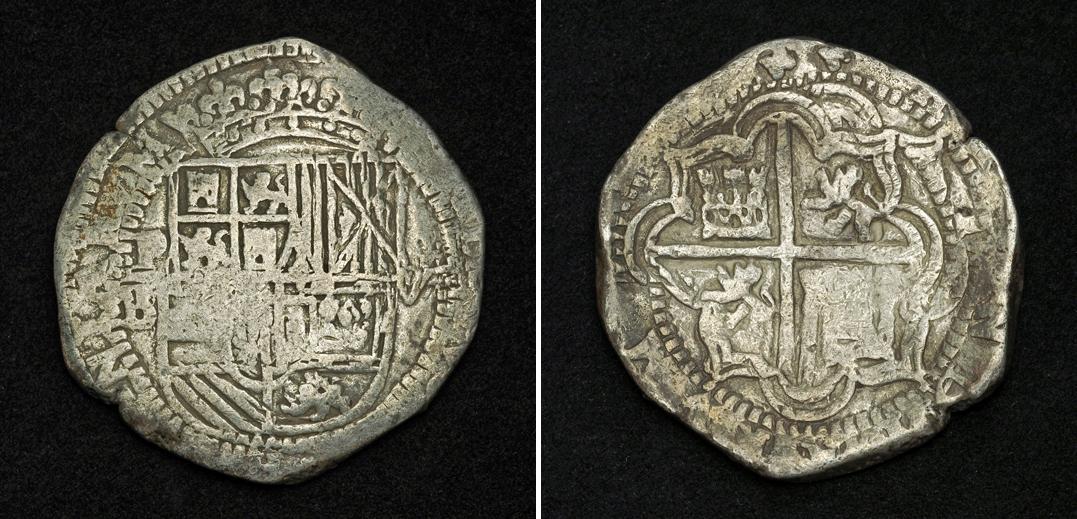
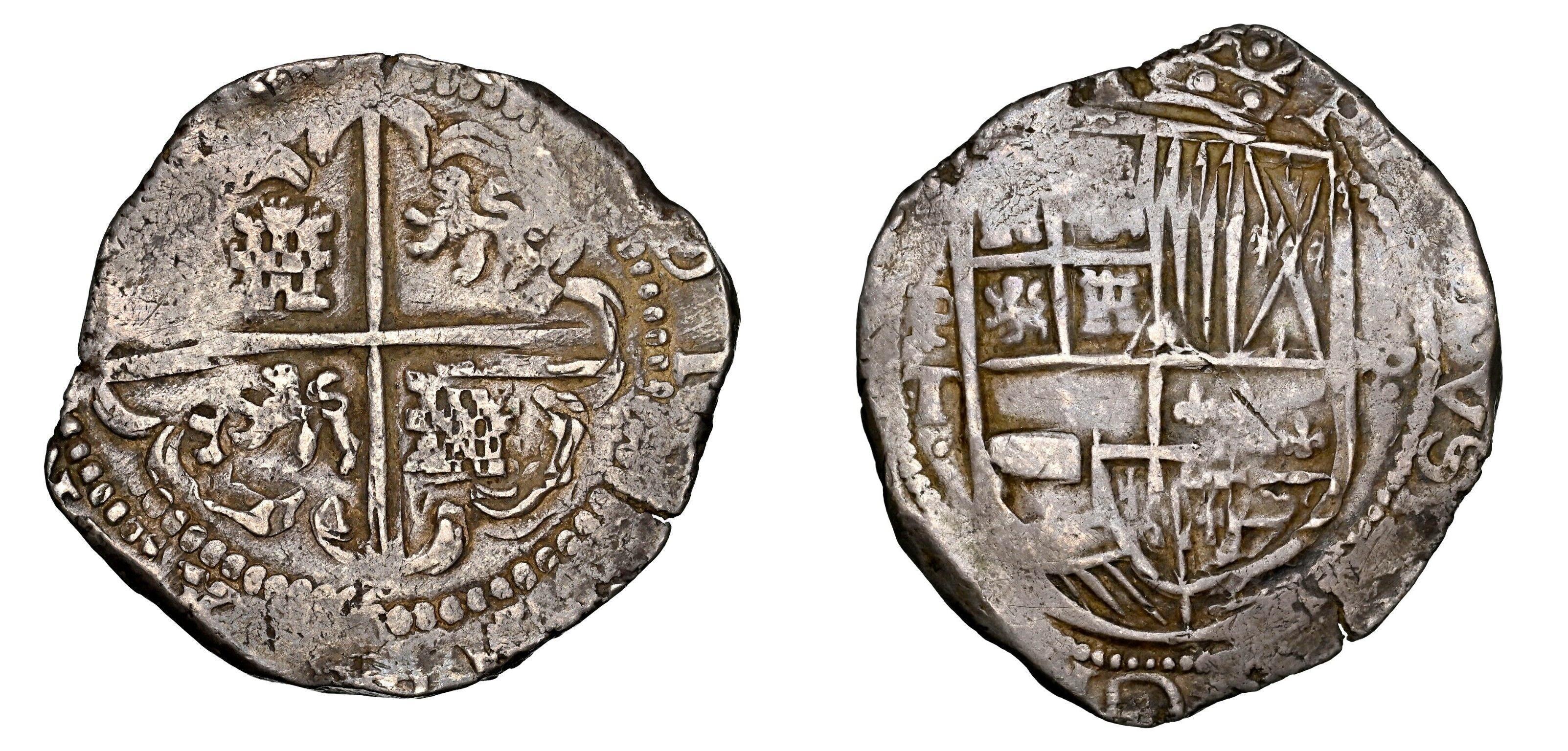
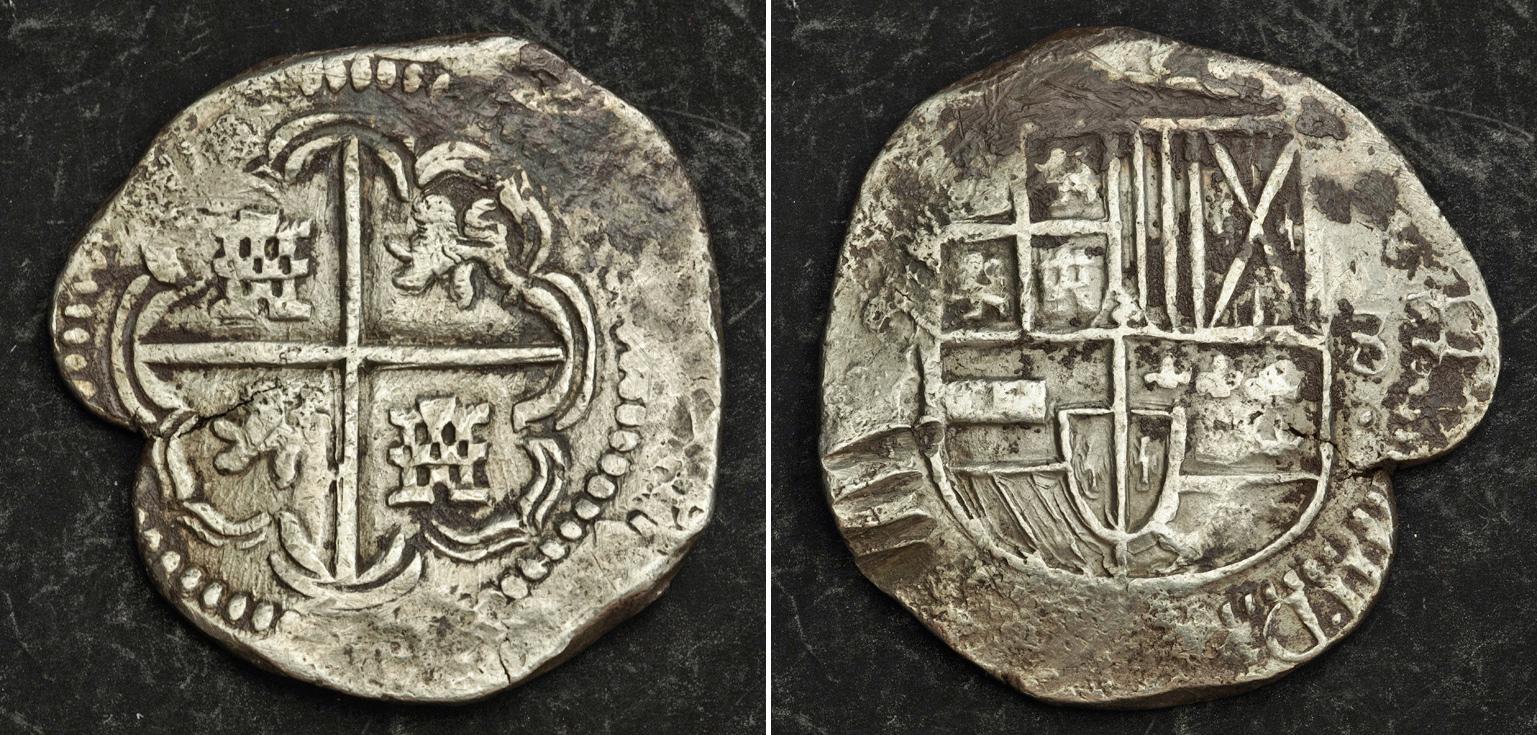
1605, Bolivia, Philip III of Spain. Large Colonial Silver 8 Reales Cob Coin. R!
Mint Place: Potosi (P)
Mint Year: 1596-1605
Mint Place: Potosi (Bolivia)
Reference: CT-121, KM-10. R!
Assayer: Hernando Ballesteros (B)
Denomination: Cob of 8 Reales (Piece of Eight)
Weight: 26.53gm
Diameter: 37mm
Material: Silver
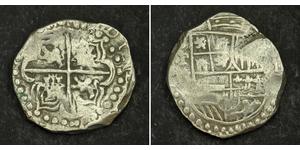
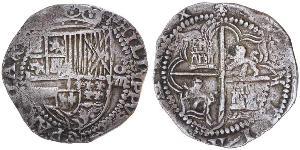
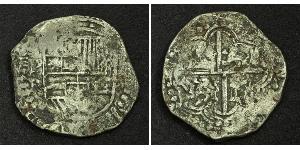
Obverse: Coat of Arms of the spanish line of the House Habsburg. Mint- and Assayer initials (P/B) in left, value (oVIII) in right field.
Reverse: Cross of Jerusalem with lions and castles in quarters. All within border of pellets.
For your consideration a scarce colonial 8 reales cob coin, struck at the colonial mint of Potosi (Bolivia), under Hernando Ballesteros (assayer during 1596-1605 with the assayer letter B), for Philip III of Spain. A well circulated, but rare and adorable specimen, struck on a broad planchet!
The first coinage of the New World and what comes to mind when we think of Pirate Treasure are pieces of eight. These first coins, often called cob coins, were made from roughly cut planchets (blanks) by striking them with hand dies. The word Cobb comes from a simplification of the Spanish phrase, Cabo de Barra, which translates as, from a bar. After the coins are struck, they are weighed by an assayer who cuts off any excess Silver which is why most coins have some of the impression cut away. Due to this method of manufacturer no two coins are alike and many are collected for their unique shapes alone. The Cobb coin, like anything that is no longer available is becoming very scarce and hence more valuable. The few remaining Coins are the last vintage of the glory days of pirates and Treasure hunting and are fast disappearing into private hands.
Philip III (Spanish: Felipe III; April 14, 1578 – March 31, 1621) was the King of Spain and King of Portugal and the Algarves, where he ruled as Philip II of Portugal (Portuguese: Filipe II), from 1598 until his death. His chief minister was the Duke of Lerma. Philip III married Margaret of Austria, sister of Emperor Ferdinand II, and like her husband, a member of the House of Habsburg.
Born in Madrid, the son of Philip II of Spain and his fourth wife (and niece) Anna, daughter of the Emperor Maximilian II and Maria of Spain. He shared the viewpoints and beliefs of his father, including his piety, but did not inherit his industry. The diligent old king had sorrowfully confessed that God had not given him a son capable of governing his vast dominions, and that he had foreseen that Philip III would be led by his servants. This assessment ultimately proved correct. In the view of historian J. H. Elliott, his "only virtue appeared to reside in a total absence of vice".
The new king put the direction of his government entirely into the hands of his favourite, the Duke of Lerma, Francisco Goméz de Sandoval y Rojas, and when he fell under the influence of Lerma’s son, Cristóbal de Sandoval, the Duke of Uceda in 1618, he trusted himself and his states to the new favourite. Unlike his father, Philip was not interested in the day-to-day business of government. He spent many months each year travelling to different palaces with his court, away from the government centre. His household costs rose enormously at a time of falling income.
He died at Madrid on March 31, 1621. The story told in the memoirs of the French ambassador Bassompierre, that he was killed by the heat of a brasero (a pan of hot charcoal), because the proper official to take it away was not at hand, is a humorous exaggeration of the formal etiquette of the court.
| 1 | 2 |
|---|
(3205 X 1536 pixels, file size: ~872K)
Posted by: anonymous 2023-10-30
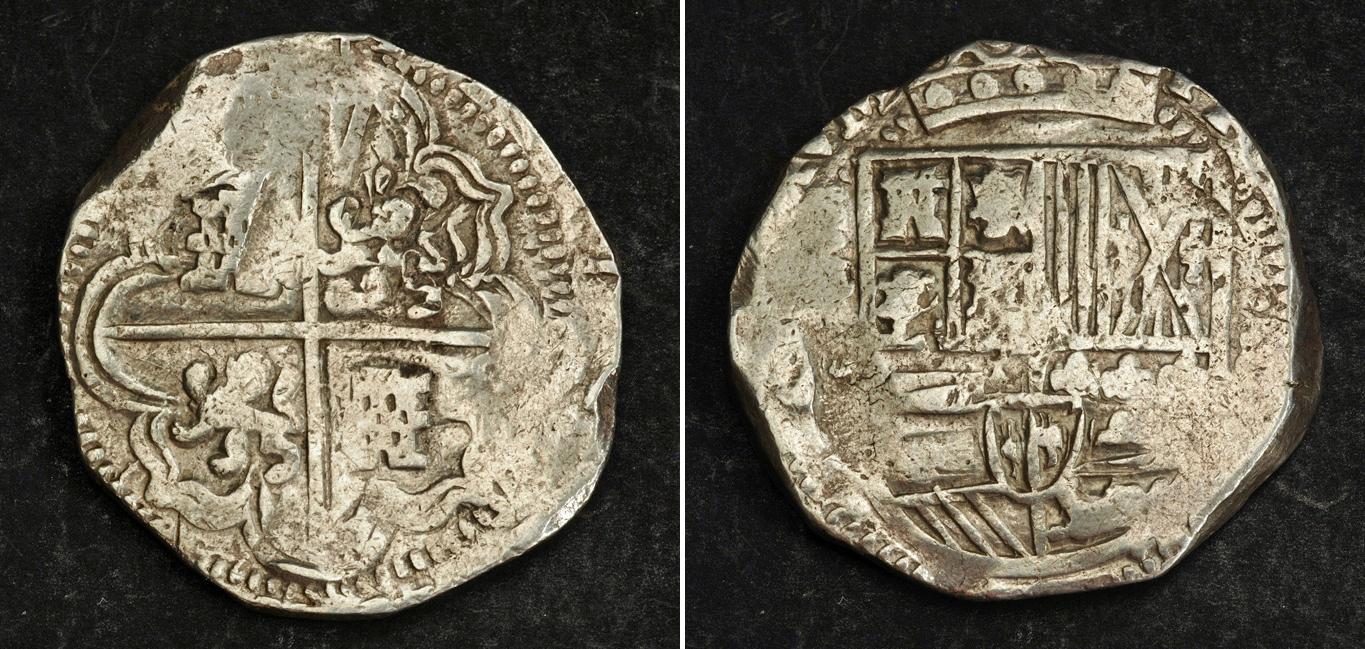
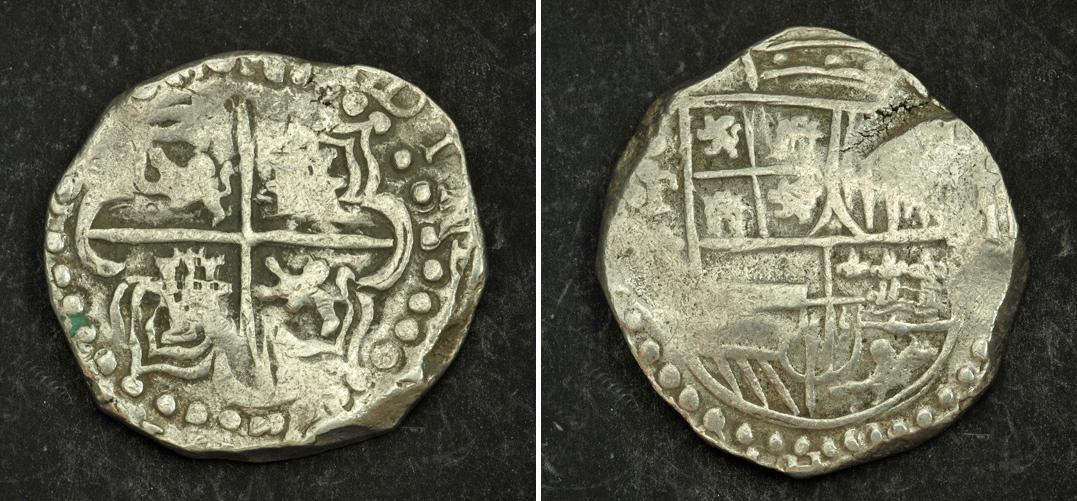
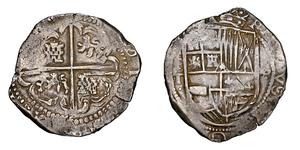
1618-1621, Bolivia, Philip III. Silver 8 Reales Cob Coin. Assayer T! NGC XF-45! Mint Period: 1605-1612 Mint Place: Potosi (Bolivia) Assayer: Juan Ximenez de Tapia (T)Denomination: Cob of 8 Reales (Piece of Eight) Condition: Certified and graded by NGC as XF-45!Reference: Cal-T ...
(1365 X 649 pixels, file size: ~201K)
Posted by: anonymous 2017-09-17
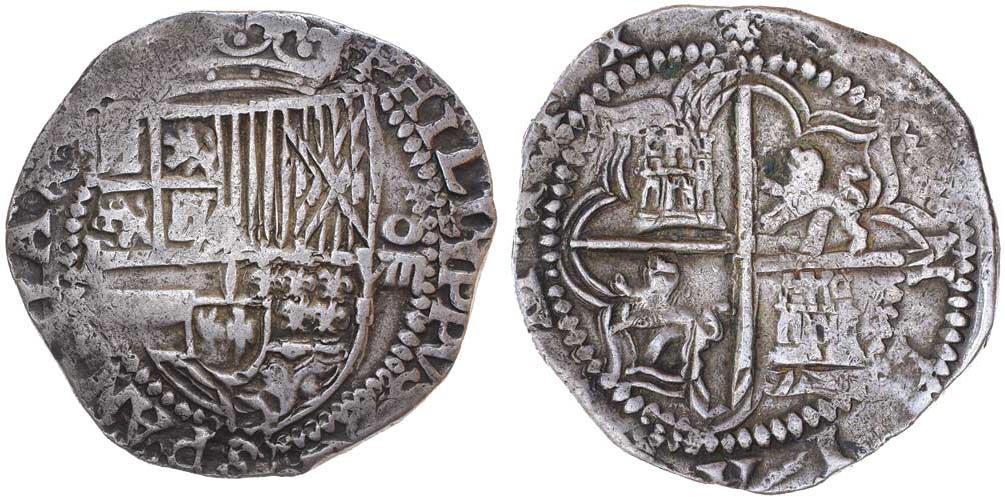
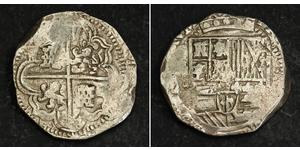
1610s-1630s, Bolivia, Philip IV. Spanish Colonial Silver 8 Reales Cob Coin. R! Reference: KM-19a. R! Mint Period: 1610s-1630s Mint Place: Potosi (Bolivia) Assayer: Juan Ximenez de Tapia (T)? Denomination: Cob of 8 Reales (Piece of Eight) Condition: Cleaned in the past, otherwise V ...
(1537 X 735 pixels, file size: ~265K)
Posted by: anonymous 2017-06-23
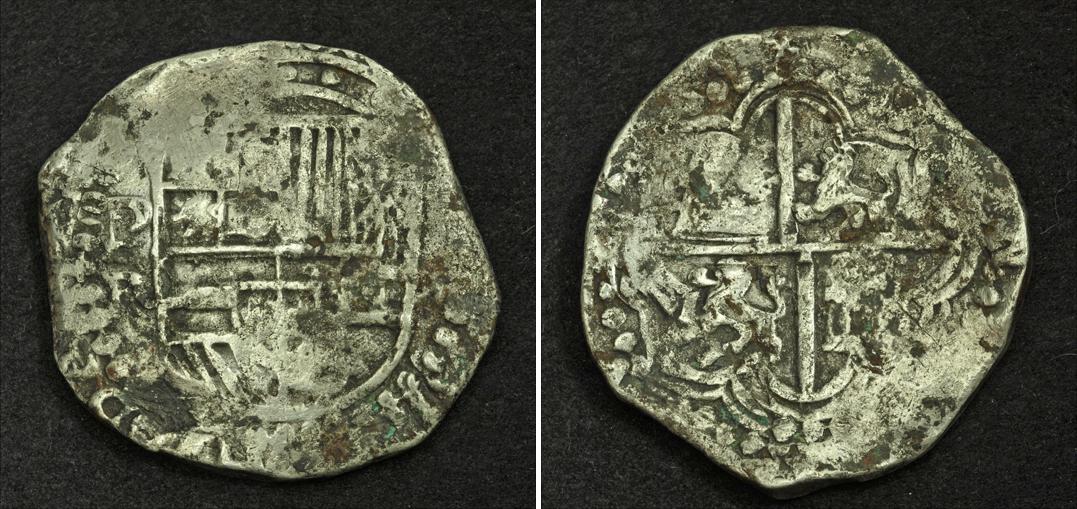
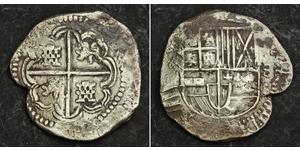
1610s-1630s, Bolivia, Philip IV. Spanish Colonial Silver 8 Reales Cob Coin. Reference: KM-19a. R! Mint Period: 1610s-1630s Mint Place: Potosi (Bolivia) Assayer: Juan Ximenez de Tapia (T)? Denomination: Cob of 8 Reales (Piece of Eight) Condition: Dark oxidation deposits, cleaned b ...
(1077 X 501 pixels, file size: ~115K)
Posted by: anonymous 2016-06-17
1602?, Bolivia, Philip II. Rare Colonial 8 Reales Cob Coin. Transposed Arms Variety! Mint Place: Potosi (Bolivia) Ruler: Philip III (Felipe III) of Spain. Denomination: 8 Reales (Cob Piece of Eight) Reference: KM-10. Very rare with transposed lions and castles (a mistake of the eng ...
(1005 X 497 pixels, file size: ~120K)
Posted by: anonymous 2015-02-20
BOLIVIA, Phillip III (1598-1621), silver eight reales, Potosi Mint (KM.10). Toned good very fine.
(1077 X 509 pixels, file size: ~139K)
Posted by: anonymous 2015-01-13
1613, Bolivia, Philip III. Scarce Silver 8 Reales Cob Coin. Curved R Assayer! Assayer: R (over B!) Mint Place: Potosi (P) Mint Place: Potosi (Bolivia) Mint Period: 1605-1613 (not dated) Reference: KM-10 (Assayer: Curved R!). R! Denomination: Cob of 8 Reales (Piece of Eight) Co ...
|
-300-150-UTQK.GJAhr0AAAEsnLAblcbe.jpg "1 Shilling First Austrian Republic (1918-1934) Silver")
1 Shilling First Austrian Republic (1918-1934) Silver
group has 61 coins / 55 prices
⇑
-300-150-1Y_BwcI0IjEAAAEmvOQ6TOhD.jpg "1 Stater Ancient Greece (1100BC-330) Electrum")
1 Stater Ancient Greece (1100BC-330) Electrum
group has 18 coins / 17 prices
⇑