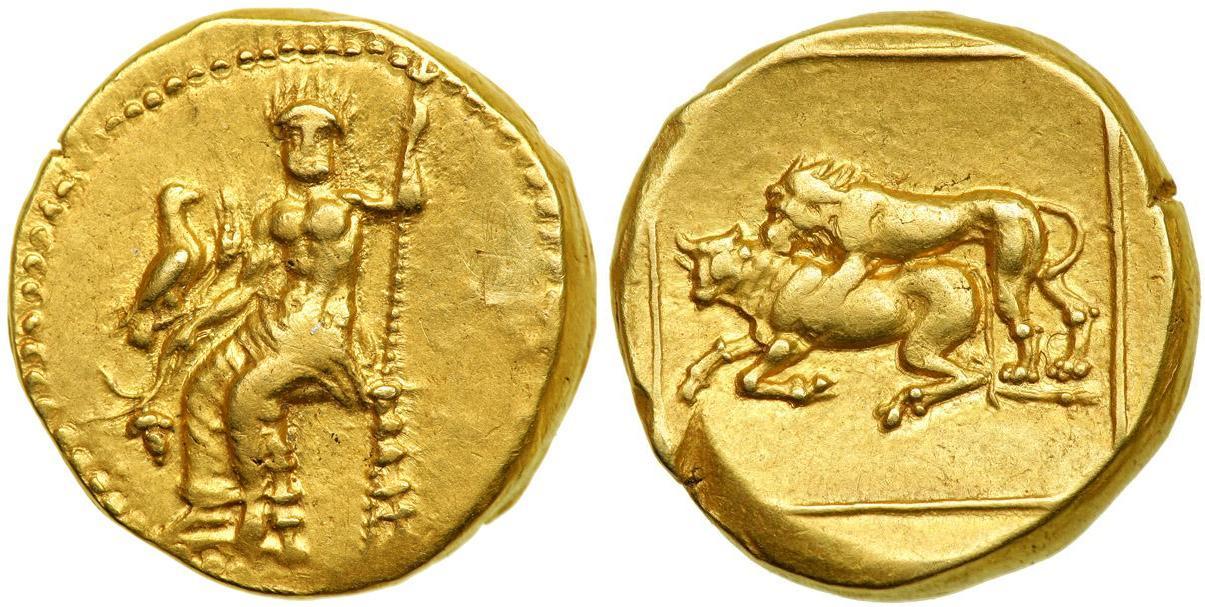
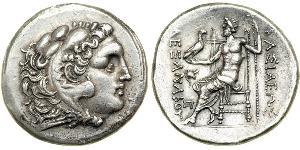
2 Daric Ancient Greece (1100BC-330) Gold
Overview
-MxgKbzbi1B8AAAFLiqWjltlx.jpg "2 Daric Ancient Greece (1100BC-330) Gold")
Alexandrine Empire. Mazaios. Satrap of Babylon, circa 331-328 B.C. Gold Double Daric (17.1 gm). Baaltars seated left, torso facing, holding grapes, grain ear and eagle in right hand, scepter in left. Reverse: Lion attacking bull to the left within linear square frame; all within shallow incuse square. See Treasures of Ancient Bactria (Miho Museum, 2002+), 44a and 44b (both ex Mir Zakah II deposit) variety (lion attacking bull to the right). For Mazaios' Cilician silver prototype, cf. SNG Levante 100-106, and for barbarous or local issues of the same type cf. SNG France 2, 352-353. Extremely rare, third known of the type and second with the reverse design to the left. Choice Very Fine. Well described in the Triton X Sale as follows: This extraordinary gold issue, unknown until the discovery of two examples in the Mir Zakah II deposit, bears the familiar types used by Mazaios as satrap of Cilicia for his silver staters, but without the usual legend and monograms. Mazaios, a Persian nobleman, had a long and distinguished career. He was appointed satrap of Cilicia about 361 B.C. and the region known as ‘Across the River’ (modern Syria, Lebanon, and Israel) was later added to his domain. He fought against the Phoenicians of Sidon who revolted with the support of Pharaoh Nektanebo II and the Greek mercenary leader Mentor. Mazaios later served as the satrap of Mesopotamia and married Barsine, the daughter of Darius III. Mazaios' absence from the first fighting when Alexander invaded Asia has been explained by the likelihood that he was the satrap of Babylon at the time and was guarding Darius' back. In 331 BC, as Alexander marched into the heart of the Persian Empire, Mazaios obstructed his way with a small cavalry contingent and forced Alexander to take a route leading to Gaugamela, where the massive Persian army had assembled in wait for Alexander on the Persians' chosen battleground. In the battle itself, Mazaios took refuge in Babylon. Alexander, upon his approach to the great metropolis, announced that Babylon would not be plundered, and Mazaios thereupon surrendered the city to him. Alexander rewarded Mazaios by retaining him as governor, a position he held until his death in 328 B.C. Alexander made Babylon his royal seat, and there established one of his most important mints, where a large quantity of regular ‘imperial’ coinage was struck, including the impressive dekadrachms. In addition to the imperial coinages, Babylon also produced a substantial group of local coinages, some of which initially bore the name of Mazaios, and it is among these Babylonian issues that the present type is to be placed. Mazaios instituted two principal local coinages in Babylon, silver ‘lion staters’ and gold double darics. For the ‘lion staters’ Mazaios adapted designs from a coinage that he had issued in his earlier days as satrap of Cilicia. In gold, Mazaios struck double darics modeled after the familiar darics of the pre-Alexander Persian world, with a figure of the Persian king running right and holding a spear and bow. The types of the present coin identify the issuer as Mazaios, and the omission of a legend is characteristic of the Babylonian context. Achaemenid gold was routinely issued without legend, as were many of Mazaios' standard double darics. Although the early ‘lion staters’ are normally struck in the name of Mazaios, some bore neither legend nor control mark. The present type is to be located alongside Mazaios' other Babylonian coinages but it is clearly distinct from them. Perhaps st was an initial emergency issue that was later superseded, or perhaps it was a local variation for a special purpose.
type to read more
1
coins in the group
-300-150-MxgKbzbi1B8AAAFLiqWjltlx.jpg "2 Daric Ancient Greece (1100BC-330) Gold")
(1205 X 607 pixels, file size: ~158K)
Posted by: anonymous 2015-03-02
Alexandrine Empire. Mazaios. Satrap of Babylon, circa 331-328 B.C. Gold Double Daric (17.1 gm). Baaltars seated left, torso facing, holding grapes, grain ear and eagle in right hand, scepter in left. Reverse: Lion attacking bull to the left within linear square frame; all within shallow incuse ...
You may be interested in following coins
2026-08-21
- New coin is added to 20 Para Turkey (1923 - ) Copper
-300-150-pSF_AAEBxhYAAAEj3nducew3.jpg "20 Para Turkey (1923 - ) Copper")
20 Para Turkey (1923 - ) Copper
group has 6 coins / 5 prices
⇑
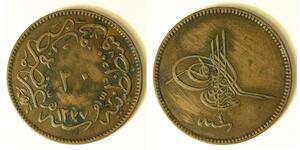
TURKEY 20 Para AH 1277//4 - Copper - Abdul Aziz - VF - 1005
2026-08-21
- New coin is added to 5 Mark Germany Copper/Nickel
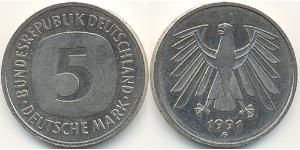
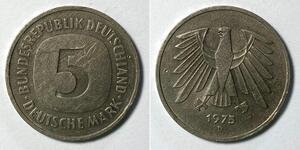
5 Mark Germany Copper/Nickel
group has 26 coins / 5 prices
⇑
You may be interested in ...

Coins Prices