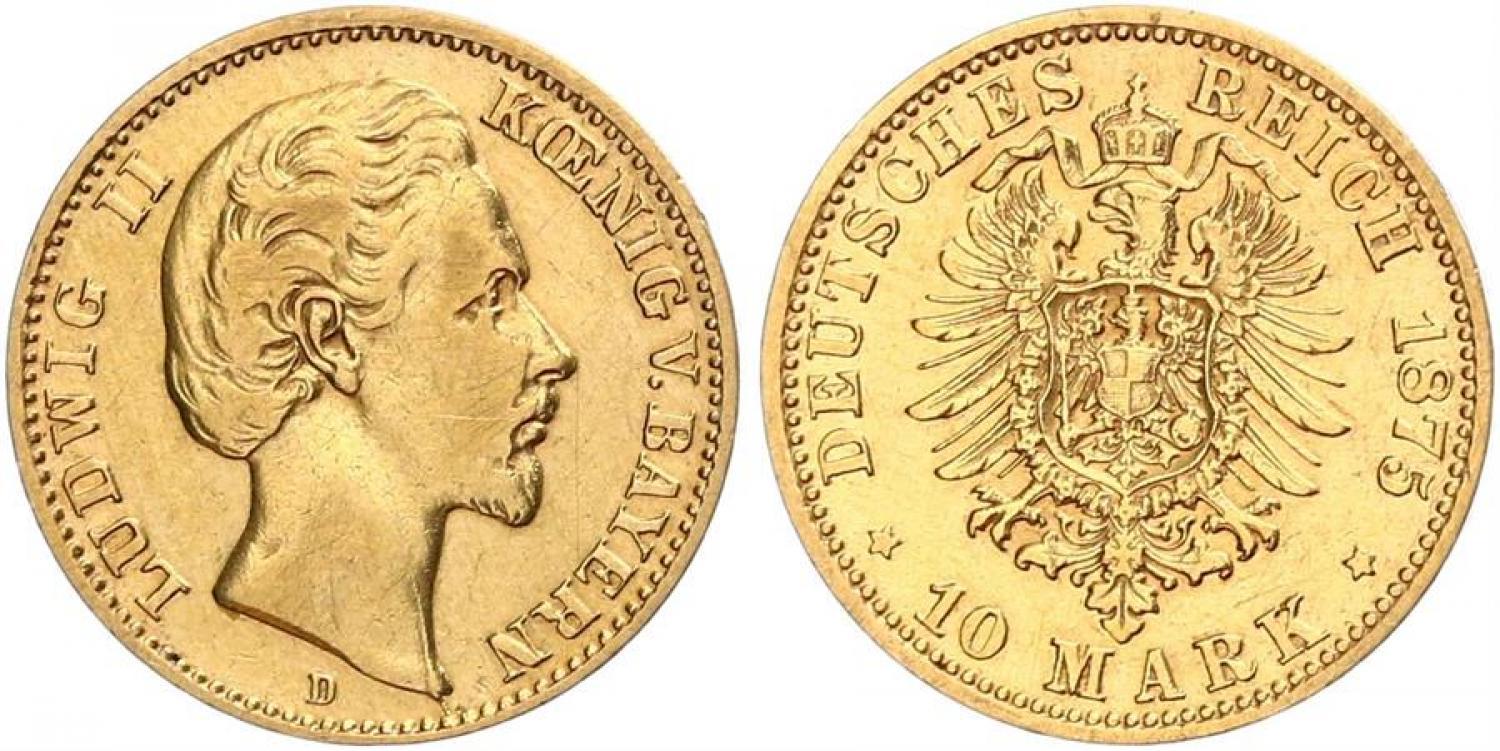
10 Mark Kingdom of Bavaria (1806 - 1918) Gold Ludwig II of Bavari ...
-LF0Kbzbi3qUAAAFL8rLk0LdK.jpg "10 Mark Kingdom of Bavaria (1806 - 1918) Gold Ludwig II of Bavaria (1845 – 1886)")
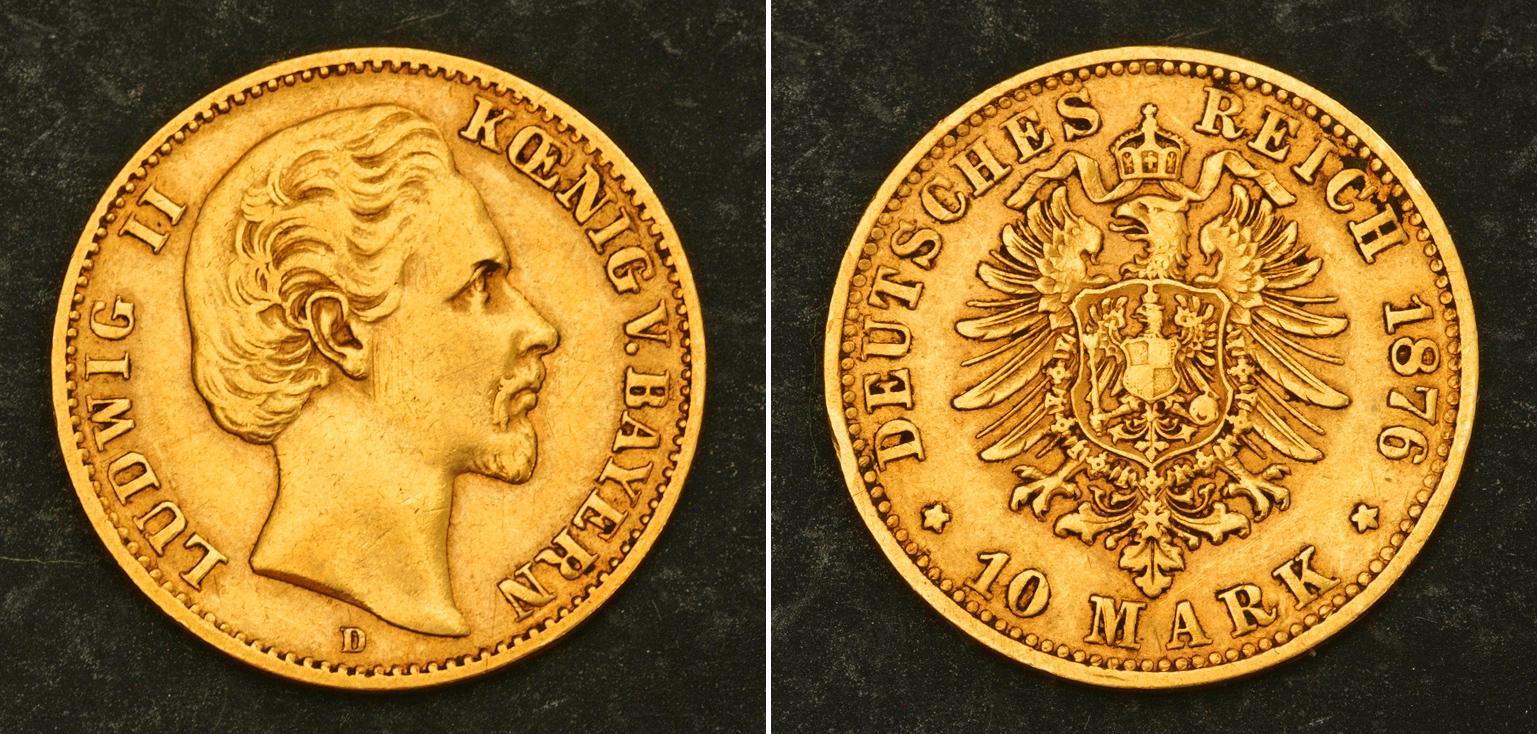
1874, Kingdom of Bavaria, Ludwig II. Nice Gold 10 Mark Coin.
Mint Year: 1874 Reference: KM-898. Mint Place: Munich (D) Denomination: 10 Mark Material: Gold (.900) Diameter: 19.5mm Weight: 3.92gm
Obverse: Young head of King Louis II (Ludwig II) of Bavaria right. Mint initial (D) below. Legend: LUDWIG II – KOENIG V. BAYERN Reverse: Crown of the German Empire above crowned Imperial German Eagle with shield at chest and star order. Value (10-M.) split in field below. Legend: DEUTSCHES REICH (oak-spray) 18-74 / 10-M.
The Kingdom of Bavaria was a German state that existed from 1806–1918. Elector Maximilian I Joseph of the House of Wittelsbach became the first King of Bavaria in 1806. The monarchy would remain held by the Wittelsbachs until the kingdom’s dissolution in 1918. Most of Bavaria’s modern-day borders were established after 1814 with the Treaty of Paris, in which Bavaria ceded Tyrol and Vorarlberg to the Austrian Empire while receiving Aschaffenburg and parts of Hesse-Darmstadt. As a state within the German Empire, the kingdom was second in size only to the Kingdom of Prussia. Since the unification of Germany in 1871, Bavaria has remained part of Germany to the present day.
Ludwig II (Ludwig Friedrich Wilhelm; sometimes rendered as Louis II in English) (August 25, 1845 – June 13, 1886) was king of Bavaria from 1864 until shortly before his death. He is sometimes referred to as the Swan King in English and der Märchenkönig (the Fairy tale King) in German.
Ludwig is sometimes referred to as Mad King Ludwig, though the accuracy of that label has been disputed. Because Ludwig was deposed on grounds of mental illness without any medical examination, and died a day later under mysterious circumstances, questions about the medical “diagnosis” remain controversial.
Ludwig is best known as an eccentric whose legacy is intertwined with the history of art and architecture, as he commissioned the construction of several extravagant fantasy castles (the most famous being Neuschwanstein) and was a devoted patron of the composer Richard Wagner.
View all coins in the group
-300-150-zmbZGYbckqMAAAFpez6Zt7cr.jpg "10 Mark Kingdom of Bavaria (1806 - 1918) Gold Ludwig II of Bavaria (1845 – 1886)")
(1500 X 751 pixels, file size: ~188K)
Posted by: anonymous 2019-03-25
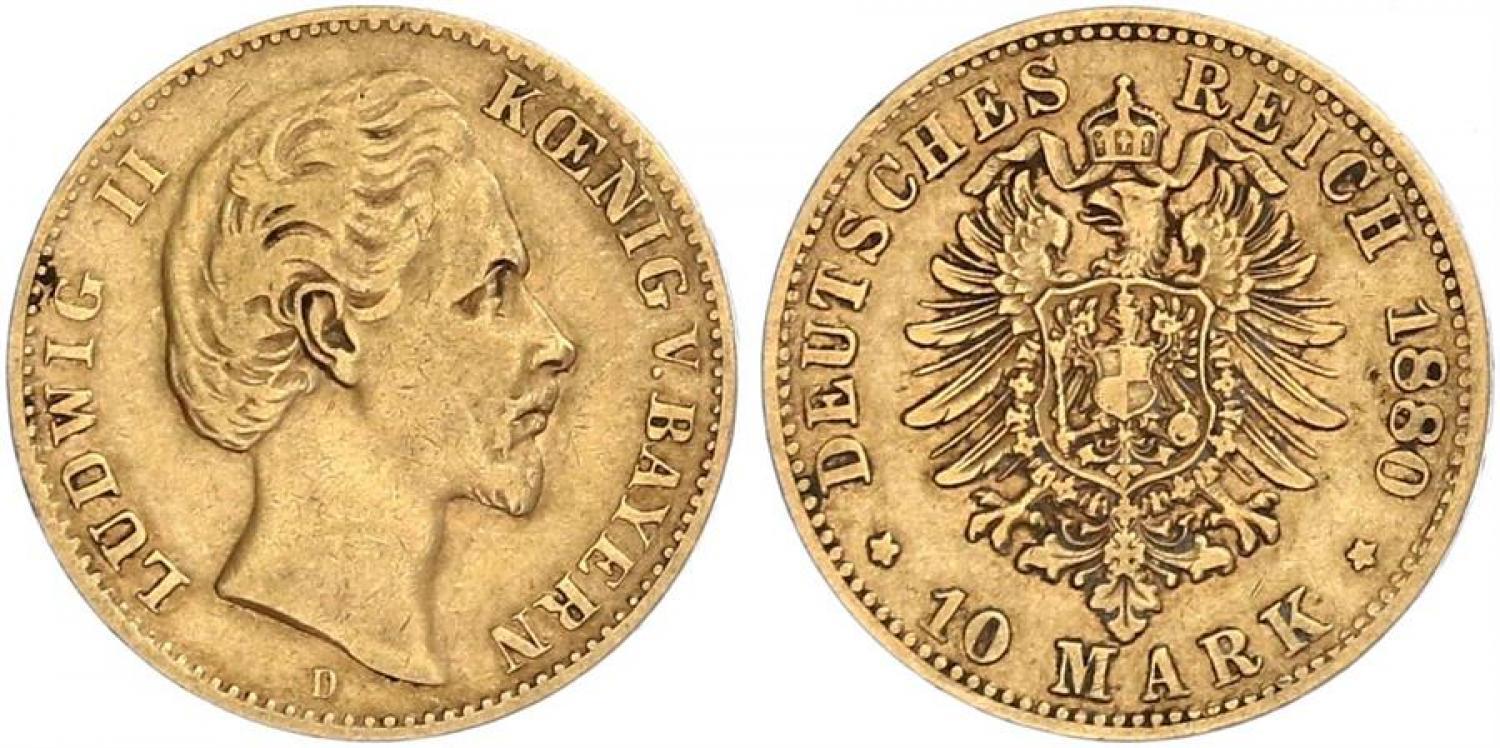
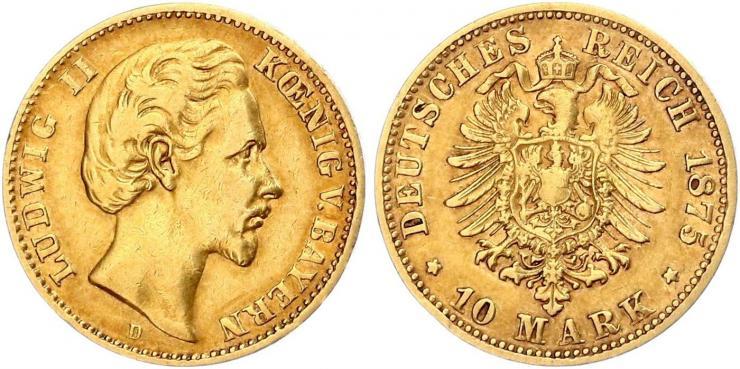
Bayern. Ludwig II. 1864-1886. 10 Mark 1875 D. Jaeger 196. GOLD. Einige Kratzer, sehr schön
-300-150-6BLZGYbc5SUAAAFpgnCZt7Mj.jpg "10 Mark Kingdom of Bavaria (1806 - 1918) Gold Ludwig II of Bavaria (1845 – 1886)")
(1500 X 748 pixels, file size: ~188K)
Posted by: anonymous 2019-03-25
Bayern. Ludwig II. 1864-1886. 10 Mark 1880 D. Jaeger 196. GOLD. Sehr schön
-300-150-SitEqa_rr1kAAAF1tjQ9VaoX.jpg "10 Mark Kingdom of Bavaria (1806 - 1918) Gold Ludwig II of Bavaria (1845 – 1886)")
(740 X 369 pixels, file size: ~64K)
Posted by: anonymous 2020-11-08
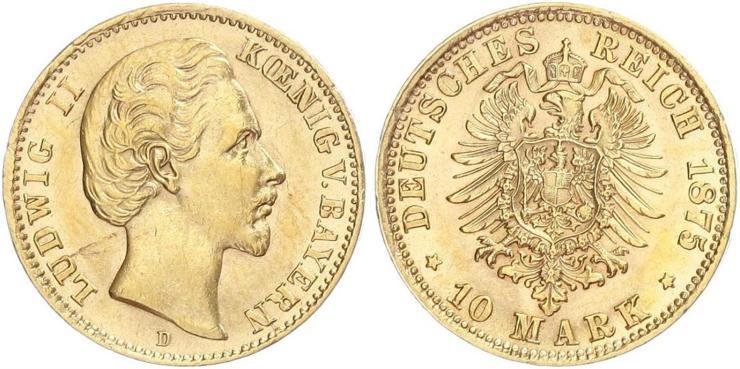
1875,Bayern. Ludwig II. 1864-1886. 10 Mark 1875 D. Jaeger 196. GOLD. Sehr schön.
-300-150-x5u9Ude9ksYAAAFtZCtLIWFn.jpg "10 Mark Kingdom of Bavaria (1806 - 1918) Gold Ludwig II of Bavaria (1845 – 1886)")
(740 X 369 pixels, file size: ~59K)
Posted by: anonymous 2019-09-24
1875,Bayern. Ludwig II. 1864-1886. 10 Mark 1875 D. Jaeger 196. GOLD. Winzige Schrötlingsfehler, vorzüglich +
-300-150-885_dbXUXwMAAAF1ZAXiU82d.jpg "10 Mark Kingdom of Bavaria (1806 - 1918) Gold Ludwig II of Bavaria (1845 – 1886)")
(740 X 369 pixels, file size: ~66K)
Posted by: anonymous 2020-11-15
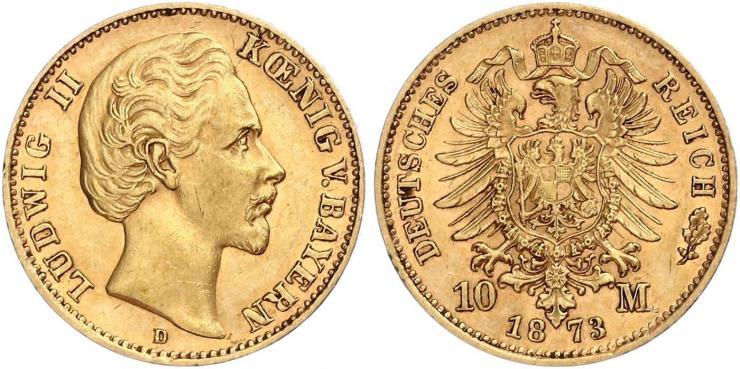
1873,Bayern. Ludwig II. 1864-1886. 10 Mark 1873 D. Jaeger 196. GOLD. Sehr schön +.
-300-150-juQKqUpYJCoAAAFkGkzX9koh.jpg "10 Mark Kingdom of Bavaria (1806 - 1918) Gold Ludwig II of Bavaria (1845 – 1886)")
(1537 X 734 pixels, file size: ~242K)
Posted by: anonymous 2018-06-29
1876, Kingdom of Bavaria, Ludwig II. Scarce Gold 10 Mark Coin. 3.92gm! Mint Year: 1876 Reference: KM-898. Denomination: 5 Mark Mint Place: Munich (D) Condition: Minor edge-hit at 8:30 o'clock (reverse), light deposits, otherwise about XF! Material: Gold (.900) Diameter: 19.5mm Weight: 3. ...
|
-300-150-to_BwcI0gqMAAAEq3LtDRaZH.jpg "1 Gulden Kingdom of the Netherlands (1815 - ) Silver Wilhelmina of the Netherlands (1880 - 1962)")
1 Gulden Kingdom of the Netherlands (1815 - ) Silver Wilhelm ...
group has 5 coins / 5 prices
⇑