| View |


|
|||||||||||||
 Kingdom of Bavaria (1806 - 1918)
|
|||||||||||||


| succeeded by |
| Kingdom of Bavaria (1806 - 1918) | Link to Wikipedia |
Kingdom of Bavaria: History, Coinage and Collectibles
Welcome to an exploration of a state whose history is written not just in books, but stamped upon metal that has survived for centuries. As we gather here today to examine the legacy of this storied land, consider how economic power shaped artistic expression long before cameras could capture the moment.
Historical Background
The story begins with a region rich in culture and strategic trade routes along the Danube valley. For centuries known as an ecclesiastical state within the Holy Roman Empire, Bavaria gradually transitioned into a Duchy under secular princes. The defining moment for its numismatic history arrived in 1805 when Napoleon reorganized Germanys political landscape through his Confederation of the Rhine.
Following these geopolitical shifts, the administration formally elevated to a Kingdom in 1806 with Maximilian I Joseph at its helm. This transformation was not merely ceremonial; it represented new administrative capabilities that funded larger public works and military endeavors. Throughout this period, the state maintained distinct cultural identity while navigating relationships between Vienna and Berlin. It is crucial for collectors to understand that Bavaria remained economically independent enough to issue its own currency until the monetary unification of modern Germany.
The kingdom grew into a powerhouse of culture before World War One ended it as an entity in 1918. This era was defined by high standards of living, religious devotion, and patronage for music and art, which seeped directly into how officials designed the national currency. The transition from feudal dues to state-issued money occurred during this prosperous period.
Currency and Coinage History
The monetary evolution in Bavaria mirrors its political maturity. Initially, local mints issued various copper pfennigs for daily commerce among merchants who traded grain and textiles across southern German borders. As trade routes expanded through the Holy Roman Empire networks, silver became vital.
In 1806, Maximilian introduced a gold thaler standard to stabilize finances during Napoleon era upheaval. This reform allowed Bavarian merchants to compete with Austrian Habsburg money in international markets without relying on foreign coinage systems for settlement of debts owed by the government or large industrial projects.
The silver content fluctuated wildly due to war and changing market values between 1806 and 1924. While some early issues were heavy, later mints often reduced weight slightly as bullion costs rose globally. This practice is a key lesson for collectors examining the condition of older specimens versus modern reissues or counterfeits.
Mints and Coin Production
The heart of this operation lay in Munich, where minters employed craftsmen who understood both metallurgy and artistic design as equally important. The Royal Mint maintained strict oversight over designs to ensure the state symbol remained clear on every piece produced for circulation or investment.
- Minting Traditions: Bavarian mints favored bold relief work, allowing coin wear without erasing portraits of monarchs too quickly. This design approach distinguished their output from neighboring states that adopted flatter styles earlier in the century.
- Techonology Evolution: The shift from hand-striking to mechanical presses occurred around 1860. Early collectors can often identify this by looking for slight blurring or doubling on high denomination issues post-dated 1875, though many rare early proofs remain crisp.
The artistic characteristics are what truly set these coins apart from standard German Empire pieces issued after unification. You will see unique floral motifs and local wildlife often integrated into the borders of shields or crowns on later designs.
Notable Coins
To understand the value system this kingdom created, we must examine a few specific examples that define its numismatic identity over two centuries.
The Silver Thaler (1806)
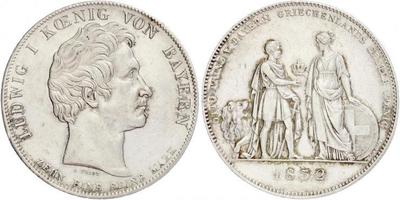
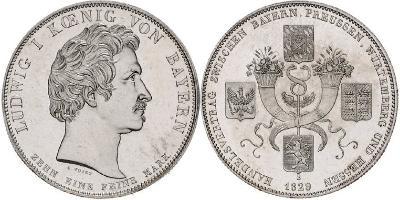
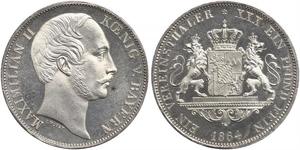
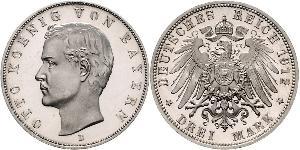
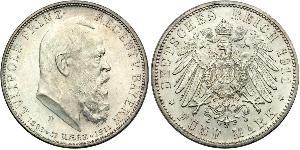
- This coin marks the transition from feudal economy to centralized state currency. It depicts the ruler seated on an elaborate throne often featuring imperial eagles alongside local Bavarian symbols like stags or lions. The obverse features a crowned head, which became increasingly refined under later monarchs.
The Gold Florin (1806-1924)
- A staple of the international market during this period. Its heavy weight and purity made it a preferred currency for trade between Bavaria, Austria-Hungary, and neutral Switzerland. Many early issues are rare today due to circulation.
The Copper Pfennig (Late 19th Century)
- This represents the daily bread of workers in Munich factories and farms during industrialization. While often overlooked, these low-denomination coins are essential for understanding social history alongside high-value investments.
Collectors should always appreciate that each coin was not just metal but a record of state finance authority at any given date.
Cultural Legacy
The iconography used on Bavarian currency reflects the deep-seated traditions and religious influences of southern Germany. Unlike secular regimes elsewhere, these coins carried significant weight in terms of civic virtue and Catholic identity among their citizens without modern political baggage interfering with appreciation today.
- Symbols of Authority: The crowns used are unique to Bavaria. They incorporate specific floral motifs found nowhere else in German numismatics prior to 1908, representing local flora distinct from imperial emblems elsewhere.
The artistic quality often rivals contemporary paintings because the state commissioned artists who were trained as sculptors and medalists rather than simple engravers. This ensures that a Bavarian coin feels like holding a small piece of art history rather than just financial transaction token.
For collectors
- Rare Specimens: Coins issued prior to 1870 often show more wear and fewer known mint marks. Seek high relief examples preserved in original circulation or proof condition as these command significant attention at auction houses globally.
This region remains a focal point for European collectors seeking pieces that bridge cultural divides before modern political fragmentation occurred fully across the continent during World War One.
- Historical Gateway: For those new to collecting state coins, Bavaria offers an accessible entry into numismatics. Their distinct identity means fewer duplicate types than generic empire wide series found elsewhere in Europe where currency issues overlapped heavily between sovereigns during peace time trade agreements.
A collection from this period tells the story of a people who valued heritage as much as commerce, preserved through silver and gold that survived centuries of conflict. Whether seeking investment or historical education, these coins offer tangible links to a past when money was made public art for all citizens to hold in hand.