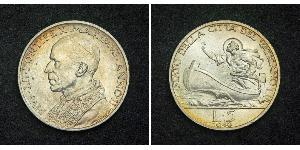
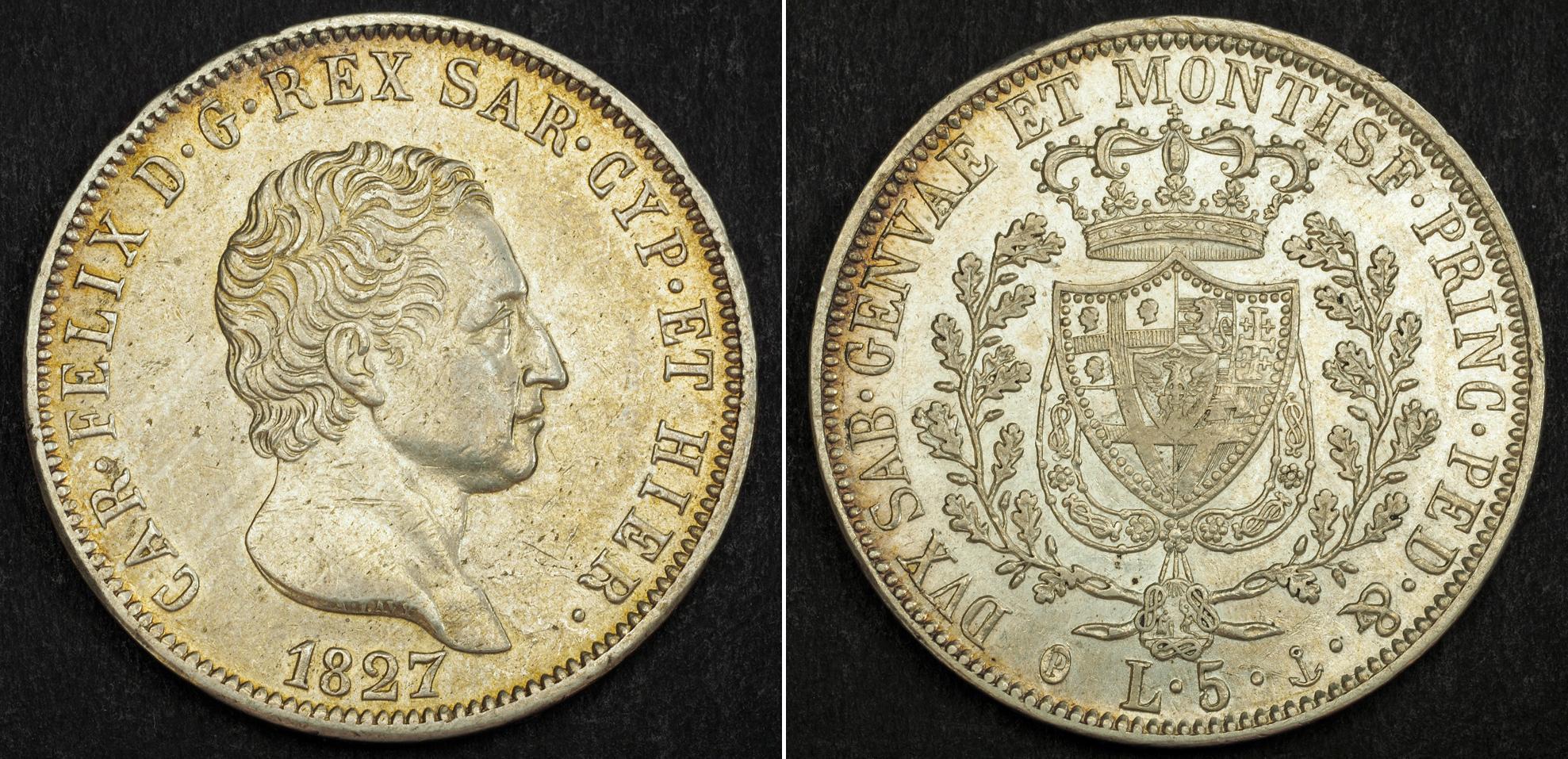
5 Lira Italian city-states Silver Charles Felix of Sardinia
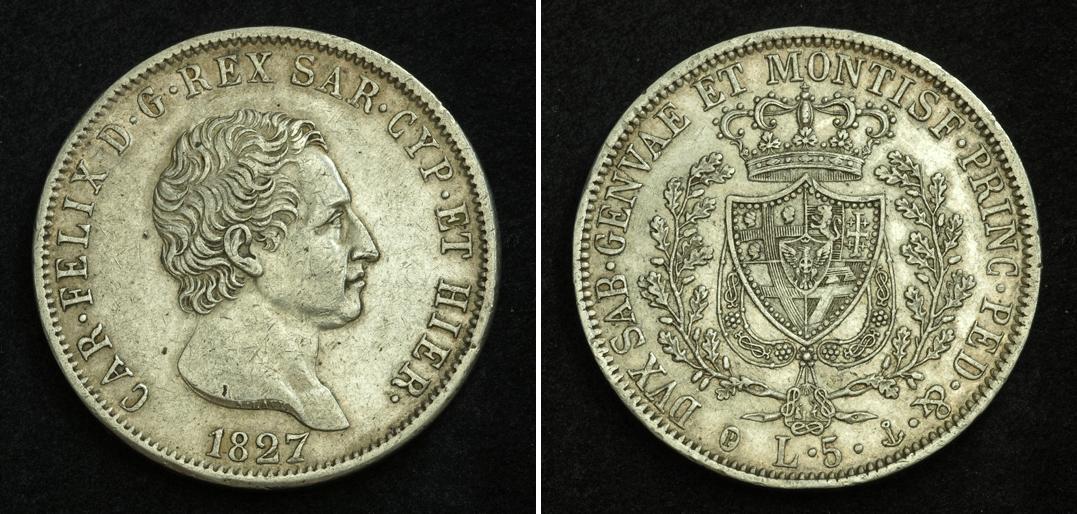
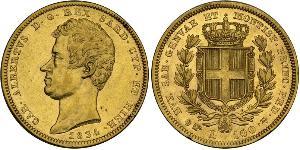
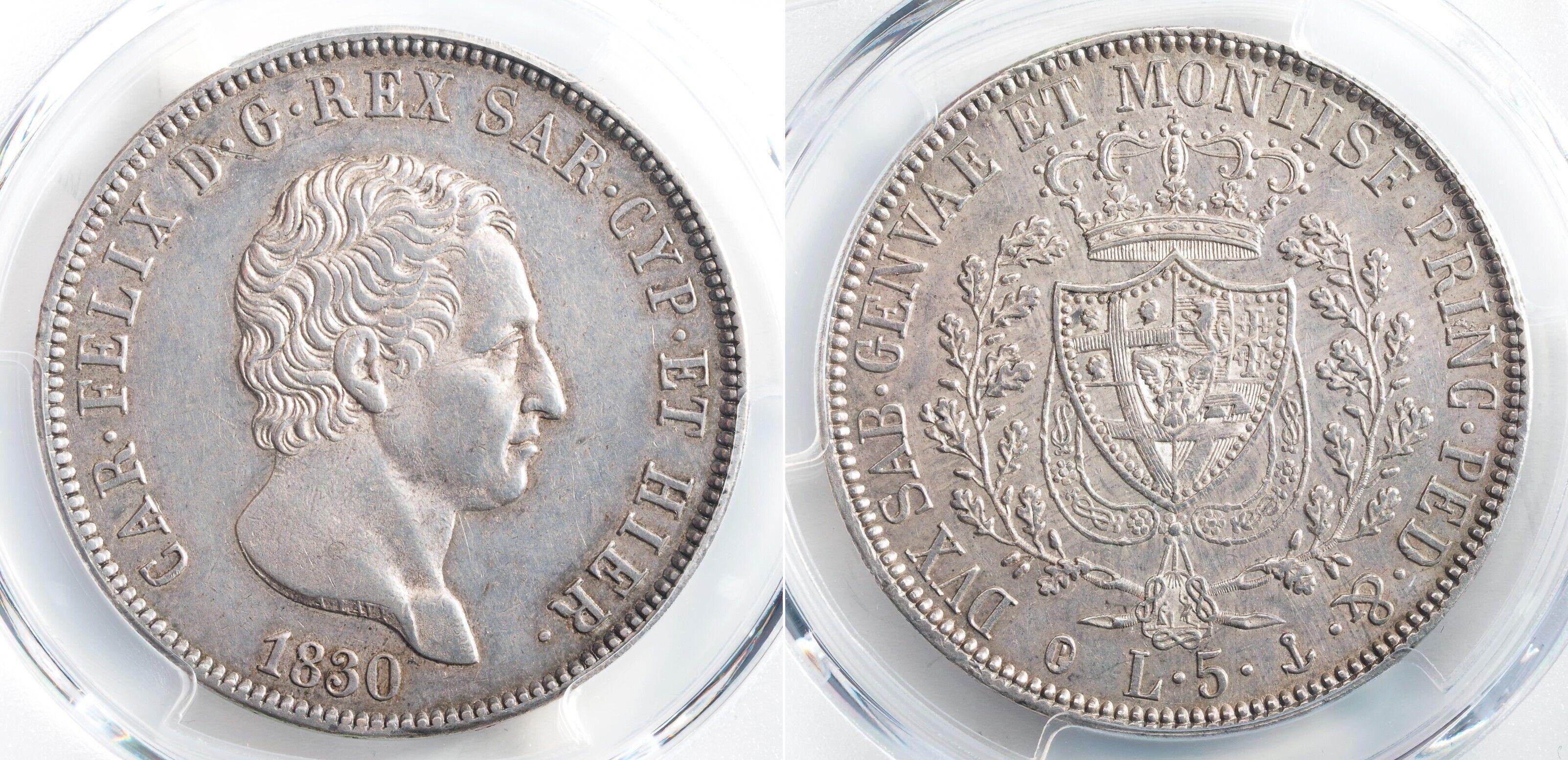
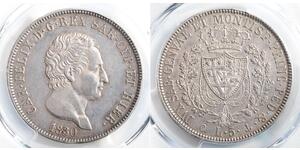
1830, Kingdom of Sardinia, Charles Albert. Rare Silver 5 Lire Coin
Mint Year: 1830
Denomination: 5 Lire
Mint Place: Genua (P, Anchor)
Reference: Pagani 233, KM-113.3.
Material: Silver (.900)
Diameter: 37mm
Weight: 25gm
Obverse: Bust of Charles Albert as King of Sardinia (italian state) right.
Legend: CAR . ALBERTVS D. G. REX SARD. CYP. ET HIER. 1830
Reverse: Crowned Italian shield inside order chain and wreath.
Legend: DVX SAB. GENVAE ET MONTISF. PRINC. PED. &. L. 5 (P) (Anchor)
Sardinia (Italian: Sardegna; Sardinian: Sardigna or Sardinnia) is the second-largest island in the Mediterranean Sea (after Sicily). A part of Italy with regional autonomy granted by the Italian Constitution, Sardinia comprises 24,090 square kilometres (9,301 sq mi). The nearest land masses are (clockwise from north) the French island of Corsica, the Italian Peninsula, Tunisia, and the Spanish Balearic Islands.
Charles Albert (Italian: Carlo Alberto Amedeo di Savoia) (2 October 1798 – 28 July 1849) was the King of Piedmont-Sardinia from 1831 to 1849. He succeeded his distant cousin Charles Felix, and his name is bound with the first Italian statute and the First War of Independence (1848-49). He abdicated after his forces were defeated by the Austrian army at the Battle of Novara (1849), and died in exile soon thereafter.
He was born in Turin in 1798, to Charles Emmanuel of Savoy, 6th Prince of Carignano and Albertina Maria Cristina of Saxony. His father was a fifth-generation descendant of Thomas Francis, Prince of Carignano, founder of the Savoy-Carignano line of the House of Savoy. Because none of the sons of Victor Amadeus III themselves had sons, Charles Albert was throughout his life known to be their likely successor on the throne of Sardinia.
He was educated in the intellectually liberal and Francophile atmosphere of Geneva, then in Paris during the First French Empire. Napoleon I of France named him lieutenant of the dragoons in 1814. After the fall of Napoleon, Charles Albert returned to Turin, were he was entrusted to two praeceptors who were to delete in him the dangerous libertarian ideas learned in France. However, he continued to display some sympathies with liberals.
In 1821, as regent for the kingdom in the absence of the new king, Charles Felix (then in Modena), he conceded a constitution that was disavowed by the king, who sent him to join the French army in Spain to suppress the liberal revolution there and restore Ferdinand VII. He distinguished himself at the Battle of Trocadero in 1823, which annihilated hopes of a constitutional monarchy for Spain and also gained him the favour of Austria.
Charles Albert succeeded Charles Felix to the throne of Sardinia in 1831. Although an Italian patriot allegedly opposed to the Austrian hegemony in Northern Italy, he put down the Mazzini conspiracy. He introduced a series of reforms that abolished domestic customs barriers within the kingdom, promulgated a constitutional law code (Statuto Albertino) inspired to those of France and Belgium, and supported the arts and sciences.
During the Revolutions of 1848 he agreed to a constitutional regime that remained in place for the century that the Kingdom of Italy lasted. The same year he declared war on Austria, with the small army supported by volunteers from the whole of Italy. However, after his initial victories lost him the support of the Pope and the other Italian monarchs, he was defeated at Battle of Custoza (July 24, 1848), being forced to sign an armistice at Vigevano on August 9. When, pushed by the increasing influence of the Republicans in Piedmont, he attempted to resume the war the next year, the Piedmontese were again crushed by Radetzky’s troops at Novara. Rather than redrawing the Statute, he abdicated in favour of his son, Victor Emmanuel fleeing in exile to Portugal.
He died at Porto the same year. His remains were transferred to the Basilica of Superga.
(3205 X 1554 pixels, file size: ~839K)
Posted by: anonymous 2025-05-10
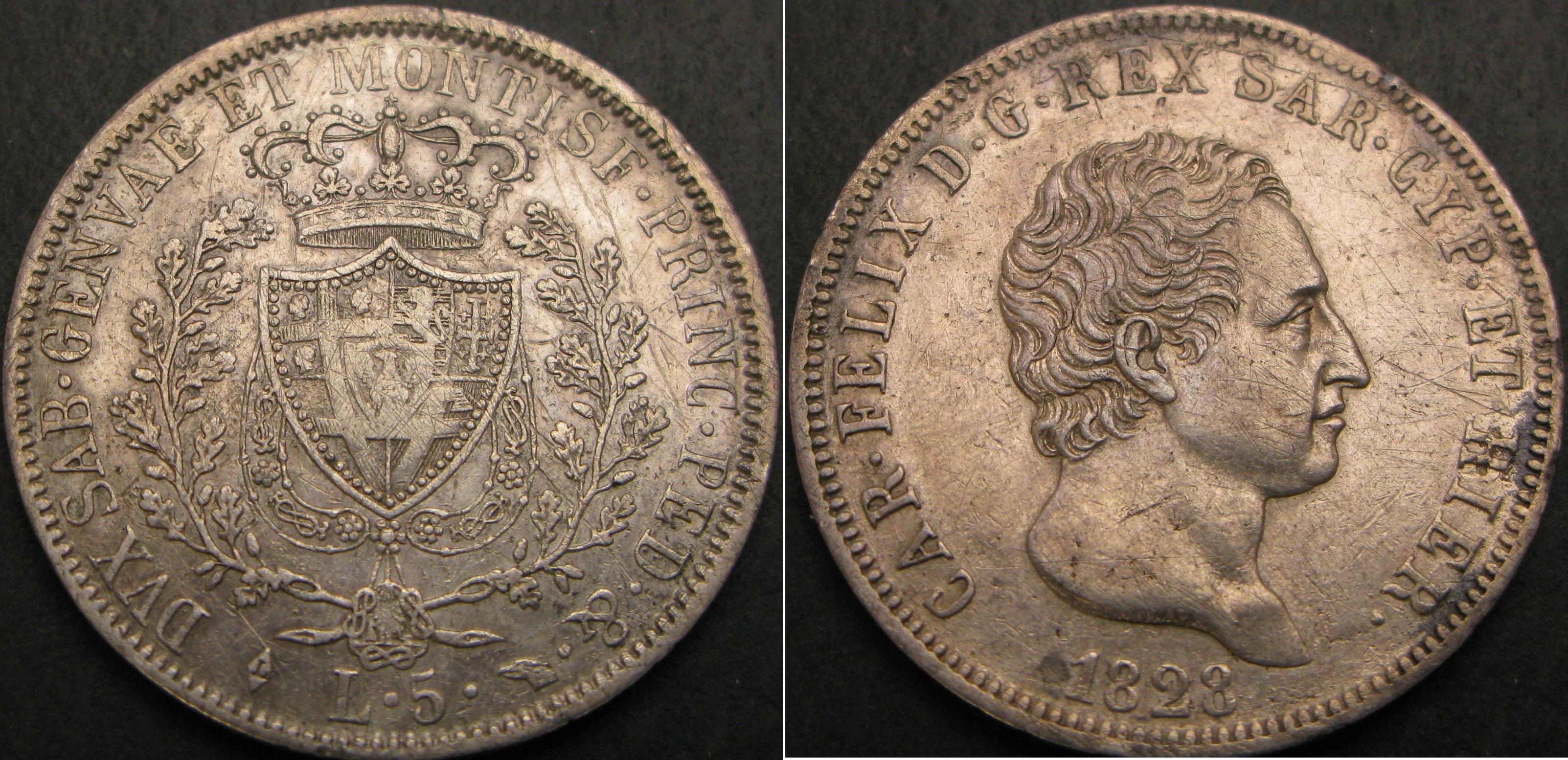
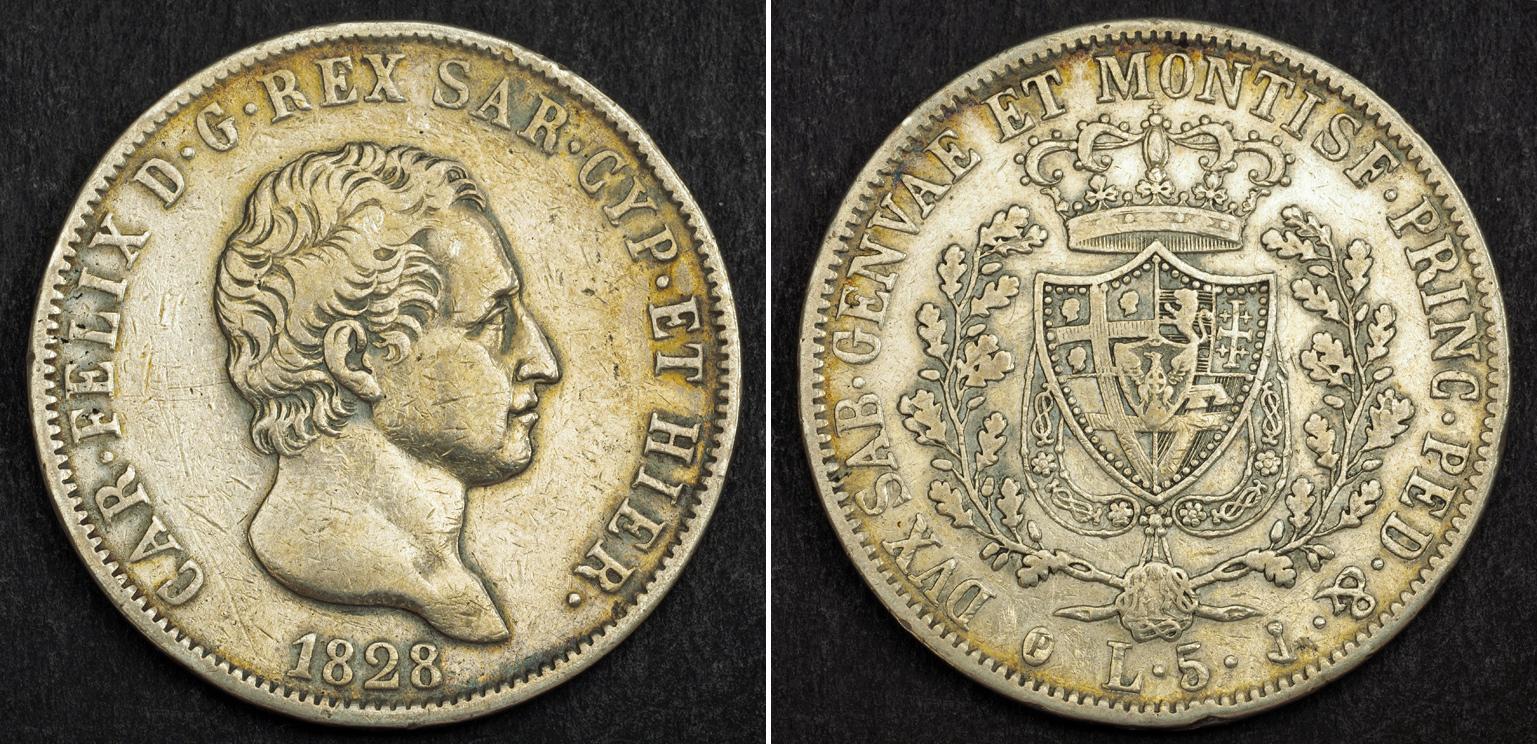
PIEDMONT-SARDINIA (Italian State) 5 Lire 1828L - Silver .900 - VF - 1047
(3205 X 1553 pixels, file size: ~957K)
Posted by: anonymous 2024-04-11
1830, Kingdom of Sardinia, Charles Albert. Rare Silver 5 Lire Coin. PCGS AU-53! Mint Year: 1830 Denomination: 5 Lire Mint Place: Genua (P, Anchor) Reference: Pagani 233, KM-113.3. Condition: Certified and graded by PCGS as AU-53! Material: Silver (.900) Diameter: 37mm Weight: 25gm ...
(3205 X 1581 pixels, file size: ~712K)
Posted by: anonymous 2024-05-16
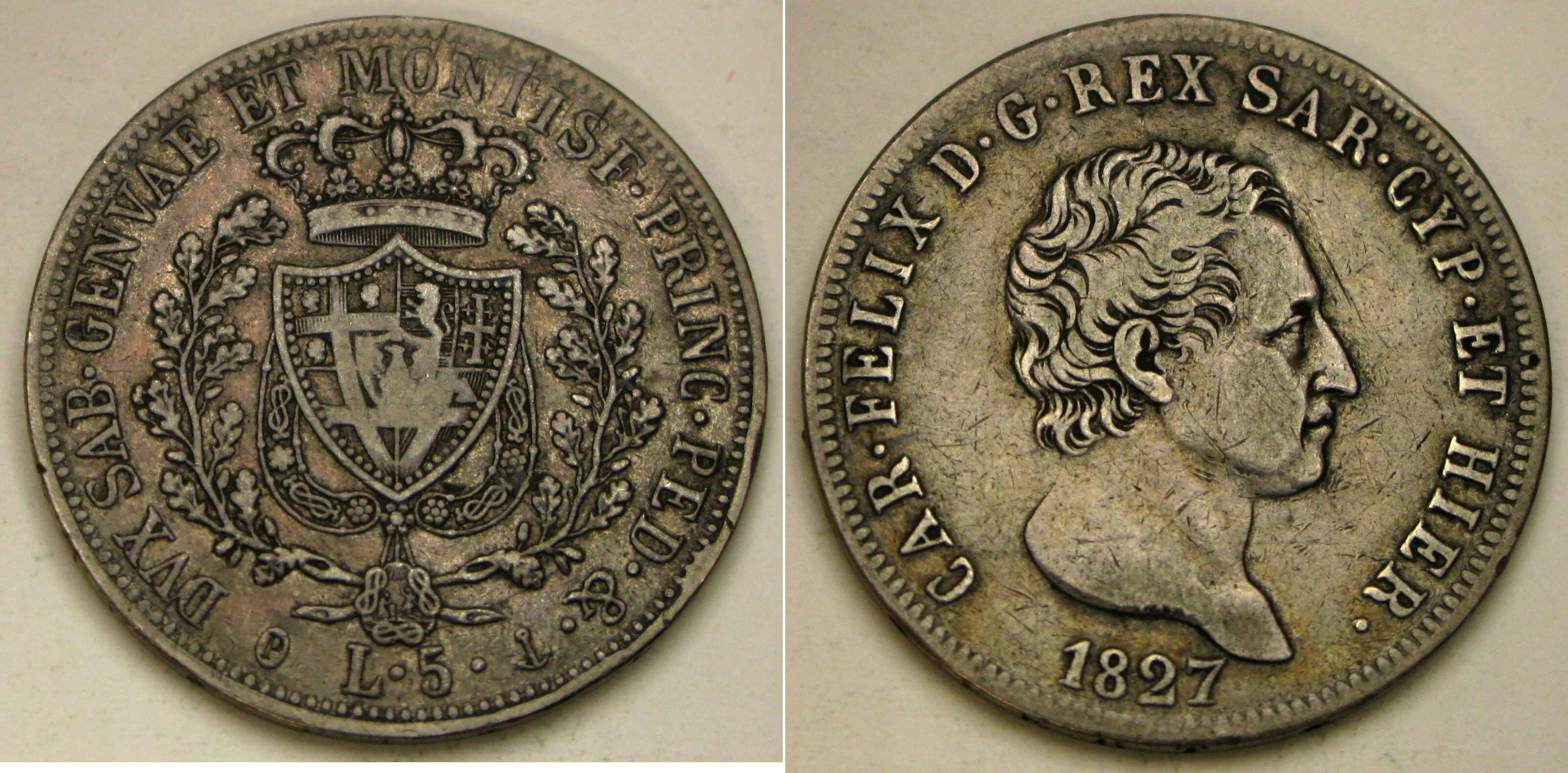
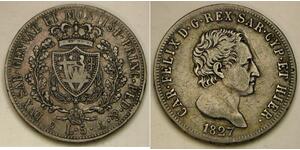
SARDINIA (Italian State) 5 Lire 1827 P - Silver 0.9 - Carlo Felice - VF - 4601 *
(1977 X 978 pixels, file size: ~452K)
Posted by: anonymous 2019-06-24
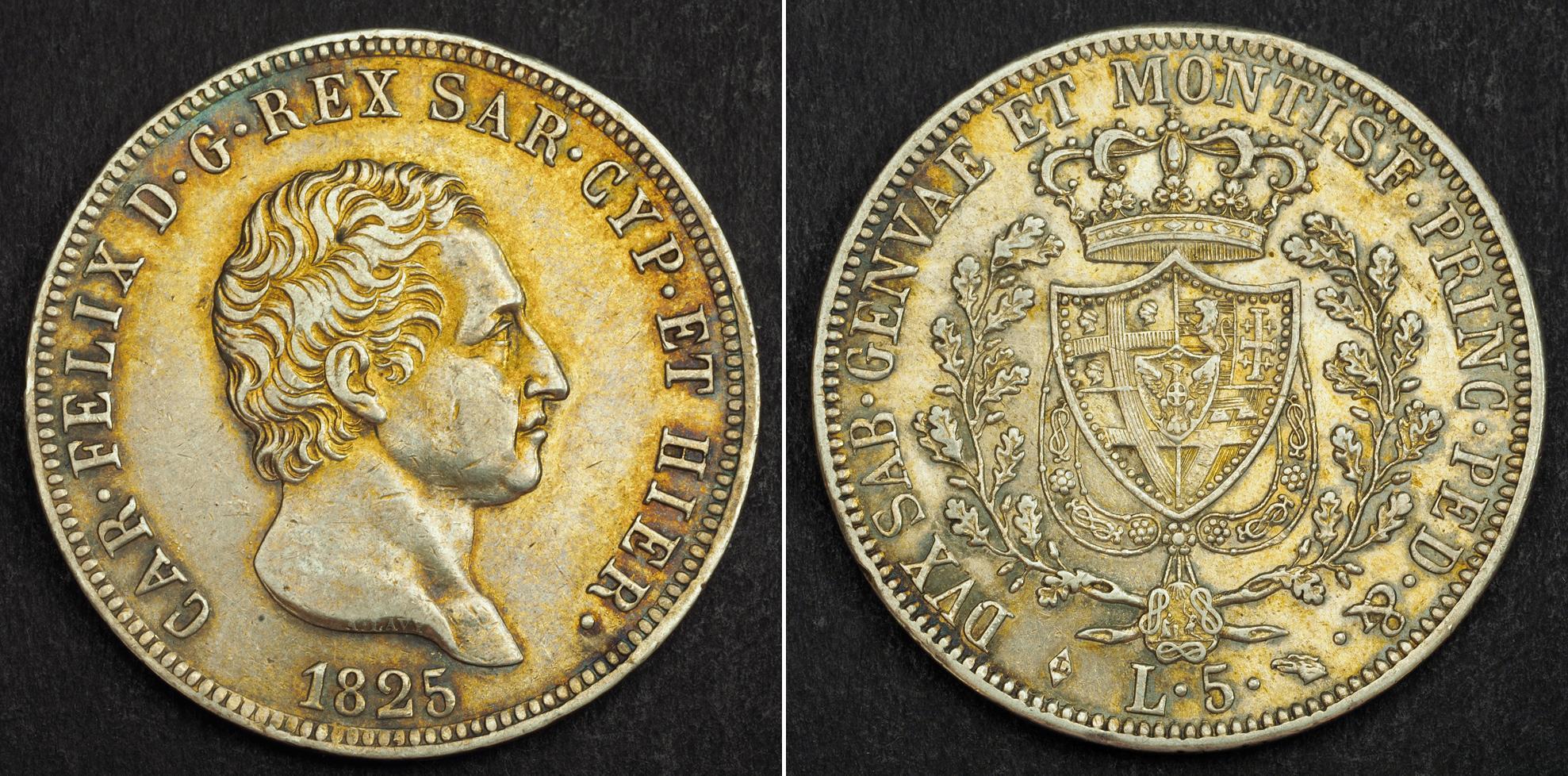
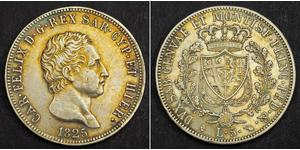
1825, Italian States, Sardinia, Charles Felix. Large Silver 5 Lire Coin. XF+ Mint Year: 1825 Denomination: 5 Lire Mint Master: Filippo Lavy (privy letter: L) Mint Place: Turin (privy mark: eagle´s head) Reference: Davenport 126, KM-116.1 ($200 in VF / $900 in XF!). Scarce! Condition: Pos ...
(1977 X 957 pixels, file size: ~435K)
Posted by: anonymous 2019-06-24
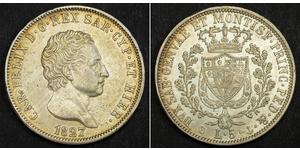
1827, Italian States, Sardinia, Charles Felix. Large Silver 5 Lire Coin. Genoa! Mint Year: 1827 Denomination: 5 Lire Mint Place: Genoa (P, Anchor) Reference: Davenport 135, Pagani 74, KM-116.2 ($180 in VF / $850 in XF!). Condition: Hairlines and numerous tiny scratches in obverse, otherw ...
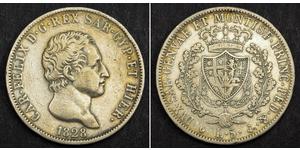
(1537 X 744 pixels, file size: ~277K)
Posted by: anonymous 2019-06-24
1828, Italian States, Sardinia, Charles Felix. Large Silver 5 Lire Coin. VF Mint Year: 1828 Denomination: 5 Lire Mint Place: Genoa (P, Anchor) Reference: Davenport 135, KM-116.2 ($180 in VF!). Condition: Numerous scratches and bag-marks, a few edge-hits, otherwise VF! Material: Silver (.9 ...
|