| View |
| preceded by | ||||
|
||||
|
|||||||||
 New Kingdom of Granada (1549 - 1739)
|
|||||||||

| succeeded by | ||||
|

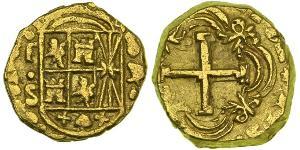
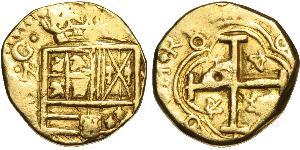
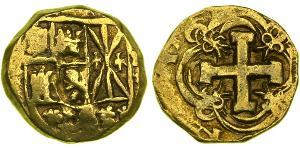
| New Kingdom of Granada (1549 - 1739) | Link to Wikipedia |
New Kingdom of Granada: History, Coinage and Collectibles
The New Kingdom of Granada stands as a pivotal chapter in the economic narrative of South America. While it began under Spanish colonial rule, its legacy is defined by the intersection of imperial authority and local ambition that shaped one of the continent's most significant monetary histories.
Historical Background
This vast territory encompassed much of modern-day Colombia, parts of Venezuela, Ecuador, Panama, and Costa Rica. Established in 1536 as a governorate before evolving into a Viceroyalty by the mid-18th century, its economy relied heavily on silver mining centers that connected to global trade networks.
The heartland became an administrative hub where Spanish law met indigenous traditions. The region was famous for high-quality gold and silver extracted from mountainous regions in the Andes, fueling a complex web of commerce between Spain, Mexico City via Manila galleons, and Peru. However, economic activity here often depended on local stability during frequent uprisings against colonial administration.
Culturally, this kingdom was unique within the empire because it faced early independence movements due to its rich resources but also political distance from Madrid by comparison with Mexico or Peru. The capital at Santa Fe de Bogotá became a center of education and artistry, influencing how wealth manifested itself physically—often in coins that circulated throughout the region before leaving for European markets.
Currency and Coinage History
For decades, commerce within the New Kingdom depended almost entirely on foreign silver produced elsewhere. Mexican 8 Reales pieces from Mexico City were standard currency across most colonial holdings due to their consistent quality and ease of transport. These high-value coins served as international money used by merchants dealing in coffee, emeralds, and precious stones.
Lower denominations required for daily transactions came initially through copper tokens or lower-value silver fractions imported from Mexico City where minting costs were higher but distribution networks more stable than local production capabilities allowed. It took time until Spanish coinage standards could be implemented fully within the boundaries of this territory due to logistical challenges posed by distance and mountainous terrain.
The transition toward sovereignty began when the colony produced its own currency under new political regimes during independence wars, marking a shift where foreign designs were replaced with national iconography. This period is particularly significant for numismatists because it represents one of the earliest instances in South America where indigenous and Spanish artistic elements merged to create locally designed coins.
Mints and Coin Production
The minting infrastructure developed primarily around Santa Fe de Bogotá, which operated from 1809 until independence solidified. Prior to this authorization, silver produced locally was exported without local stamping or branding unless authorized by Spain directly for specific tax uses.
Minting technology in the region utilized traditional Spanish methods where metal sheets were cast and struck using heavy press mechanisms imported overland from Europe. Artistic characteristics often showed influence from Mexican dies because they provided standard matrices used until later independence reforms allowed distinct national designs to emerge.
The transition toward sovereign coinage required new machinery that could produce local denominations without relying on shipments from across the ocean, a process complicated by war and blockade attempts during revolutionary conflicts. The establishment of mints here also coincided with broader efforts to establish economic sovereignty for independent states emerging in South America following 1820.
Notable Coins
- The Real Eight from Santa Fe de Bogotá:
- Silver Doubloons and Fractional Pieces in Trade:
- Independence War Denominations:
This coin marks the beginning of local production during a turbulent era where independence movements influenced monetary systems. The design typically featured national symbols alongside traditional Spanish motifs, signaling a blend between imperial heritage and emerging republican identity.
Coinage designed for international commerce circulated widely because merchants required standard weights from recognized sources like Mexico City or Spain. These foreign imports often feature distinct mintage dates that collectors use to trace trade routes between the Andes and Pacific ports.
During conflicts for sovereignty, smaller copper tokens were struck in emergency conditions where metal supplies ran low. Their artistic features include rough edges showing hurried production, making them highly interesting pieces that reflect immediate historical needs rather than formal art.
Cultural Legacy
The coinage from this region reflects a deep cultural blending of Spanish heritage with local Andean identity. Symbols used on denominations often referenced agricultural themes relevant to coffee and gold mining industries, representing wealth sources that defined colonial prosperity.
Silver content remained high quality until trade wars disrupted production chains during independence eras when copper or lower-quality metals were utilized due to logistical interruptions from European embargoes against the region. Despite these changes in metal value, artistic integrity was preserved through skilled workers who maintained design standards even under difficult political conditions.
The transition away from Spanish designs toward national emblems illustrates broader ideological shifts within South American history where local pride grew stronger after centuries of colonial rule. Coins became tangible markers that citizens used to express allegiance to new governments rather than foreign crowns, creating numismatic archives unique in the way they blend imperial artistry with republican sentiment.
For Collectors
This era offers valuable opportunities for those seeking specimens connected to early Latin American independence movements and Spanish colonial history. Specimens from this period often carry historical significance tied directly to major economic transitions where local minting first began after decades of dependency on foreign imports.
Rarity is defined not always by production numbers but by survival rates because many pieces were melted down for silver content during inflationary periods or used in government treasury needs. Consequently, high-grade survivors are prized highly within collections focusing on Spanish colonial coinage across the Americas.
Institutional value grows as understanding increases about how these coins connect to broader narratives of trade and independence that shaped modern borders today. Collecting them provides insight into daily life during turbulent historical moments where money served both government needs and common commerce equally, making each piece a small window through which observers can view complex political history.