| View |

|
|||||||||
 Viceroyalty of New Granada (1717 - 1819)
|
|||||||||

| succeeded by | ||||
|

| Viceroyalty of New Granada (1717 - 1819) | Link to Wikipedia |
Viceroyalty of New Granada: History, Coinage and Collectibles
Welcome to the world where the empire met the continent. The Viceroyalty of New Granada stands as a monumental chapter in both South American history and numismatic heritage. For centuries, this vast territory encompassed modern-day Colombia, Panama, Ecuador, and Venezuela, centered around its capital, Santa Fe de Bogotá. As we examine the artifacts left behind from these formative eras, one finds not merely metal discs with embossed images but tangible proof of shifting power dynamics between European crowns and independent nations.
Historical Background
The establishment of Spanish colonial rule in South America brought a structured economic system centered on the extraction and trade of precious metals. In this region, Santa Fe de Bogotá quickly rose to become the seat of government for the Viceroyalty, serving as an administrative heart that connected local economies with distant imperial markets.
The economy relied heavily on agriculture and mining. The cultivation of cacao, cotton, and other cash crops required a robust internal trade network which was facilitated by hard currency. As independence movements gained momentum in the early nineteenth century following French Revolutionary ideals spreading across Europe, the economic stability provided by Spanish coinage began to fracture.
This period marked a transition from royal tribute to national sovereignty. The wars of independence disrupted standard supply chains for bullion and finished coins. Merchants who relied on real de a ocho silver dollars found their value fluctuating not just based on metal content, but on the political uncertainty surrounding trade tariffs with Spain versus emerging local republics.
The cultural fabric was equally significant as it influenced how money was used in daily life. Religious festivals and colonial civic events were funded through coinage that carried specific denominations required by church and state alike. Understanding this historical backdrop is essential for the collector, as coins minted before 1806 bear distinctly different characteristics than those struck during the turbulent years of war.
Currency and Coinage History
The evolution of currency in New Granada mirrors the trajectory of Spanish Imperial policy. Initially, foreign silver dollars from Mexico and Peru circulated freely within colonial territories due to high demand for trade goods like textiles and jewelry materials.
As royal authority sought tighter control over local economies, Spain authorized regional mints to produce coinage that bore their mark but utilized standard imperial designs. However, by the time independence was declared in 1806, the Spanish Crown had lost much of its ability to ship bullion directly for new issues due to blockades and trade wars.
The monetary landscape shifted dramatically with the introduction of copper-nickel pieces used as small change alongside silver denominations. These smaller coins were essential because daily commerce could not function solely on high-value metal currency produced abroad or at the main mint in Cádiz, Spain. The scarcity caused by supply interruptions led to unauthorized production practices that collectors often encounter.
The independence era saw a brief reorganization where local governments attempted to stabilize their economies through new coinage laws designed for commerce and government stability rather than mere imperial tribute collection.
Mints and Coin Production
Central to this history is the mint in Santa Fe de Bogotá, officially known as Real de la Santa Fe. This workshop served not only New Granada but also became a focal point during the transition period from colonial dependency to independent republicanism.
The technology used for coin production varied over time. Early issues often utilized hand-stamping or simpler dies that reflected artisanal craftsmanship rather than modern press machinery. However, later reforms introduced more standardized pressing techniques intended to improve uniformity and deter counterfeiting during economic instability periods.
Minting traditions emphasized the use of gold obtained from local mines combined with silver imports for higher denomination pieces like eight reales or quarter dollars. Artistic characteristics distinguish these issues significantly; early dies featured intricate royal arms that were later replaced by simplified designs once political allegiance to Spanish monarchs ended entirely.
Notable Coins
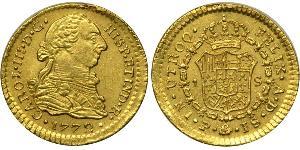
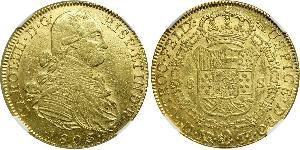
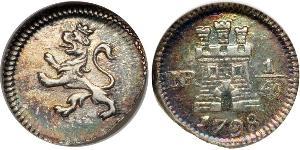
To appreciate the collection potential, we must look at specific pieces that represent key moments in this nation's history. The most historically important are often those struck just as independence was declared, capturing a unique moment where both old and new symbols coexist on metal surfaces.
- Copper Cent Coins: These coins appeared when silver became too valuable or scarce for everyday transactions. Their obverse typically features an eagle symbolizing liberty rather than the crowned head of Philip V, marking a significant design shift. Collectors prize these as they are often found in lower grades due to circulation wear.
- Silver Reales from Bogotá: High-value silver pieces were minted locally before 1806 using bullion brought by naval fleets. The reverse usually carries the cross of Santiago or a shield bearing royal coats, indicating loyalty even as political winds shifted abroad.
- Post-Independence Silver Issues: Once independence was achieved around 1825, new designs emerged featuring stars and liberty caps on silver issues used for commerce. These coins bridge the gap between Spanish colonialism and republican governance visually through die cuts that replaced royal imagery entirely.
An interesting artifact often discussed is the quarter dollar or similar denomination struck after independence was established but before the nation fully stabilized its currency laws. The visual transition from crowns to stars tells a story without words, making them particularly valuable for numismatists interested in state symbolism evolution rather than purely metal purity.
Cultural Legacy
The coinage of New Granada reflects broader cultural themes including religion and trade networks that defined the region prior to modern national borders. Images on coins frequently depict religious patron saints or symbols associated with Catholic tradition, underscoring the role of faith in society during colonial times.
For collectors
The historical significance of this period remains deeply relevant for today's collector community because it connects you to a time when nations were born from empires. These coins tell stories not just about economic activity but also about the social movements that reshaped South America permanently.
- Rarity Factors: Look for dates associated with mint strikes during wartime or early republic formation, where production was inconsistent and metal availability limited.
- Aesthetic Value: Coins from this era often possess unique artistic detailing influenced by local engravers working in Bogotá. The wear on copper issues reveals daily market life rather than just precious storage value today.
In conclusion, acquiring a coin from the Viceroyalty of New Granada means owning a fragment of history where power and commerce converged under changing skies. Whether you are examining an eight reales or smaller denomination pieces used by street vendors in Bogotá centuries ago, these items offer insight into how cultures adapt to political transitions through their currency systems.
This rich heritage ensures that coins from this region continue to appeal to those seeking tangible connections between the past and present worlds of commerce. They stand as monuments frozen time when independence changed everything yet left behind artistry in metal form for future generations.