| View |
| preceded by | ||||
|
||||

|
|||||||
 Empire of Brazil (1822-1889)
|
|||||||

| succeeded by | ||||
|

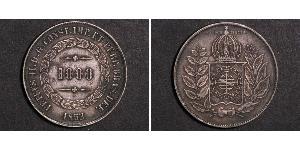
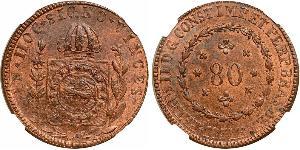
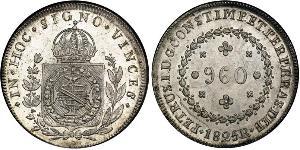
| Empire of Brazil (1822-1889) | Link to Wikipedia |
The Empire of Brazil: History, Coinage and Collectibles
Historical Background
The story of the Empire of Brazil begins with a remarkable geopolitical rupture that reshaped South American history in 1807. When Napoleon Bonaparte invaded Portugal, Prince Regent John was forced to flee from Lisbon across the Atlantic Ocean carrying Portuguese gold and royal regalia. Remarkably, he settled his court not on the English Channel shores but within Rio de Janeiro harbor at Bahia Blanca. This relocation transformed a regional capital into an imperial seat almost overnight.
The independence movement gained momentum as Brazil sought to carve out its own identity separate from Lisbon while avoiding European warlordism. Prince Pedro of Braganza remained behind in 1820 and declared himself Emperor on September 7, securing autonomy without the bloodshed common elsewhere in South America. This era established a constitutional framework where national unity was paramount. The economic foundation rested heavily upon coffee production expanding from São Paulo into Minas Gerais alongside slavery until its abolition during the mid-century.
The cultural landscape shifted dramatically between these two emperors: Pedro I and his son Pedro II. While the first reign focused on consolidation, the second half of the century represented a golden age of stability where art, education, and diplomacy flourished under Parisian-trained influence brought to Brazil through royal patronage. This period laid the groundwork for modern national symbols still seen today in flags and currency.
Currency and Coinage History
The monetary evolution of this nation mirrored its political maturation. At independence, the Empire retained elements of Portuguese currency law but rebranded them with distinct Brazilian nomenclature to assert sovereignty immediately after 1822. Initially, coin circulation was largely driven by imports because domestic mints had struggled during wartime.
The transition period saw a chaotic mix of old-world crowns, colonial coins, and new national copper pieces bearing Portuguese designs but reissued as Brazilian money under local mintmaster supervision. By the time Pedro II ascended to full imperial power in 1840, there was an urgent need for standardization.
The introduction of a stable gold currency aligned with international markets allowed trade expansion during coffee booms and railway construction projects that linked ports like Santos to interior lands like Mato Grosso. As the century progressed toward civil war threats in neighboring states (such as Uruguay), monetary discipline became vital, pushing mints away from regional experimentation back into centralized control under Rio de Janeiro.
Mints and Coin Production
The Imperial Mint was located primarily in Rio de Janeiro throughout most of the Empire's existence. However, economic necessity occasionally necessitated temporary use of other production sites like Bahia or Pernambuco for copper pieces needed by local commerce during wartime shortages.
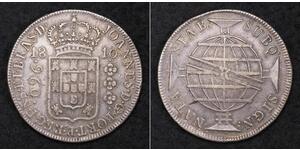
Technological development followed European trends closely. Early coins were often struck manually before hydraulic presses became common practice toward 1860. The artistic style shifted significantly between the two reigns. Under D.João VI and Pedro I, designs reflected heavy baroque influences carried over from Portugal to Rio de Janeiro.
In contrast, the later half of the century showcased academic styles inspired by French Neoclassicism. Portrait sculptors employed engravings that featured softer lines on silver pieces while copper change bore simpler heraldic patterns suitable for low-volume production. Engraver quality became a hallmark distinguishing Brazilian imperial coins from contemporaneous South American republics.
Notable Coins
The most sought-after issues generally reflect the political narrative of sovereignty or technological transition. The gold crowns bearing Pedro I's head serve as early symbols of independence and national unity rather than pure trade currency, which explains their low mintage numbers compared to standard silver denominations.
- Silver 1 Real (First Empire): These pieces carry the date prior to 1840 and feature allegorical themes combining Brazil's independence with imperial stability. The reverse often displays a shield emblematic of Brazilian provinces rather than generic national symbols, emphasizing regional unity during early formation.
- Copper Half Centavos (Second Empire): By the mid-century shift to decimalization, smaller copper coins replaced larger denominations used for daily transactions in ports and markets. The reverse features the Imperial coat of arms while obverses utilized more refined bust portraits influenced by French sculptors.
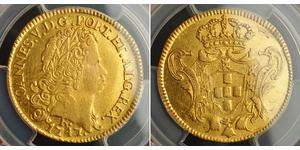
- The Gold Doubloons: These massive gold pieces were rarely found because most trade relied on foreign bullion before national banks issued standardized issues under D.João VI later. The heavy weight and specific relief make them historically significant but difficult to find in good condition due to usage wear over decades.
Rarely did collectors encounter coins struck for local defense needs during the Paraguayan War which featured unique mint marks indicating temporary production centers outside Rio de Janeiro's control. These war-time examples hold historical value as proof of logistical mobilization alongside numismatic scarcity due to limited striking times before hostilities subsided.
Cultural Legacy
The coins produced during this Empire serve not merely as currency but as portable monuments reflecting national aspirations and artistic tastes beyond simple monetary function. The use of green, yellow, and blue in coinage iconography reinforced political values while maintaining traditional Portuguese royal motifs on early issues.
This period also saw the first introduction of indigenous themes subtly integrated into border designs to suggest unity across different ethnic groups making up Brazil's complex social fabric. Religious imagery was notably minimized compared to Spanish colonies but replaced with civic symbols representing science, agriculture and education—reflecting Pedro II's educational reforms that prioritized learning over religious dogma.
The enduring appeal comes from the transition of artistic style which mirrors international fashion while maintaining unique Brazilian character through cartography on coinage. Maps appearing on low-denomination copper coins accurately depicted territorial claims in Amazonia or Paraguay before they were officially confirmed by later treaties, making these small metal objects geographical proof-of-sovereignty during early nation building.
For Collectors
The Imperial Empire of Brazil remains a fascinating subject for collectors seeking historical narratives over catalog rarity alone. Unlike European monarchies that faced frequent regime changes or currency debasement, this 67-year reign offers stability across the transition from colonial to sovereign status.
New entrants should understand that while condition matters greatly, provenance often provides additional context worth pursuing in auction catalogs and estate inventories where pieces may have survived within family collections for decades. The educational journey of studying these coins reveals how a vast country built trade relations through careful monetary management rather than pure military force.
Focusing on regional varieties from Bahia or Pernambuco allows deeper exploration beyond generic national issues found elsewhere in circulation today and connects collectors with the history of early South American economic zones before modern borders solidified. Ultimately, these coins preserve memories of a world where coffee wealth funded cultural institutions built to educate children while gold standards balanced global trade relations during turbulent times.