| View |
| preceded by | |
|
|||||||||
 Kingdom of Italy (Napoleonic) (1805–1814)
|
|||||||||


| succeeded by |
| Kingdom of Italy (Napoleonic) (1805–1814) | Link to Wikipedia |
Kingdom_of_Italy_(Napoleonic): History, Coinage and Collectibles
Welcome to a journey through time where metal meets memory in the pages of history. The Kingdom of Italy during the Napoleonic era stands as one of Europe's most fascinating interludes before national unification took shape decades later. To understand the value of these coins today, we must first look at how this political entity transformed the social and economic fabric of Northern Italy.
Historical Background
In 1805, Europe was in a state of flux following years of intense conflict known to us now as the Napoleonic Wars. The Kingdom of Italy emerged from a series of treaty settlements that redefined borders for generations prior to this period. This new regime aimed not merely at occupying Italian soil but establishing a model republic or kingdom based on principles derived from revolutionary France, adapted to local traditions.
The political landscape had been dominated by feudal structures and foreign hegemony since the end of the eighteenth century. The establishment of an independent state was driven largely by administrative necessity for the French Emperor, who needed Italian resources and territory to support his campaigns against Austria and Russia. Consequently, this period saw massive investments in infrastructure; roads were paved, tax systems simplified, and local industries encouraged where possible.
Culturally, however, a distinct tension existed between imperial ambition and national pride. While French culture was heavily promoted—seen in the style of dress and architecture—the deep roots of Italian history could not be entirely suppressed by decree. The population remained deeply attached to their regional identities even as they were incorporated into a broader administrative system.
This historical context is vital for understanding what these coins represent: they are tokens of an era where sovereignty was transferred, economic policies shifted from isolationism toward imperial integration, and art flourished under patronage that valued classical antiquity. The decline came abruptly in 1814 following Napoleon's abdication. When the Austrians returned and restored the old order, many who had benefited from these reforms found themselves displaced.
Currency and Coinage History
The monetary evolution of this state was a complex process. Prior to its formation as an Italian kingdom under French oversight, Northern Italy utilized various local currencies ranging from silver ducats to copper pennies with no standardization across the peninsula. The Napoleonic administration sought unity.
Initially, France attempted to impose their own decimal coinage system upon these territories, aligning them closely with coins minted in Paris and Brussels under similar standards of weight for silver and gold used by Napoleon himself on his personal travels throughout Europe (Napoleon). Over time, however, the specific economy dictated that local names were retained but often altered.
This meant that while some units bore values familiar to French coinage collectors—like francs or centimes—the metal content fluctuated based on bullion availability and economic pressure. This hybrid system was unique in Europe's history because it bridged the gap between a centralized imperial economy and local trade needs, often necessitating dual circulation of foreign silver alongside domestic copper issues.
Mints and Coin Production
The physical creation of these medals involved sophisticated machinery brought by French technicians. Turin served as the primary minting center because it had long been a hub for Sardinian state coinage before becoming central to this new administration. Milan acted as a secondary production site specifically for campaigns.
Mint marks are found on specific denominations indicating these factories in cities like Turin, often denoted by letter combinations that would later be cataloged carefully by modern scholars but were invisible to the general citizen at the time of circulation. The artistic quality remained high because coinage was seen as propaganda; it needed to project strength.
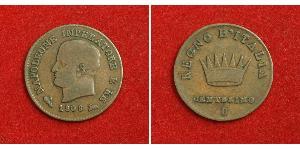
Design traditions leaned heavily on neoclassicism rather than realistic portraiture common in British currency art or later Victorian styles. Sculptors used Greek-inspired relief designs, placing profiles against laurel wreaths that suggested peace achieved after conquest. These artistic choices were not merely aesthetic but ideological—connecting modern Italy to the glory of ancient Rome.
The technology employed was cutting edge for its time; mints adopted steam power in some capacities or utilized improved milling machines, ensuring high standards despite economic pressures during wartime scarcity conditions that sometimes forced reduction in size and weight of circulating pieces.
Notable Coins
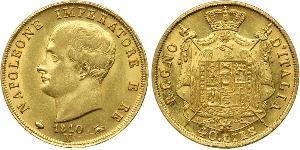
- The gold ducat produced under the first Viceroy is often regarded as one of the most beautiful issues from this period. These coins feature a profile bust with classical detailing, representing an artistic high-water mark during European numismatic history.
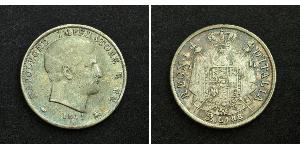
These pieces are prized by collectors because they represent a time when French artistry met Italian craftsmanship in gold metal that survived melting down campaigns often conducted after 1809 to fund military operations. The silver series featuring the eagle of France, adapted with local heraldry elements later on, is another category worth examining.
Cultural Legacy
The legacy of this coinage is visible not only in museums but also in the way we understand cultural exchange during conflict periods. The imagery on these pieces bridges two worlds: a French imperial aesthetic and an Italian historical consciousness.
Rulers depicted are often shown wearing Roman togas rather than modern military uniforms, signaling respect for antiquity which was crucial for legitimacy among local elites who felt alienated by foreign rule when it did not align with their cultural values. Religion also features prominently; while Catholicism remained the dominant faith and thus protected from persecution unlike during some French Revolutionary phases in other regions.
The symbols used on these coins reflect a desire to unify people under new leadership without explicitly suppressing traditional customs entirely, resulting in art that can be read as both imperial propaganda and genuine appreciation of regional heritage. For students of history, examining these objects provides tangible proof of how political power was visually communicated across borders.
For collectors
The Kingdom of Italy remains significant to collectors today because it offers a unique window into the mechanics of state formation during Europe's revolutionary age. Unlike standard currency from stable empires, pieces from this short-lived kingdom often display transitional designs that bridge pre-Napoleonic Italian issues and later Austrian post-war coins.
Rarity is not always determined by official mintage figures but rather by survival rates; wartime destruction of archives means many records are lost while some physical specimens were melted down shortly after production for bullion content. Consequently, finding examples in high grade becomes a pursuit akin to historical excavation. Collectors should focus on the condition and mint variety because these aspects offer more insight into economic stability than catalog numbers.
Conclusion
Ultimately, exploring this era's coinage allows one to touch history directly through metal that circulated in bustling marketplaces across Lombardy and Piedmont. The coins stand as monuments to an attempt at unity under difficult circumstances where art met administration on the battlefield of economic reform.