| View |
| preceded by | ||||
|
||||

|
|||||||
 Kingdom of Afghanistan (1926—1973)
|
|||||||

| succeeded by | ||||
|

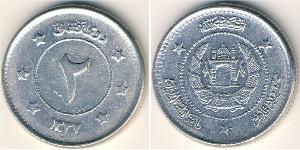
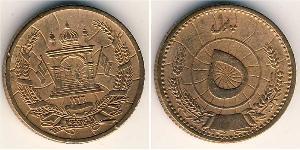
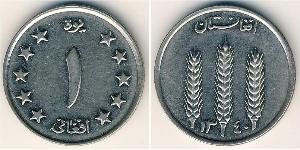
| Kingdom of Afghanistan (1926—1973) | Link to Wikipedia |
Kingdom of Afghanistan: History, Coinage and Collectibles
Historical Background
The history of modern Afghanistan is a fascinating tapestry woven from threads of geography, diplomacy, and cultural resilience. Situated strategically at the crossroads of Central Asia, bordered by Iran to the west, China in the east, and the Soviet Union (later Russia) to the north, this nation long served as an independent buffer state between British India and the Russian Empire.
The transition from traditional emirate rule to a modern monarchy marks one of the most significant chapters for coin enthusiasts. This era began under Amanullah Khan in 1926 but reached its zenith during the reign of his cousin, Mohammad Zahir Shah (ruling from 1933 until 1973). During this long tenure, Afghanistan pursued a policy of neutrality and non-alignment amidst global conflicts. However, the country faced immense pressure to modernize an agrarian economy into one capable of withstanding the technological shifts of the twentieth century.
This period was not just political; it deeply influenced how commerce functioned at local scales. The shift from isolationism to seeking diplomatic relations—particularly during World War II and the Cold War era—necessitated a stable monetary system to engage in international trade without reliance on foreign currencies like the Indian Rupee or British Pound that had circulated previously. As Afghanistan developed industries, sought Soviet technology for infrastructure projects like the Helmand River valley dams, and established military ties with Western nations like Czechoslovakia during World War II, its need for a sovereign identity became paramount.
The monarchy's legacy is complex. While internal challenges such as conservative opposition to modernization arose, leaders worked hard to integrate Afghanistan into global trade networks without compromising national sovereignty. The government actively promoted education and literacy campaigns in places like Darai Nur valley, which improved the populace but faced economic hurdles typical of a developing region reliant on agriculture and mining.
Currency and Coinage History
The evolution of money within these borders mirrors the country's political journey. For centuries, Afghan territories relied heavily on rupees from neighboring India or coins minted in Persia (Iran). As the Kingdom consolidated power under Barakzai dynasty rule during the early 1930s, a new vision emerged: to coin and circulate currency that bore Afghanistan’s sovereign seal.
The introduction of an official silver rupee marked by Zahir Shah was revolutionary. Unlike previous issues often backed by British or Indian mint standards, these coins reflected Afghan independence but still utilized familiar denominations for ease of trade with neighbors like Pakistan (pre-partition) and Iran. By 1960, the government introduced the "Afghani," a currency reform designed to stabilize the economy further as it sought development through international loans from institutions like the Export–Import Bank.
Coinage during this era was not merely a practical necessity; it was a diplomatic tool and a symbol of stability. Foreign observers noted that when Afghanistan remained neutral, its coins circulated freely in trade zones. Conversely, times of geopolitical tension—such as disputes over Pashtunistan with Pakistan or relations with the USSR—led to temporary currency shifts but ultimately strengthened resolve for domestic minting standards.
Mints and Coin Production
The production environment evolved from simple handcrafts to industrial standardization. Initially, coinage relied on older dies brought in by neighbors like India or Iran. However, the mid-twentieth century saw significant improvements where mints were upgraded with Soviet technicians' help for infrastructure projects which extended into currency machinery.
Minting technologies shifted dramatically under Zahir Shah's patronage to produce high-quality portraits of his majesty. While early issues might have featured Islamic calligraphy or architectural motifs like the Bala Hissar palace (though specific designs vary, collectors are primarily interested in these iconic busts), later production moved toward highly detailed engravings that rivaled European artistic standards.
The minting tradition also absorbed diverse influences. As officers trained in Europe and technical academies constructed modern facilities with assistance from Czechoslovakia, the precision of engraving improved significantly. The art became a unique hybrid: blending traditional Afghan patterns—often depicting harvest scenes or agricultural symbols relevant to their agrarian economy—with realistic Western-style portraiture.
Notable Coins
- The High-Value Gold Rupee and Afghani: Among the most coveted issues are the early gold pieces minted from 1930 through to the late Zahir Shah era. These were typically circulated in low numbers as diplomatic gifts or high-denomination currency for wealthy merchants rather than daily trade. They often feature inscriptions that blend Persian and modern administrative terminology.
- The Bust Portraits (The "Zahiri" Series): Collectors particularly value the 1940s to 1960s silver issues featuring portraits of King Zahir Shah. The artistic shift was striking; instead of traditional calligraphy-heavy designs, these coins showcased a realistic bust of the monarch surrounded by inscriptions stating "God is great" and denoting Afghanistan's official names like "Kabul-e-Akbar". These are historically significant as they represent the peak of modernization efforts in the region.
- The Copper-Framed Silver Issues: In times when silver was scarce, copper-nickel coins or framed issues were produced to manage costs. For collectors studying economic history at a grassroots level, these common change pieces are vital artifacts showing how ordinary villagers and soldiers paid for their daily lives during the nation's development.
Cultural Legacy
The coinage of this period stands as physical evidence of Afghanistan's struggle to modernize while maintaining its religious roots. Designs carefully balanced new Western-style imagery—like portraits representing statehood—with Islamic phrases like "Bismillah" and references to national unity. This duality is central to the country's cultural legacy during these decades.
The coins serve as a timeline of Afghanistan's diplomacy. The inclusion of specific denominations often corresponded with international trade partners or aid, while silver coinage reflected confidence in internal reserves during periods of neutrality. For historians and artists studying regional development, finding an Afghan gold piece from the 1950s is akin to discovering high-relief sculptures.
For Collectors
Afghan Kingdom coins occupy a distinct niche for collectors interested in post-War Asian history or numismatics focused on monarchical regimes. Their significance lies primarily in two areas: the scarcity of specific years due to interrupted production during conflicts and high geopolitical events, and their unique artistic evolution.
- The Monarch's Image: The portrait coinage is aesthetically pleasing with a style that influenced Central Asian designs for decades. Collectors are advised to focus on the condition of relief in these busts as they often display excellent strike details compared to other contemporary Asian issues.
- Rarity and Survival Rates: Because Afghanistan was not an industrialized manufacturing hub, its coinage output varied by necessity rather than pure profit. Finding a high-quality example from earlier periods is challenging but rewarding for enthusiasts who value the "Zahir Shah" designs specifically as historical symbols of that specific era.
In conclusion, these collectibles offer more than financial investment; they provide tangible history of Afghanistan's journey to independence and state-building. They remind us that even in a small mountainous nation surrounded by larger powers, the coinage remained proud, sovereign, and distinctively Afghan until 1973.