| View |
| preceded by | |
|
|||||||
 Kingdom of Hanover (1814 - 1866)
|
|||||||
| succeeded by | ||||
|

| Kingdom of Hanover (1814 - 1866) | Link to Wikipedia |
Kingdom of Hanover: History, Coinage and Collectibles
Welcome patrons and enthusiasts to our virtual gallery dedicated to one of Germany’s most storied numismatic provinces. Today we explore the Kingdom of Hanover—a realm where British royalty ruled German lands for a century and half. For collectors of historical silver and gold, this territory offers more than just currency; it provides a tangible timeline through which you can view European geopolitics, dynastic tensions, and cultural identity.
Historical Background
To understand the coins that passed hands in Hanover between 1800 and 1946, one must first grasp the unique political structure of this land. For centuries prior to 1714, Germany was a patchwork of duchies and principalities within the Holy Roman Empire. When George Louis ascended as King George I of Great Britain that year, he brought Hanover into a "personal union" with England. While these were two distinct countries with their own laws—particularly in religious practice—they shared one monarch.
The early years saw coins reflecting this duality; however, the narrative shifts dramatically following the Napoleonic Wars. By 1807, under pressure from French expansionism, Hanover was briefly absorbed into a rival territory created by Napoleon's brother Jerome Bonaparte—the Kingdom of Westphalia—leading to some unique currency issues before restoration occurred.
The Congress of Vienna in October 1814 restored the kingdom and elevated it. This moment marks one of the most exciting chapters for numismatists: Hanover became a true monarchy, no longer just an electorate or duchy ruled by British regents from afar (until then). The local population now saw their own King George III in personage, distinct from his role over seas thousands of miles away. This era established strong regional pride that would linger even after the political entity was annexed to Prussia.
Currency and Coinage History
The evolution of money in Hanover parallels its turbulent history. Following 1803, during French occupation, coins were re-struck with Napoleon’s imperial imagery or those of Jérôme Bonaparte to facilitate commerce under the Continental System. Collectors find these rare transitional pieces fascinating as they show local gold and silver being melted down for continental war efforts.
The restoration in 1815 standardized currency across Germany, but Hanover maintained its own distinct identity through minting choices until it was conquered by Prussia during the Austro-Prussian War of 1866. This annexation marks a definitive end to independence coinage as German silver standards were enforced upon the region.
A particularly unique period for collectors is between 1837 and 1850, when Queen Victoria ruled Great Britain but her uncle Ernest Augustus became King of Hanover due to semi-Salic laws. For a decade or so, the world held two branches: one in London under female succession that followed different lineage rules than those applying in Germany (the House of Welf). This separation is crucial for catalog collectors.
Mints and Coin Production
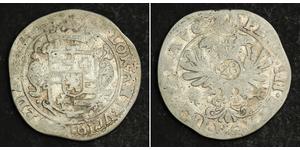
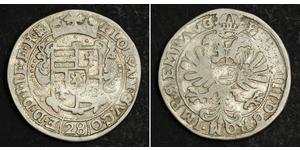
Hanover's coinage was produced at its own dedicated mints, primarily located in the major city. The artistic style of these coins often blended English portraiture with German heraldic traditions. In early issues featuring George I through George III, you will see faces modeled on London standards but executed under local craftsmen.
The minting quality generally reflected Hanover's status as a prosperous industrializing region within Germany before the Prussian takeover. Silver currency was essential for trade across the German Confederation to which it belonged in 1815. As industry grew, so did silver output, though the local economy remained heavily dependent on agriculture and textiles.
Aesthetic choices were conservative but distinctive: often utilizing wreath motifs popular in Germany while employing British profiles. After 1866, production ceased as a separate entity; however, Hanoverian mints were briefly utilized for Prussian issues until fully subsumed into the larger imperial system of the Second Reich.
Notable Coins
In the world of collecting, certain coins stand out not necessarily because they are rarer than others in modern markets alone, but because they represent turning points. Here we highlight three categories that warrant attention:
- The Westphalia Gold Issues.
During the Napoleonic occupation (1807–1813), gold pieces were minted bearing Jerome Bonaparte's likeness. These are prized by collectors not only as historical oddities but because they represent a brief, foreign interlude in Hanoverian history.
- The 1829 Silver Florins and Stücks under George III
Perhaps the most sought-after pieces from this era are those minted after his accession as King of Hanover. These often feature different dies or mints compared to British coins, serving a very distinct purpose: paying German taxes and commerce locally rather than subsidizing London.
- The Ernest Augustus Series
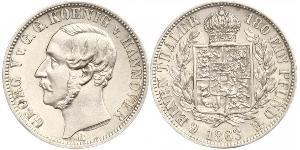
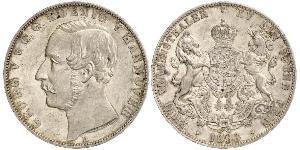
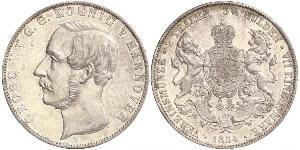
After 1837, the reign of King George V (born Ernst-August) brings a significant change in iconography. You will often find coins dated after his assumption that mark Hanover's continued independence despite being ruled by British blood relatives.
Cultural Legacy
The coinage reflects deep cultural values: specifically the Lutheran identity of the region and its devotion to monarchical order. Before 1840, many issues featured religious iconography alongside royal portraits, reinforcing the King's role as "Supreme Governor" of local church institutions. Following liberal revolutions in the late 19th century, designs shifted away from overt religious symbols toward more secular state symbolism.
The heraldry on coins—the golden eagle—serves as a bridge between Prussian expansion and Hanoverian tradition. When Germany united in 1871, local issues briefly merged with imperial German currency before being abolished completely upon the death of George V and later his son Ernest Augustus during WWI.
This legacy continues to resonate today; Lower Saxony still uses historical flags and symbols that trace directly back to this era. For collectors examining these pieces, they are not just looking at metal but holding history made solid by state authority and the passage of time in Europe's central industrial region.
For Collectors
The collection offers a compelling narrative arc from British royal family governance through to German unification. Why should you pursue Hanoverian coins? First, they are often affordable compared to high-end continental European pieces but carry comparable historical weight regarding the Napoleonic Wars and 19th-century reform.
The most valuable finds in this category lie not just in rarity of metal content—such as gold florins—but rather in die varieties that show where a King tried to unify his dual realms or failed due to political shifts. The transition from the "personal union" era to the Prussian annexation provides excellent examples for those studying numismatic politics.
Many dealers offer pieces with provenance linked directly to this dynasty, ensuring that you understand how money flowed in these markets before modern banking standards were introduced. It remains a perfect topic for serious students of European history who wish to explore the intersection of finance and dynastic power without needing an encyclopedic knowledge.