| View |
| preceded by | ||||
|
||||

|
|||||||||
 Province of Hanover (1868 - 1946)
|
|||||||||

| succeeded by |
| Province of Hanover (1868 - 1946) | Link to Wikipedia |
Province of Hanover: History, Coinage and Collectibles
The Legacy of a Royal Province in Numismatic Terms
Historical Background
To understand the coinage associated with this region requires delving into its rich political landscape. For centuries, Hanover was defined by its role as an Elector within the Holy Roman Empire and later an independent Kingdom before 1867. Its location along major trade routes meant that it served as a vital economic hub connecting northern Europe to central markets. The geopolitical shifts in this region were profound; following conflicts with neighboring Prussia, Hanover was annexed into the German state system in 1866 by Otto von Bismarck's policies.
This administrative transition reshaped local economies overnight. Before becoming a mere province of Prussia, it possessed its own court traditions and royal patronage that heavily influenced art and commerce. The dissolution of sovereignty meant that local mint operations ceased or were repurposed to serve the larger Imperial agenda. After World War II, British military administration briefly recreated the State before integrating Hanover into Lower Saxony in 1946.
Culturally, this territory was renowned for its intellectual vibrancy and industrial growth during the late nineteenth century. As a center of learning and industry within Prussia, it produced wealth that contributed to national infrastructure projects. However, the loss of independence also meant local currencies were absorbed into broader German monetary standards.
Currency and Coinage History
The story of money in this territory is one of evolution from sovereign silver coinage to federalized paper currency systems. In its Kingdom days, Hanover issued Thalers which circulated widely throughout the region due to their purity and intrinsic metal value. These coins were distinct markers of sovereignty.
Following annexation into Prussia, these denominations underwent standardization as the economy integrated with Berlin-based mint outputs and national banking systems. Collectors often focus on this transition because it marks a shift from local artistic expression to standardized state issues. During the late Imperial period, trade flourished within administrative districts like Aurich or Stade due to established infrastructure.
The introduction of paper money began in earnest during the German unification efforts and accelerated after 1873 when gold standard reforms were implemented across Germany. This meant that coins became less necessary for small change than they had been previously, leading to a decline in local minting activities within Hanover's boundaries once it lost its status as an independent state.
Mints and Coin Production
The primary center of coinage heritage here was the Hanover Mint. While modern German states standardized production under Berlin supervision after 1867, pre-unification pieces were produced locally with distinct artistic nuances reflecting regional craftsmanship standards.
- Location: Historically centered in the capital city itself and later adapted to administrative requirements as districts like Lüneburg or Celle operated under federal mandates.
- Techology: The shift from hand-striking machines to hydraulic presses allowed for faster mass production of standardization required during World War I era shortages.
The artistic characteristics distinguish the pre-unification period significantly from later issues. While Prussia controlled the designs, local engravers often maintained subtle stylistic traditions honoring regional heritage.
Notable Coins
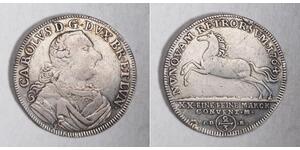
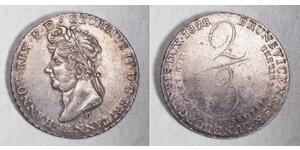
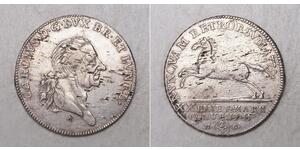
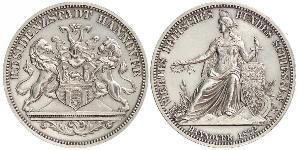
- The Royal Portrait Thalers: These silver coins feature busts of Kings George I or William IV. They are prized for the fine detail in their portraits and often carry legends indicating sovereignty rather than mere provincial administration.
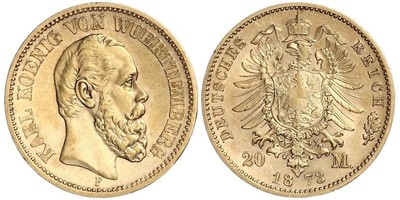
- Post-Unification Mark Issues: As a province within Prussia, Hanover circulated Imperial Marks from 1873 onwards while maintaining administrative distinctions like those seen in Bremen or Hamburg. These are valuable for historical context regarding trade zones and economic integration.
- Transition Pieces (Pre-Annexation): Coins minted immediately before the war that reflect Hanoverian identity hold high value as they represent a specific era of local independence shortly absorbed into Prussia's administrative overhaul in 1867.
Cultural Legacy
The coinage reflects the culture, economy and religious history through symbols. Early issues displayed coats-of-arms bearing the Hanoverian dynasty while later periods adopted imperial or republican motifs depending on political leadership under presidents appointed by Berlin's central government.
Symbols such as oak leaves, wheat sheaves often appear alongside allegorical figures representing agriculture—the backbone of much pre-industrial economy before urbanization took root in cities like Hildesheim. The artistic evolution mirrors the shifting tides between monarchy and republicanism found throughout German history during this century-long span.
For Collectors
The Province of Hanover offers significant historical depth for collectors seeking items with political weight. Unlike purely decorative pieces, these coins document a region's integration into national structures leading up to the end of Prussian administration in 1946.
While standardization often reduces unique artistic merit after 1873, the regional significance makes them interesting for serious buyers who study economic history and state transitions. The story concludes with the merger into Lower Saxony, where currency changed again under federal oversight post-World War II. For those interested in numismatics, pieces depicting this territory offer a tangible connection to how borders moved while trade remained constant across Europe.