| View |
| preceded by | ||||
|
||||

|
|||||||
 United Provinces of the Río de la Plata (1810 -1831)
|
|||||||


| United Provinces of the Río de la Plata (1810 -1831) | Link to Wikipedia |
United Provinces of the Río de la Plata: History, Coinage and Collectibles
Historical Background
To understand the numismatic heritage of this region, one must first grasp the turbulent yet inspiring journey from colonial dependency to sovereign independence. The United Provinces of the Río de la Plata emerged during the tumultuous late eighteenth and early nineteenth centuries as a successor to Spanish Viceroyalty structures in South America. Following the May Revolution of 1810, Buenos Aires declared itself autonomous, initiating a long process that eventually fractured into modern nations like Argentina while maintaining historical bonds with Uruguay and parts of Paraguay.
The era was defined by a fierce struggle for sovereignty against colonial powers, first Spain and later during inter-southern conflicts. This period established the political architecture where money played as vital a role in war efforts and commerce. The early leadership often oscillated between unitary states governed from Buenos Aires and loose confederations led by figures like Juan Manuel de Rosas. These shifts created distinct monetary needs, requiring coinage that could reflect authority without alienating rival provincial factions.
Culturally, this region was deeply influenced by Enlightenment ideals mixed with the realities of a vast agricultural frontier dependent on cattle ranching and trade across the Atlantic Ocean. Independence movements were not merely military victories but economic transitions. The people sought to replace colonial imagery representing Spanish crowns with symbols depicting liberty, agriculture, and their own natural landscapes.
Currency and Coinage History
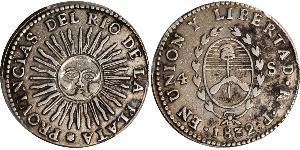
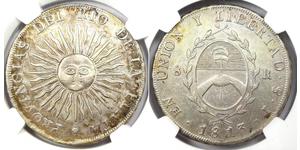
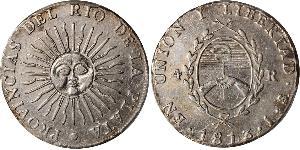
In its formative years, commerce was conducted largely using currency imported from Spain or minted in neighboring regions like Brazil. The most common piece found in the treasury of merchants during this era was the Spanish eight-real dollar, often known locally as a peso fuerte or "strong peso." It became so prevalent that it essentially functioned alongside local debasements and paper money.
Mint production began to stabilize around 1820 with the establishment of new monetary standards. Initially, minting was sporadic due to war disruption. The economic instability meant that the government frequently issued copper tokens or reduced silver denominations to keep domestic prices manageable without depleting reserves for military campaigns. As peace settled during the mid-nineteenth century, the authority sought standardization.
The role of coinage evolved significantly during this time from a tool of war finance to an instrument of international commerce. The government began recognizing that stable silver currency was essential for exporting raw materials like beef and leather. Consequently, they minted coins specifically meant to circulate in global markets rather than just domestic hand-to-hand transactions.
Mints and Coin Production
The Casa de Moneda del Plata, located within the historic district of Buenos Aires, served as the primary center for striking these early national coins. Though originally a colonial facility repurposed after independence, it underwent significant renovations during the Federal period.
Minting Traditions:
Artistic Characteristics:
The mintmasters often struggled with metal purity during times of crisis, resulting in coins that were heavily silver-plated or alloyed with base metals when necessary to meet demand for military payrolls.
Notable Coins
- The Silver Eight-Real Dollar:
- The Gold Sovereigns:
- Copper Fractional Coinage:
Coin Aesthetics:
Cultural Legacy
The coinage of this region remains a testament to how visual identity was constructed after centuries of colonization. Symbols used on these coins shifted from royal eagles and Spanish shields to the condor, which became an emblem of strength in high-altitude regions or horses representing their vast grasslands.
This shift represented more than just political change; it signaled a cultural awakening where local artists took charge of design elements without relying solely on European patrons. The imagery reflects values deeply embedded into the society: independence was celebrated, not as chaos, but as freedom to forge one's own destiny through trade and agriculture.
The persistence of certain motifs even after political fractures—such as a divided Argentina—shows how numismatics preserved unity where diplomacy failed. Coins often served as portable propaganda during civil wars, reminding opposing factions that they still shared a common history and economic necessity for currency stability.
For Collectors
Today, these historic pieces hold significance beyond mere silver content or rarity statistics in modern market terms. They offer collectors a tangible connection to the birth of South American republics. For those seeking historical depth, hunting through regional auction results reveals that quality often depends on context rather than just age.
The condition and patina tell stories; darkening surfaces often indicate genuine circulation from early decades rather than artificial toning. Collectors appreciate how these coins bridge the gap between colonial history and modern nation states like Argentina or Uruguay, providing insight into a time when economic policy was inextricably linked to survival.
Award-winning examples might be those that display clear design intent alongside historical necessity. Whether searching for early gold sovereigns used for foreign trade or everyday copper fractions from rural markets, these coins remain essential educational tools and valuable assets within numismatic portfolios dedicated to Latin American history.