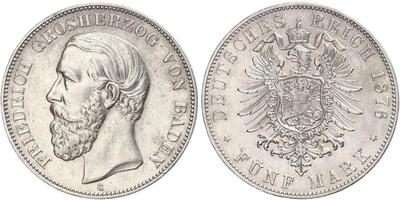
| View |
| preceded by | ||||
|
||||

|
|||||||
 Republic of Colombia (1819 - 1831)
|
|||||||

| succeeded by | ||||
|

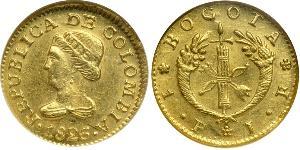
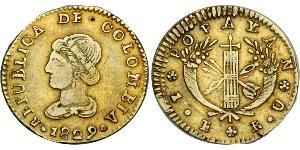
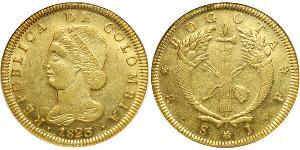
| Republic of Colombia (1819 - 1831) | Link to Wikipedia |
Gran Colombia: History, Coinage and Collectibles
Welcome to this exploration of a republic that shaped much of modern South American identity before it could fully mature into its constituent parts today. The story we are about to tell is not merely one of metal and ink; it is the materialization of liberty itself struck from silver and copper in the heart of Latin America.
Historical Background
The narrative begins on a continent recovering from three centuries of Spanish rule. In 1819, General Simón Bolívar proclaimed independence for what became known as Gran Colombia. This was not just a geographical union; it represented an ambitious geopolitical vision where the nations that today comprise Venezuela, Ecuador, Panama, and most notably Colombia were intended to thrive under one sovereign umbrella.
The economic lifeblood of this new entity relied heavily on agriculture and strategic trade routes connecting the Andean highlands with coastal ports like Cartagena. For a young republic in 1819, stability was elusive, as borders remained porous against external pressure from Spain and internal centrifugal forces seeking regional autonomy.
Culturally, Gran Colombia sought to blend indigenous heritage with Enlightenment ideals borrowed from Europe. The capital fluctuated between Bogotá, Caracas, and Quito during the early years of its existence before finally stabilizing under specific administrative mandates in Cumaná or Bogotá depending on military exigencies at different moments. The legacy was that this union would struggle to hold together due to divergent local economies.
The cultural significance extended beyond politics into art and literature, where poets celebrated Bolívar as the Liberator while artists depicted scenes of freedom from oppression. However, a nation must eat and trade to survive. As we look at any artifact from this era—whether it be a letter or an ingot—we see evidence that the economy was fragile yet fiercely nationalistic.
Currency and Coinage History
The transition of money in Gran Colombia reflects the turbulent political landscape of its founding years. For some time, merchants used silver pesos brought from Spanish colonies in Mexico or Peru to settle debts before new production could be established. The Real de a ocho was widely accepted across the region.
In 1825, following internal stability achieved by Bolívar's leadership, a monetary reform aimed at creating national identity occurred with the introduction of the Peso Granadino. This coinage system standardized trade and signaled to international buyers that this nation could honor its debts and currency in silver standards recognized globally.
Copper coins were issued concurrently for daily commerce within cities like Bogotá and Cartagena, though these circulated poorly compared to foreign small change which remained popular due to superior metallurgical quality. The scarcity of domestic copper meant many traders relied on colonial-era Spanish coppers or Mexican denominations that still held value locally even decades after independence.
This economic reality highlights how a new nation relies upon established networks until its own infrastructure matures. By the time the Peso became standard, silver purity was monitored closely to maintain confidence in trade relations with London and New York.
Mints and Coin Production
The Bogotá mint stands as the most prominent center of coin production during this period. Unlike royalist mints under strict Spanish oversight which prioritized volume over artistry, Gran Colombia sought designs that embodied national pride rather than monarchical authority.
Silver coins struck here featured specific metallurgical marks to prevent debasement and maintain public trust in the currency system. While other cities such as Caracas or Quito attempted production during their brief moments of autonomy before full separation in 1830, Bogotá remained central for consistent output.
Minting traditions involved using classic neoclassical designs common across Europe at that time but adapted with local iconography: the Liberty eagle and laurel wreaths became motifs associated with republican freedom rather than royal crowns. The mint facilities themselves were modest structures compared to modern plants, relying heavily on hand-hammering or early hydraulic presses.
The artistic characteristics distinguishing these coins from contemporary Spanish issues are immediate; they lack portraits of monarchs but instead focus on allegorical figures representing justice and liberty wrapped in symbols native to the Andean terrain. Quality control was often secondary to availability due to war-torn conditions, resulting in varied striking qualities that collectors study today.
Notable Coins
The 19th-century silver pieces struck after independence are among the most sought-after from this region of South America for their historical provenance. Among these is the famous 1806-1824 Real de a Ocho produced under colonial rule which continued in circulation through initial transition periods.
This specific denomination carries deep significance because it represents one final link to Spanish authority before full sovereignty was asserted on the silver coin itself as a symbol of independence. The design features an eagle standing upon laurel branches representing victory over oppression while wearing traditional imperial attire adapted for republics in Latin America.
Another significant type is the 1825-1903 Bolivar Peso which became standard after reform was fully implemented by state decree during this era. These silver coins depict a prominent portrait of General Simón Bolívar facing left, holding an olive branch to denote peace while wearing military garb that connects him as both leader and servant of the people.
Small copper fractions like centavos or smaller denominations were issued for local markets during these early decades. These circulated in urban centers before being absorbed into larger economic transactions involving silver pesos imported from elsewhere. While rare high grades are sought by dealers, historically they served as daily wages rather than investments and their value fluctuated wildly with inflation.
Cultural Legacy
The coinage of Gran Colombia serves a dual purpose today: it commemorates economic systems but also immortalizes the ideals fought for during its short existence. The image of Bolívar on currency is powerful because he represented more than politics—he was a man who envisioned unity among diverse peoples.
Symbols used in these denominations, such as the sun representing light over new lands or the eagle watching over freedom are recurring themes seen throughout history across Latin America where indigenous and European cultures meet. Religion played its part initially with crosses on coins before secular designs replaced them to emphasize national unity above religious affiliation.
This legacy extends beyond mere aesthetics; collectors understand that holding these items is akin to touching a piece of constitutional law made manifest in metal. It tells the story of how young democracies established their identities through art and economics long before printing presses could handle books or posters effectively at this early stage.
For collectors
These coins remain important because they bridge the gap between colonial rule and modern nationhood in South America. For enthusiasts seeking historical depth, a coin from Gran Colombia is not just currency; it is an artifact of political philosophy where unity was tested against local desire for independence.
The scarcity arises naturally from the dissolution of the state itself around 1830 when neighboring regions separated to form their own governments shortly after. Consequently, high-grade examples are rare as much money changed hands under war conditions which often led coins to be spent rather than saved or melted down later during times of crisis.
We invite you to study these artifacts with appreciation for the struggle they represent and how artistry was mobilized to support a republic that struggled against geography, politics, economics while laying foundations still visible today in modern Colombia. Collecting them honors memory but also helps preserve knowledge about financial history during revolutionary periods when trust must be built upon every single coin struck.