| View |
| preceded by | |
 Romania
|
||||||||||||
|


| succeeded by |
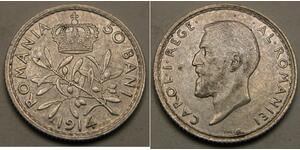
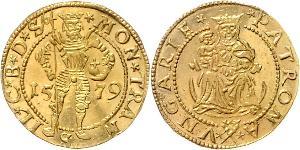
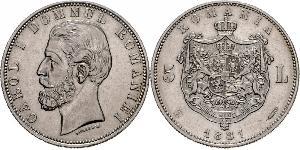
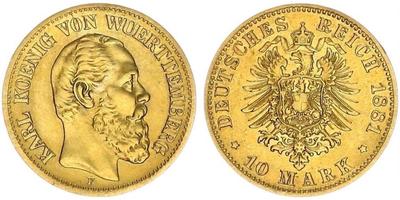
| Romania | Link to Wikipedia |
Romania: History, Coinage and Collectibles
Historical Background
Welcome to the story of a land where history layers upon itself like geological strata. Romania occupies a unique geopolitical space in Europe, nestled along the lower Danube at the crossroads between Central Asia and Western culture. This location was not merely convenient; it was transformative. From antiquity through the Roman Empire, this territory served as an extension of Rome's eastern frontier before becoming part of that empire itself. Over centuries, waves of Goths, Huns, Bulgars, and Slavs migrated across these borders or assimilated into local populations.
The cultural narrative is defined by a synthesis of influences. While the name derives from Latin origins—meaning land of Romans—the landscape evolved through millennia of foreign domination and independent development under the Danubian Principalities (Moldavia and Wallachia). The unification in 1859 marked the birth of modern national identity, eventually becoming the Kingdom of Romania by 1881. By this time, a cohesive cultural entity emerged from Transylvania, Banat, Moldavia, and Walachia. These borders shifted drastically during the twentieth century, influenced heavily by geopolitical pressures such as World War I, which brought new territories into the fold.
Understanding these historical shifts is crucial for anyone appreciating monetary systems. The country moved through periods of independence under Ottoman suzerainty (vassalage) where it used foreign currencies, to full sovereignty with its own mints, and finally becoming a member state in global organizations like NATO and the EU. This trajectory shaped how wealth was measured, recorded, and spent across generations.
Currency and Coinage History
The monetary history of this region is as layered as its civilization itself. In ancient times, under Dacian rule or Roman occupation before 106 AD, the territory functioned as a frontier province within the vast empire. While not issuing large volumes of their own coinage initially, the locals interacted with Denarii, which circulated alongside local gold ingots and silver bars minted in Dacia during its peak prosperity under Emperor Trajan.
When imperial legions departed following Aurelian's withdrawal order in the late third century, a new era of currency evolution began. The region was absorbed into various nomadic empires like the Huns or Gepids before eventually falling within the orbit of Byzantine influence again after Constantine moved to Constantinople (modern Istanbul). During these medieval periods, coinage was often irregular and heavily influenced by foreign powers such as Hungary or Austria.
The transition from feudal principalities using external currency began in earnest during the 15th century. The Voivodes of Wallachia started issuing their own silver coins to facilitate local trade with Venice and Turkey. This era saw the introduction of specific iconography reflecting religious devotion and political alliances, often utilizing Ottoman designs but minted locally.
The most dramatic shift occurred in the mid-19th century following Unification in 1859. Prior to this, money was fragmented; after unification under Alexandru Ioan Cuza, a centralized monetary system began taking shape. Following independence and royal coronation by Carol I in 1881, the country introduced its own definitive currency systems that aligned with European standards while retaining distinct national artistic flair.
Mints and Coin Production
The architecture of coin production tells us much about industrial progress. For centuries, there were no official permanent state mints within Roman territory; coins struck in Bucharest or Sibiu (then Kolozsvár) were often contracted to foreign firms based in Paris or Vienna who utilized local labor.
A true national mint was established at Constantinople (Constantin), but the crown jewel of numismatic production developed later under modern administration. The 1890s brought a new era with dedicated facilities opened by King Carol I's initiative to produce gold coins for circulation, specifically designed and stamped in Bucharest.
Sibiu was another crucial center due to its strong ties to the Austro-Hungarian industrial complex, though it operated as part of larger mint networks. Later, during the 20th century and socialist eras (pre-1989), facilities in Craiova and Bucharest became central hubs.
The artistic evolution reflected these technological changes. Early coinage was crude by modern standards but carried powerful religious symbolism. As industrialization grew in the early 1900s, neoclassical styles were replaced by Art Nouveau elements before shifting toward strict realism during inter-war republic designs and later socialist imagery under communist rule (which focused on collective themes rather than royal figures). Post-1989 transition saw a return to heraldic symbols like stars, eagles, and the historical Dacian tridents.
Notable Coins
No list of collectible Romanias would be complete without mentioning The Golden Era under Carol I (Late 19th Century). This period produced some of the finest gold coinage in Eastern Europe. The most celebrated design is found on the Gold Ducats bearing the legend "Léo Reginae" or featuring the profile of King Carol wearing a laurel wreath.
The Legend: These coins often feature the inscription LÉO REGIS / ROYALIAE, signifying that they were struck under authority recognized by both France and the Romanians themselves. The reverse side typically depicts an eagle, a symbol of sovereignty. Their craftsmanship represents one of the highest peaks in local numismatic art.
Trajan's Denarius from Dacia (106-AD): While rare and often found only as high-grade survivors or fragments, these ancient coins hold immense historical weight. They connect the modern nation to its Latin roots directly through Rome itself.
The Unification Silver Francs: Struck shortly after 1859 under Cuza before full independence, these marks a turning point in statehood—transitioning from foreign trade tokens to sovereign currency with national portraits. Designs varied but often featured the coat of arms merging the symbols of Wallachia and Moldavia.
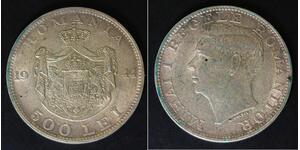
The Republic Period Silver Coins: Post-World War I (1920), following the "Greater Romania" expansion, silver coins circulated heavily in commerce. They depicted national leaders or agricultural themes reflecting the state's focus on agrarian export economies (wheat exports were vital at this time).
Cultural Legacy
Romanian coinage is a mirror of national resilience and identity. The transition from being a vassal minting Ottoman-style coins to issuing gold crowns for international trade highlights the country's desire for parity with Western Europe.
The use of religious imagery shifted subtly over time: Orthodox Christian symbols giving way to secular nationalist motifs, then back again after communism ended in 1989. The modern state reintroduced stars and eagles found on coins from centuries prior.
For Collectors
The Curator's Note:
- Romania remains a vibrant area for numismatic study due to its rich cultural heritage. The transition of styles—from ancient Dacian motifs and Roman legacies through Byzantine influence, up to modern neoclassical designs—provides endless opportunity.
- Cultural Depth: Collectors often seek these coins not just for rarity, but for the storytelling potential they hold regarding Romania's unique position as a bridge between East and West. The history of statehood is embedded in every gold edge or silver proof you might acquire today.
Romania offers one of Europe's most compelling numismatic narratives because it represents such diverse historical strata, yet the country maintains a unified artistic soul that makes its coinage instantly recognizable to enthusiasts worldwide.