| View |
| preceded by | |
|
|||||||
 Dutch Republic (1581 - 1795)
|
|||||||
| succeeded by | ||||
|

| Dutch Republic (1581 - 1795) | Link to Wikipedia |
The United Provinces of the Netherlands: History, Coinage and Collectibles
Welcome to this exclusive collection that bridges the gap between economic power, artistic expression, and monetary history. Today we explore the Republic of Seven United Provinces—a state whose existence in European memory was defined by its merchant ships rather than its armies for centuries. This narrative explores how a small maritime confederation built an empire not just with cannons from their forts but also through the very metal they traded hands upon.
Historical Background
The history of this nation is rooted in one simple premise: freedom breeds commerce, and commerce requires stability. The Republic was born amidst a fire that scorched Europe—the Revolt against Habsburg Spain—and its survival depended on the collective will of seven provinces to remain independent of any single monarch's whim.
The turning point came after decades of struggle where independence became reality through economic strength rather than just battlefield victory. When William of Orange fell in 1584, and subsequently under the Act of Abjuration, a new society emerged one tolerant enough for merchants to operate freely regardless of religious affiliation or origin.
This tolerance attracted capital that fueled innovation across every sector from banking to manufacturing; Amsterdam became known as the financial center of the world. This wealth did not merely sit in vaults but was circulated daily. The influx of refugees—wealthy Jews fleeing persecution, Huguenots seeking safety after civil wars elsewhere—all brought with them new skills and currency needs that drove innovation.
The state itself struggled to maintain control over this economic tide because the seven provinces had fiercely independent governments. Each city needed its own coin supply for internal trade while relying on large denominations like silver florins or gold doubloons imported from Italian mints as they were preferred in foreign trade. Yet, domestic currency production was a source of constant friction between central authority and local provincial needs.
Currency and Coinage History
The evolution of coinage here followed the trajectory of its economy—chaotic at first then standardized for stability.
- The Early Trade Era:
- The Gold Taler of William Louis:
- The Silver Standard Crisis:
- The Final Years:
In the late sixteenth century, foreign coins like Spanish Reales and Portuguese Doubloons circulated so freely in Dutch ports that domestic silver production was minimal. The Republic had to mint its own currency because it needed to pay soldiers for the Eighty Years' War using money controlled by itself rather than relying on Spanish gold.
When Stadtholder William Louis ascended his office, he sought to create a unified monetary system that would stabilize trade and reduce reliance on foreign coinage. He produced high-quality florins intended to compete with the Spanish pieces which were often counterfeited by Dutch mints themselves before being re-coined.
By 1672, when Louis XIV invaded, the economic strain was severe. The government needed money fast and lowered silver standards in existing coins to meet war expenses—a classic sign of an economy under siege that collectors look for when dating pieces.
In 1684, after years of financial pressure the currency reform failed because merchants had no trust left in minted silver. As a result heavy copper coins became legal tender while gold was hoarded away as bullion until French influence returned and replaced the Republic's monetary system entirely.
Mints and Coin Production
The most important centers for coin production were located within Amsterdam which served not only domestic needs but also international trade. Other regional mints existed in cities like Dordrecht or Enkhuizen, yet all produced work of a standard that was highly prized abroad.
The minting tradition during the Golden Age focused on high precision; sharp rims and consistent weights were paramount because merchants used them to pay debts at foreign banks. Counterfeiting was rampant—often by rival nations like France or Spain so much that Dutch authorities struck coins in heavy silver content simply to make fake pieces easily detectable.
Notable Coins
Certain coin types stand out as historical markers of this nation’s struggle for identity. Collectors today prize these not only for scarcity but for the story they tell about a state that had to constantly mint money just to survive its own existence.
- The Guilder Florins (1609–1748)
- The Guldengroten
- The Copper Stuivers (17th–18th Century)
- The 1647 Florin
- The Counterfeit Era (1650–1720)
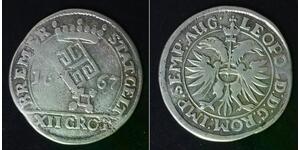
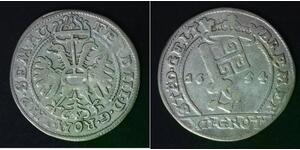
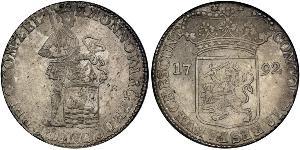
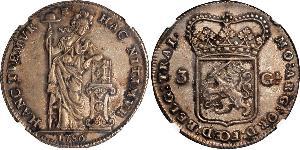
This was the primary silver coinage used domestically and exported globally. Unlike Spanish pieces which featured religious iconography, Dutch coins showed coats of arms or simple geometric designs to reflect their secular focus on commerce rather than faith.
A large gold piece produced during a brief period when the country attempted minting its own reserve currency. These are rare because they were almost immediately melted down to fund wars against France or Britain, leaving only examples in museum collections today.
Daily life for citizens depended on these small copper coins which came from mints that used primitive hammer-striking technologies. Collectors can identify specific issues based on the crude nature of their designs versus later engraved dies.
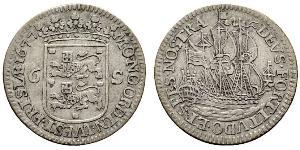
This coin is considered by many historians a masterpiece because it was struck to exact specifications during wartime when money supplies were tight yet quality remained superior. Its reverse design shows intricate heraldry that reflects the pride of its city and province.
During these decades many pieces bear "Dutch" designs but are actually Spanish imitations, or Dutch-made coins struck with false dates. Experts analyze metal density to distinguish genuine heavy silver from fake low-content issues.
A specific feature that collectors look for is the presence of a cross on some late-17th century pieces which was actually an anti-counterfeit measure. Because Dutch coins often had to fight off Spanish imitations they were given distinctive markings like crosses or letters stamped into them.
Cultural Legacy
The coinage reflects the society that produced it; a nation that valued freedom over dogma and trade over war reflected on these metal plates. In contrast with their neighbors, Dutch coins lacked the overt religious imagery so common in Spain or France where monarchs used saints' names to legitimize rule.
The distinct absence of crosses helps identify a piece as truly originating from the Republic rather than being an imitation from Catholic regions. Additionally, while many modern collectors focus on gold and silver pieces these copper coins tell their own story—how small change was used to pay daily market workers in Amsterdam.
For Collectors
The Dutch Republican coinage remains highly significant for enthusiasts because it captures the zenith of a maritime empire at its very peak. It represents the final moments before the state collapsed into French domination, meaning there is no long timeline from which to choose; this era ended abruptly.
These coins are valuable because they document how a nation tried—and often failed—to control money when global powers like France were encroaching. For those seeking an educational collection these pieces show the evolution of currency standards, trade patterns and artistic shifts during Europe's most vibrant period.
The next time you examine a silver florin or copper stuiver from this era imagine yourself standing in Amsterdam harbor watching ships sail to Batavia. The coin is not just metal but proof that one day these cities controlled the oceans and built an empire through trade alone.