| View |
| preceded by | |
|
|||||||
 Free Imperial City of Nuremberg (1219 - 1806)
|
|||||||

| succeeded by | ||||
|

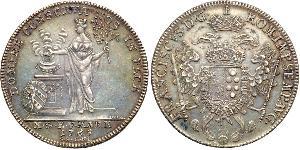
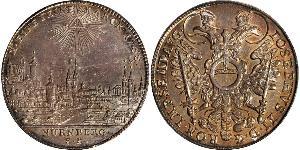
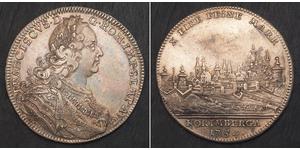
| Free Imperial City of Nuremberg (1219 - 1806) | Link to Wikipedia |
Free Imperial City of Nuremberg: History, Coinage and Collectibles
Welcome to the story of a jewel within an empire that was never quite a country in our modern understanding, yet possessed more power than many nations today. The Free Imperial City of Nuremberg stands as one of the greatest commercial entities of medieval Europe.
Historical Background
In the tapestry of European history, few cities carried as much weight or prestige during their prime as did this bustling metropolis in Franconia. Located on a vital crossroad for trade routes connecting Italy to Northern Europe and beyond, Nuremberg grew into what was effectively the 'unofficial capital' of the Holy Roman Empire.
This status evolved slowly from its earliest settlement traces but crystallized under emperors like Charles IV and Sigismund. By 1356, the Golden Bull formally established Nuremberg as one of only three supreme cities in the realm—a distinction that placed it above the Duke of Saxony or Bavaria regarding political influence within their own sovereign territory. This independence from ducal rule granted them a unique legal standing known as Reichsfreiheit. They were not merely subjects; they were peers.
The city's economy thrived on the sheer volume of commerce passing through its walls, supported by imperial privileges that allowed for an independent customs policy and trade regulation. However, this wealth came with a responsibility: maintaining stability in the currency system that facilitated trade between Northern Europe and the Mediterranean. The political autonomy meant they did not rely solely on regional currencies; instead, Nuremberg operated as a bridge of finance where its own local issues existed alongside the broader Imperial standard.
Currency and Coinage History
The evolution of money in this region is a fascinating story of transition from feudal silver to standardized high-denomination currency. While early coinage bore the image of burgraves, Nuremberg's independence allowed for its minting rights—originally granted by Frederick II in 1219—to expand over centuries.
The city produced coins that circulated far beyond local borders because they adhered strictly to international silver standards. In a competitive medieval market where currency debasement was common, Nuremberg's coinage stood out for its quality and consistency. The introduction of the Imperial Thaler in later periods marked another high point; by producing these massive bullion pieces locally based on proven imperial designs or adapting them with local civic symbols, they facilitated an economy capable of supporting great trade fairs.
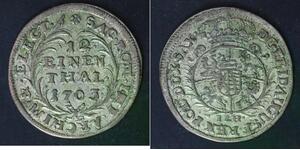
The currency was not just metal to pay for goods; it was a representation of the city's autonomy. A coin struck in Nuremberg often carried both Imperial and City imagery, reflecting its dual nature: a free agent within a larger federation. This duality ensured that collectors find pieces here that tell stories of trade alliances as well as political independence.
Mints and Coin Production
The minting environment in Nuremberg was defined by artistic excellence rather than mere bulk production. As the center of a cultural flowering known today as the German Renaissance, the city's output reflected this humanist revival. While many mints existed across Europe, few could boast such consistent artistry.
The transition from medieval craftsmanship to high Renaissance aesthetics is evident in their coin dies and engravings. Artists who moved between Florence, Rome, and Nuremberg brought new styles of portraiture—realistic heads rather than symbolic icons—and these designs often appeared on the sovereigns' coins minted within city workshops or imperial mints located there.
The technology was as advanced for its time. The use of specialized punches to strike high-relief relief allowed for sharp details that captured human emotion and architectural accuracy, particularly in depictions of castles and town walls seen on the obverse side. This commitment to quality meant that even common trade coins from this era carry an artistic weight rarely found elsewhere.
Notable Coins
Collectors today look for pieces that tell a story, not just measure in silver or gold weight. Three examples stand out as historical touchstones:
- The Burgundy Schilling and Early Gulden: These are among the earliest high-quality independent issues from this city. They represent an era when Nuremberg was defining its own economic standard against Italian competitors. The design often features a crowned eagle or imperial symbols, signifying the strong relationship between local civic power and the Emperor.
- The Renaissance Thaler Variations: As trade with Italy increased during the 15th century, Nuremberg began striking large denominational coins that incorporated artistic motifs from Italian artists. These pieces serve as a numismatic record of cultural exchange in Europe.
- Sigismund's Medallions and Issues: During his reign (early 1400s), Sigismund spent significant time at the city mint. Coins featuring portraits that resemble those by famous painters like Albrecht Dürer are found here, representing a rare instance where political art reached its zenith in numismatic production.
Cultural Legacy
The coinage of this region serves as an archive for understanding the soul of medieval and early modern Europe. Beyond their monetary value, these pieces reflect the city's identity: a place where art was paramount, and commerce demanded trustworthiness.
You can see the cultural legacy in every mark on the surface—whether it is the architectural style of an Imperial castle depicted on one side or religious symbols honoring local patron saints. This artistic focus turned standard coinage into works of art that were preserved for centuries because they represented beauty and power, not just utility.
The decline came during the political realignments at the end of 18th century when these territories were mediatized—meaning absorbed by larger powers like Bavaria—but the historical footprint remains visible in every surviving specimen. Collecting pieces from this period is effectively collecting history itself, capturing a moment where culture and commerce were perfectly aligned.
For collectors
When you consider acquiring these specimens, look for more than condition; seek out rarity and narrative. The historical significance of Nuremberg lies in its unique legal standing as an imperial peer with minting rights—a rare combination that produced exceptional quality coins over a long period.