| Jovian (331- 364) | Link to Wikipedia |
Jovian (331–364): History and Coinage
Roman history rarely pauses to honor a ruler who commanded the empire for less than one year, yet Jovian’s brief reign marked a critical turning point in late antiquity. Rising from humble origins within Constantius II's bodyguard, he ascended abruptly after Emperor Julian was mortally wounded during an expedition against Persia. His accession ended the imperial endorsement of polytheism that Julian had briefly revived before dying on June 26th, 364. Unlike predecessors who expanded eastern territories or established a complex tetrarchy system, Jovian sought peace above all else.
The most defining moment of his short life occurred when he negotiated the humiliating but necessary retreat from Persia without crossing the Tigris River into enemy territory to end Julian's war effort. This diplomatic decision was controversial in Rome; historians debated whether saving lives justified ceding land and fortresses. However, his restoration of Christianity as the dominant religion while maintaining toleration for other beliefs positioned him between the pagan attempts at restoration and later rigid Christian policies established under his successors.
The Numismatic Record
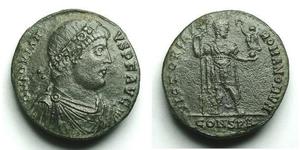
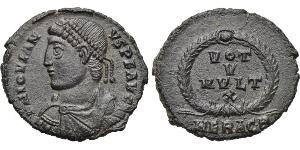
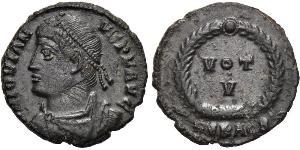
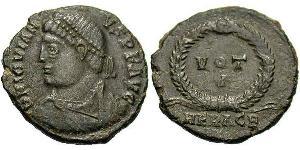
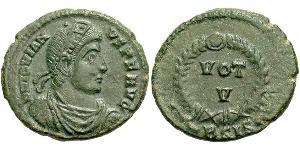
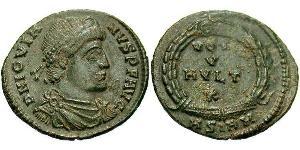
In numismatics, Jovian presents a fascinating challenge due to the scarcity of surviving specimens. Since he assumed power only days after Julian's death in late June 363, there was insufficient time for significant minting operations at Antioch or Constantinople before his retreat and subsequent illness forced him toward Dadastana by February 17th. Consequently, very few official portraits bearing his name were likely produced during this volatile period compared to the abundant coinage of Constantine II or later Valentinian I.
The coins that do circulate today are rare treasures found in Eastern mints prior to full withdrawal from Mesopotamia. Their scarcity is directly linked to the historical crisis where logistics for a massive retreat were prioritized over currency production rather than minting large silver issues common during more stable reigns. Collectors examine these pieces not merely as gold or copper, but as physical evidence of an emperor who died before securing peace terms fully.
Rarity and Historical Value
Awarded high value for collectors seeking the "Holy Roman Empire" era transition period, Jovian’s coins represent a rare connection to a specific historical bridge: ending Julian's campaign without war. Their artistic quality remains simple yet dignified because resources were exhausted during their creation journey south from Samarra toward Constantinople.
The primary attraction for numismatists is the rarity factor combined with its association with one of history’s most unexpected coronations, chosen by soldiers who preferred a Christian to an aging pagan. For those building specialized ancient collections, these pieces offer a glimpse into military logistics in Crisis and diplomatic failure that shaped future Roman politics between Julian's assassination at Ctesiphon until his death en route home.