| Mehmed V | Link to Wikipedia |
Mehmed V (1844 – 1918): History and Coinage
In an era of seismic political change, Mehmed Reşad ascended to the Ottoman throne at a remarkable age. Born in Constantinople during the height of Abdulmejid I's reign, his life trajectory shifted dramatically when he became crown prince as a child under the watchful but suspicious rule of Sultan Abdülhamid II. His formal accession occurred not through birthright alone, but following the turmoil of the Young Turk Revolution and the deposition of his uncle in 1909. At sixty-five years old, Mehmed V entered history during one of humanity's most turbulent transitions. He sat upon a throne that was increasingly symbolic rather than sovereign, presiding over an empire facing internal collapse and external invasion.
The final decade of the Ottoman Sultanate saw rapid territorial loss, from the cession of North African lands to the Balkans during World War I. During this period, Mehmed V declared jihad against Allied powers while remaining largely removed from active statecraft due to the dominance of the Committee of Union and Progress (CUP). Collectors often refer to him as the "Constitutional Sultan," a designation that reflects his nominal adherence to new laws despite having little executive power. He witnessed the empire fight gallant battles like Gallipoli, yet saw those victories fail to prevent total defeat by 1918.
The Numismatic Legacy
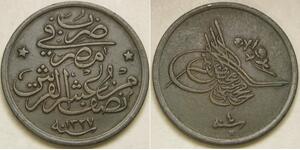
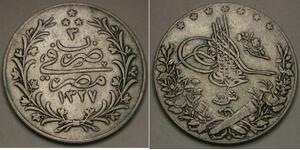
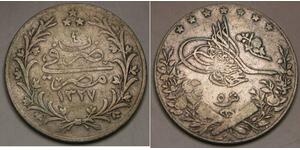
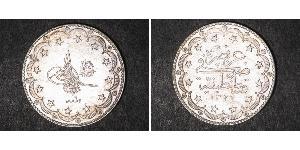
Coinage issued during Mehmed V's reign serves as a unique historical marker for serious collectors of Ottoman currency. While his predecessors often appeared on coin legends in standard Turkish or Persian script, the late era saw shifts toward nationalistic themes even before republican rule took hold.
- The silver tiran and copper cash coins minted between 1908 and his death carry specific calligraphic inscriptions bearing his regnal name.
Mehmed Reşad remains a figurehead whose life encapsulates the fading grandeur of an empire. His coins provide scholars and hobbyists alike with small windows into a world where empires met their end on battlefields from Mesopotamia to Macedonia, leaving behind artifacts that bridge history and modern collecting passions.