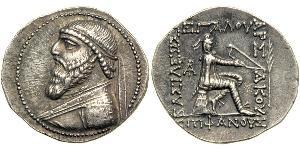
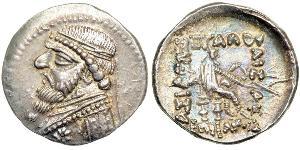
| Mithridates II of Parthia (121-91 BC) | Link to Wikipedia |
Mithridates II (c. 136 – c. 87 BC): History and Coinage
A Stabilizing Monarch of the East
Mithridates II stands as a pivotal figure in ancient Central Asian history, serving as an architect for the Parthian Empire’s golden age. Ruling over this vast domain during its zenith, he transformed a realm reeling from internal strife and external invasions into a stabilized superpower extending across Syria to India. His reign was defined by significant geopolitical successes: securing Mesopotamia against Arab raids, subduing Elymais in the south, and asserting suzerainty over Armenia and other Caucasian kingdoms in the north. Furthermore, he successfully repelled eastern nomadic incursions that had previously destabilized his predecessors.
Cultural revitalization was just as critical to his legacy as military expansion. A dedicated champion of ancient Iranian traditions, Mithridates II sought to distinguish his dynasty from Greek influence by reviving the prestige associated with the Achaemenids. This ideological shift fundamentally changed how he presented himself not only in literature but visually on currency. He became one of history's most influential numismatic rulers because it was under him that Parthian coinage decisively turned away from Hellenistic styles to embrace distinctly Iranian iconography.
The Iconographic Revolution
The transition during Mithridates II’s reign is immediately evident when examining his currency. While earlier Arsacid kings adopted the diadem and omphalos common in Greek art, this monarch abandoned those symbols entirely. He reintroduced an Iranian tiara on coin obverses to signal a return to ancestral identity and replaced standard motifs with the high-backed throne of Achaemenid origin.
This shift extended beyond simple aesthetics; it signaled a major political realignment within the empire's borders, effectively declaring independence from cultural Seleucid dominance. The name Mithridates itself honors Mihrdāt in Old Iranian script, meaning "given by Mithra," reflecting his patronage of Achaemenid traditions and the cult of the sun god that became central to Parthian state religion under his watch.
A Curator’s Perspective on Collecting
Nuismatics enthusiasts value coins from this period for their historical gravity. These pieces offer a tangible link to an era when diplomatic relations were first established between Rome and the Han Dynasty, marking Mithridates II as a diplomat of international consequence.
- Rarity: Coins minted early in his reign before he fully consolidated power are exceptionally scarce compared to those issued after stability was achieved.
- Educational Value: These issues demonstrate the precise moment when Iranian national identity began asserting itself over Greco-Roman artistic trends within a unified empire.
Tangible evidence of this cultural renaissance makes these artifacts essential for any advanced collection. They illustrate how monetary policy served as a tool of statecraft, projecting an image of ancient glory and legitimacy throughout the provinces he conquered. For those studying Parthian history through objects rather than texts, Mithridates II’s coinage remains the definitive standard against which imperial prestige is measured.