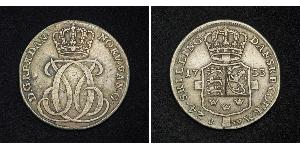
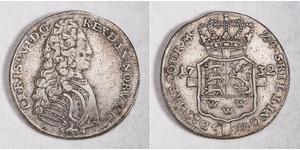
| Christian VI of Denmark (1699 - 1746) | Link to Wikipedia |
Christian VI (1699–1746) History and Coinage
Historical Biography and Context
King Christian VI ascended the throne in 1730 following the death of his father, Frederick IV. He ruled Denmark-Norway until 1746 as an absolutist monarch deeply influenced by Pietism. Unlike many contemporaries engaged in constant warfare across Europe, he maintained strict neutrality throughout most conflicts, focusing instead on internal reforms and commercial navigation laws. His reign is historically marked by significant domestic acts including the introduction of mandatory confirmation services and a nationwide school system to support religious instruction among commoners.
Beyond governance, Christian VI was an avid builder who commissioned structures such as Christiansborg Palace in Copenhagen, now known for its reconstruction after fires during his rule. His legacy includes founding several institutions that defined Danish bureaucracy until the nineteenth century. These reforms established a period of stability often contrasted with neighbors frequently drawn into foreign conflicts.
Relationship to Coinage
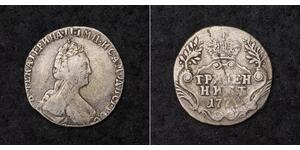
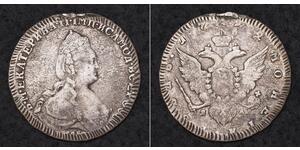
Danish mints produced copper coins for daily transactions while silver thalers facilitated international trade during Christian VI's lifetime. Official issues bore his bust and name, affirming the authority of the Danish crown under the Oldenburg dynasty following previous reigns. The coinage reflects a stable monetary environment distinct from wartime debasements elsewhere in Europe.
Posthumous commemorative medals were also struck to honor his interment at Roskilde Cathedral where neoclassical designs emerged for memorialization, signaling shifts toward modern artistic trends in sculpture and architecture that mirrored broader European changes. These issues served as tangible records of a king who prioritized "Deo et populo"—for God and People—as inscribed on various state seals.
Why Collectors Value These Coins
- Educational Content: These coins serve as accessible artifacts connecting history enthusiasts to the economic policies of a peaceful Northern European empire, distinct from more conflict-focused numismatics elsewhere.
- Rarity and Condition: While common silver issues exist in circulation for general collectors, specific low mintage copper pieces or proof-like finishes attract specialists interested in 18th-century monetary standards before industrialization increased output volumes significantly later.
The enduring interest lies not merely in market price but in their association with major historical events like the Treaty of San Ildefonso where commercial relations were adjusted. Understanding these pieces allows collectors to appreciate how a monarch focused on education and neutrality left an indelible mark on currency circulation without relying heavily on military imagery found elsewhere.