| Georg, Prince of Schaumburg-Lippe | Link to Wikipedia |
Georg, Prince of Schaumburg-Lippe (1846–1911): History and Coinage
A Life in Service to the German Empire
Growing up within Bückeburg Castle as the eldest son of Adolphus I and Princess Hermine, Stephan Albrecht Georg was a central figure in one of Germany's smallest sovereign states. He ascended to the throne following his father’s death in 1893 at the tender age of forty-six. His reign marked an era of stability within the German Empire until his passing in April 1911, after which he handed power over to his son Adolf II.
The Prince's standing was bolstered by significant familial ties; his wife, Princess Marie Anne of Saxe-Altenburg, arrived from a prominent house. Their union on sixteen days in April 1882 produced nine children and cemented the family’s place among imperial nobility. Imperial patronage reached its peak during their silver wedding anniversary in 1907, when Emperor Wilhelm II gifted them Schaumburg Castle—symbolizing royal approval that often translated into special permissions for state imagery to appear on currency or commemorative items.
The Connection Between Sovereign and Currency
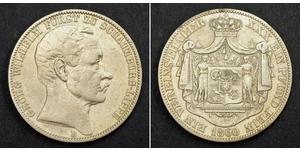
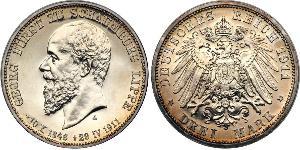
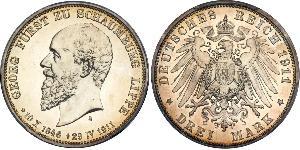
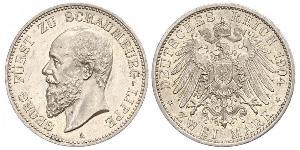
Numismatically, Georg represents the transition of European monetary policy during the late nineteenth century. While circulation coins were eventually standardized across the empire under the Reichsmark system before World War I, local princes often appeared on specific medallions or limited issue tokens celebrating their houses.
- Pieces issued from Schaumburg-Lippe depict Georg's reign within a unified but diverse German monetary landscape.
- The portrait appears primarily in commemorative contexts rather than daily commerce due to federal currency regulations of the Wilhelmine era.
This connection illustrates how regional sovereignty could visually coexist with national unity through state-sanctioned imagery, often minted locally before being circulated regionally or kept within official collections.
The Appeal for Historical Collectors
Enthusiasts and specialists prize these issues not merely as financial artifacts but as historical documents. Each piece reflects the specific context of German monarchy just prior to global conflict, offering insight into how minor states operated under imperial oversight before 1918.
- Rarity plays a vital role in valuation; small-mintage regional pieces are scarce compared to mass-produced imperial coinage from larger territories like Prussia or Bavaria.
- The artistic quality captures the formal portrait style prevalent among German nobility of the era, appealing to those who study period iconography.
Beyond mere price fluctuations, these items provide tangible links to a fading epoch of decentralized governance within Germany.
Schaumburg-Lippe coins and medals offer educational value regarding how local identity persisted alongside national symbols during the final years of the German Empire. Collectors are encouraged to explore this niche segment for its deep historical narrative rather than speculative market trends, ensuring they appreciate the story behind every mint mark associated with Prince Georg’s reign.